 Guide On Map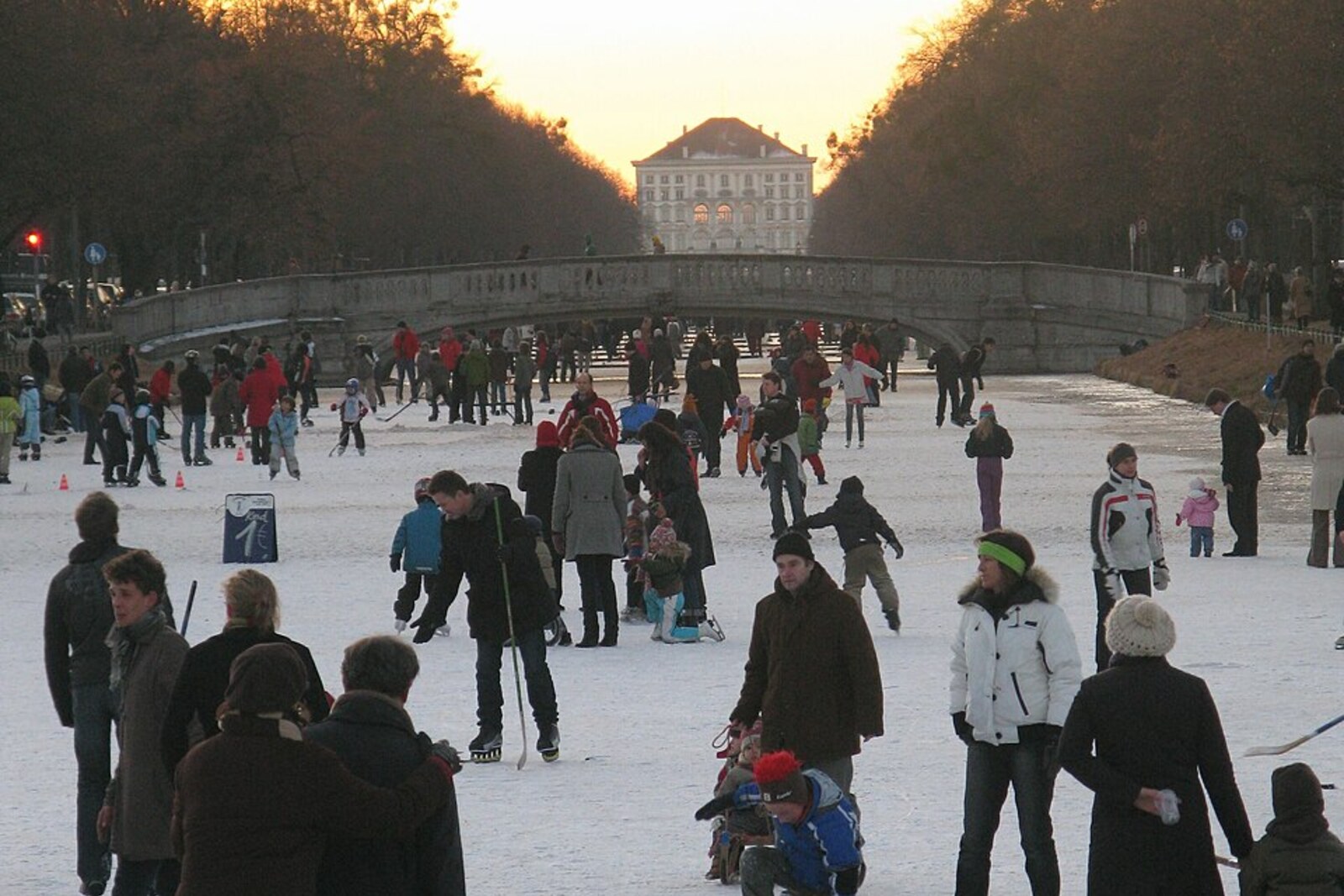
Look around first
What to notice
- The straight canal
- Linden avenues
- The large basin
- Hubertus Fountain
The story of the place
The canal stretches in a straight band of water between linden avenues: it reaches twenty-five meters in width and one and a half kilometers in length. A lock connected this water with the palace basin, and courtiers came here by boats and gondolas. At the Hubertus Fountain, the flow reaches the large basin, then enters a soakaway well and seeps into the ground. Beyond the avenues, several houses remain, recalling a broader plan around the palace.
In seventeen twenty-eight, the Bavarian elector Charles Albert ordered a straight canal to be dug from the palace toward Munich. An elector was a hereditary ruler whose vote counted in the choice of an emperor. Water from the Würm River had already been brought to Nymphenburg by his father, Max Emanuel. Charles Albert extended the waterway eastward for the city he planned to build around his country residence.
The new city was to be called Karlstadt—“Charles’s city.” The canal, twenty-five meters wide and one and a half kilometers long, marked out its center. Linden avenues were planted on both sides. Nearby, plans called for two-story houses for court servants, workshops for artists and craftspeople, manufactories, and inns. The palace and the semicircular rondel in front of it became the center from which streets spread out.
The completed section was connected by a lock to the palace basin. Court vessels and Venetian gondolas traveled along it; an image of such an outing from the late eighteenth century has survived on the bank. Charles Albert hoped to extend the waterway to Munich. Then it would have been possible to arrive at the palace by water, and Karlstadt would have gained a connection with the old city.
But the elector was also seeking the imperial crown. After the death of the Habsburg emperor, he entered the struggle for the inheritance of his house and, with the support of France and Prussia, secured his election. In seventeen forty-two, Charles Albert was crowned in Frankfurt as Emperor Charles VII. At the same time, Austrian troops occupied Bavaria and Munich. The new emperor gained the title but for a long time lost the ability to return to his own capital. The war halted the construction of Karlstadt and the extension of the canal.
Charles returned to Munich only in the autumn of seventeen forty-four and died the following winter. His seventeen-year-old son, Max III Joseph, inherited a country occupied by troops and a debt of about forty million gulden. Three months later, he made peace, renounced his father’s claims, and began paying off the debts. No more funds were allocated for the city near Nymphenburg.
What remained of Karlstadt were the canal, two straight avenues, and several houses near the palace. At today’s Hubertus Fountain, the water still ends its journey in the large basin, then flows through a soakaway well into the ground. An extension to Munich was never dug here.
Useful on site
The stretch of canal from the city to the palace is open urban space with no ticket requirement. In winter, going onto the ice is possible only when it is thick enough and according to signs on site; do not plan on skating as a guaranteed part of the route.
Checked: June 29, 2026. Check the official source before visiting.Choose a spot on the bank from which the palace is visible in the center of the canal. Boats and winter activities depend on the season; do not go onto the ice without official confirmation that it is safe.