 Guide On Map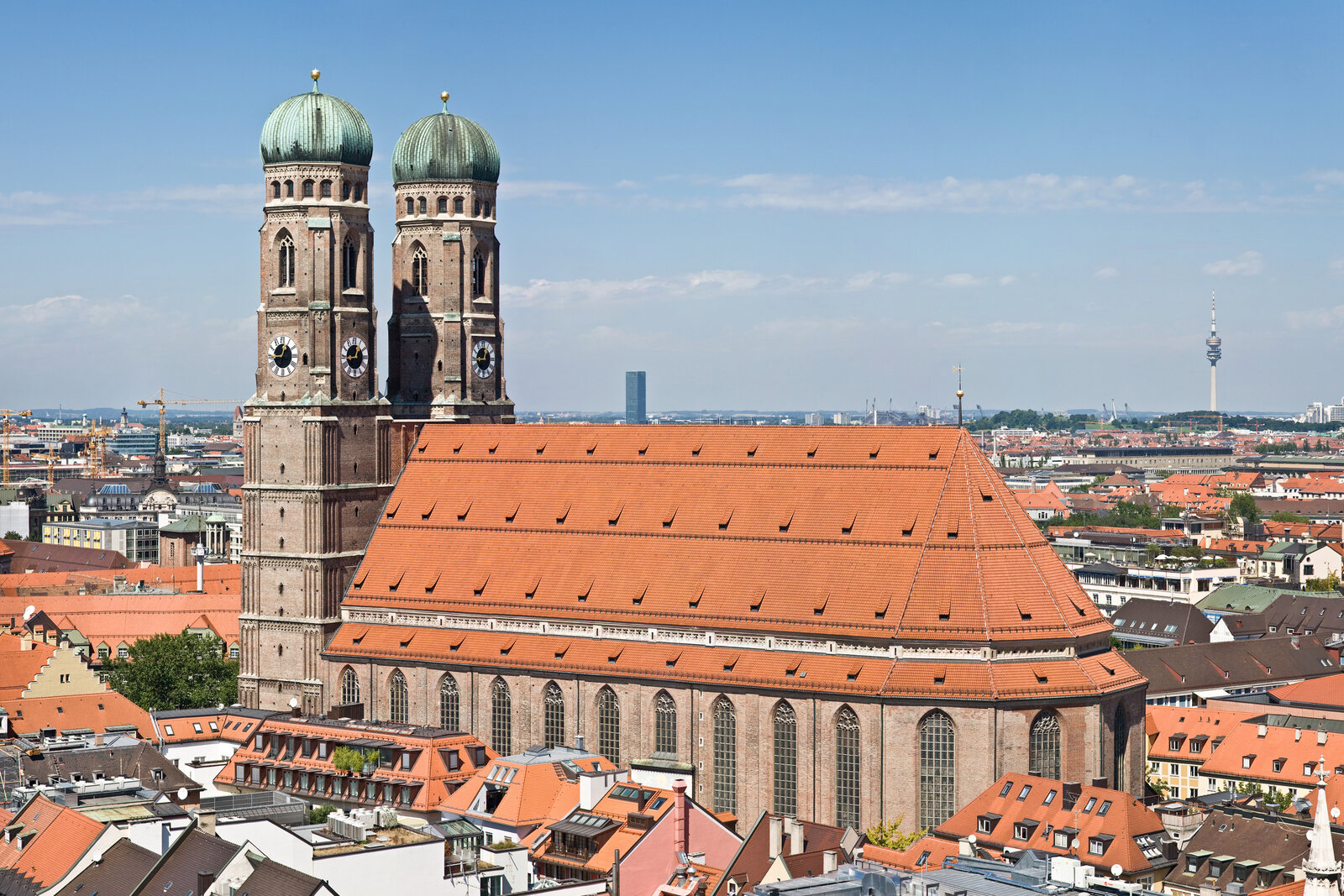
Look around first
What to notice
- Two towers
- Net vaults
- Two plaques by the southeastern portal
The story of the place
Behind the two towers, the life of a parish church continues, where the Archbishop of Munich and Freising officiates at the same time. The dedication to Mary survives in the familiar name Frauenkirche. The large brick body was once raised around a dilapidated earlier church without interrupting services. By the southeastern portal, two plaques preserve on the wall the memory of the beginning of this construction.
In the spring of fourteen eighty, more than sixty-five thousand pilgrims came to the unfinished Munich church. A closely guarded chest stood near the choir. Each pilgrim first confessed and received Communion, then placed in the chest no less than the amount that would have provided a week's sustenance.
The pilgrims were promised a plenary indulgence—the remission of temporal punishment for sins already forgiven after confession. The indulgence did not replace repentance and did not permit further sin. According to Catholic teaching, a person had to be cleansed of the consequences of sin during life or after death. To shorten this cleansing, the person gave the money on which they were meant to live for a week.
The collection began because of a decision made here twelve years earlier. The former parish church had fallen into disrepair. Duke Sigismund of the House of Wittelsbach, which ruled Bavaria, sought a large new church and a college of clergy attached to it. In fourteen sixty-eight, he laid the first stone, and the city entrusted the work to its master stonemason, Jörg von Halsbach. New brick walls began to rise around the old church, where services were still being held.
By fourteen seventy-nine, Jörg had raised the main body, but there was no money left for the vaults. City envoys went to Rome and persuaded Pope Sixtus IV to support the construction. A papal letter promised an indulgence to those who, during a specified week of Lent, visited the church, confessed, received Communion, and contributed the cost of a week's maintenance.
For the first such collection, the church book counted nine thousand three hundred seventy-six Rhenish guilders. After mandatory payments and expenses, the funds were still insufficient, so pilgrims were received again. Only after the final accounting in October fourteen eighty-two were the builders permitted to begin the vaults. Six years later, Jörg brought the church to completion, except for the coverings of the towers.
The church was dedicated to the Virgin Mary. From the full German name, “Cathedral of Our Lady,” the familiar name Frauenkirche remained: the church of the Mother of God. It became a cathedral much later. When a principal church was chosen for the new Archdiocese of Munich and Freising in eighteen twenty-one, three city churches were considered. Frauenkirche was preferred because of its size, accumulated donations, and numerous clergy. The archbishop now officiates here, although it remains a parish church at the same time.
Two plaques by the southeastern portal mark the laying of the first stone. The medieval vaults were destroyed during the bombings of the Second World War; the present ones repeat their netlike pattern. This pattern first closed over the naves after pilgrims had placed in the guarded chest money for their own week's sustenance.
Useful on site
From outside, the cathedral's scale and material are clearly visible. The footprint and the perspective of the columns are inside; postpone your visit during a service, and plan the climb and other special visits separately.