 Guide On Map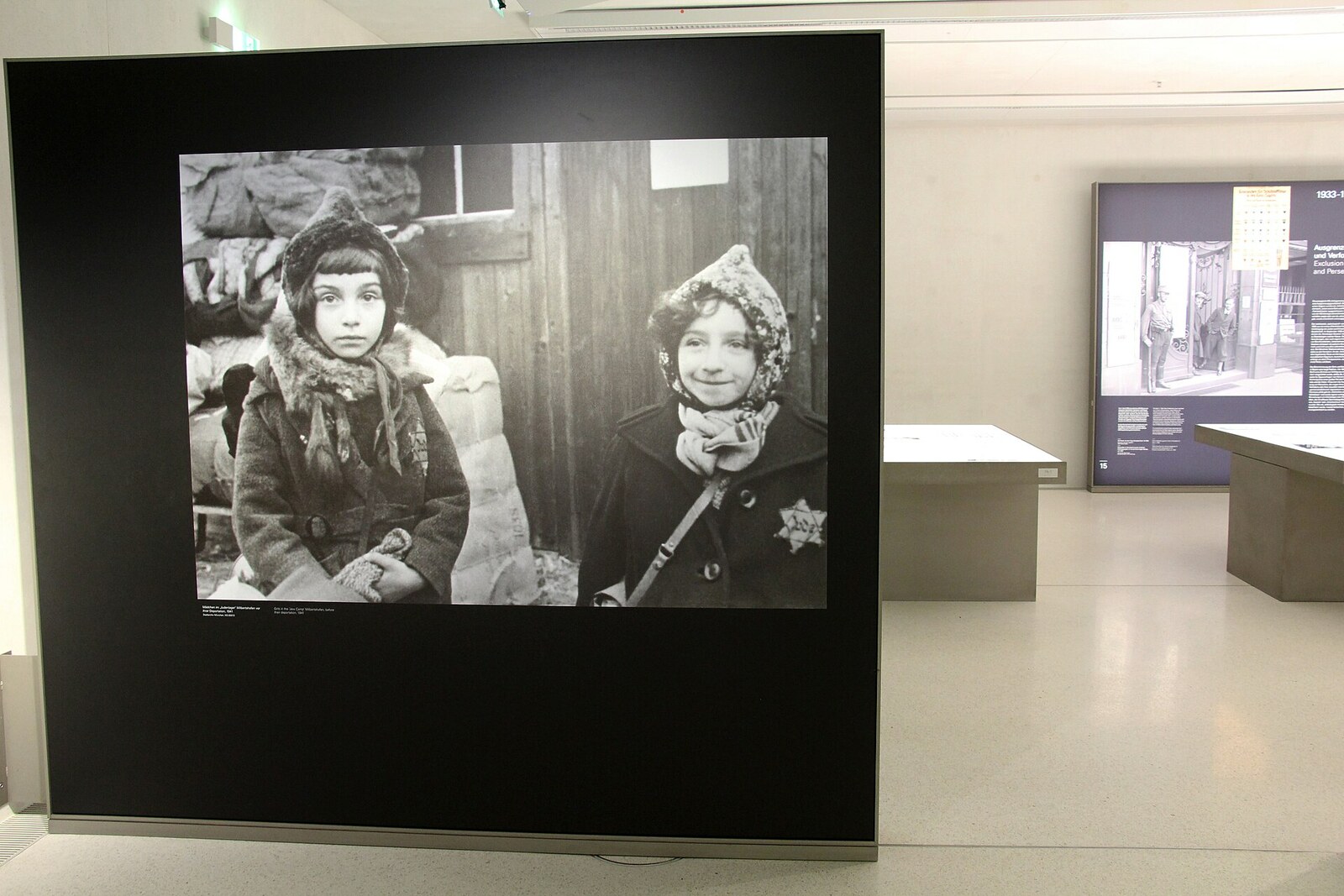
Look around first
What to notice
- White façades
- Königsplatz before the windows
The story of the place
The white façades stand right beside Königsplatz, where there was once a private palace, later given over to the headquarters of the National Socialist German Workers' Party (NSDAP). In its offices, archives, and party card index, the organization’s work and the command of its street units came together, while political opponents were held and tortured in the basement. The war left the house in ruins, and then the basement walls, documented before construction, disappeared as well. The present center occupies the same site and uses documents to examine how the National Socialist German Workers' Party (NSDAP) took shape in Munich, how its terror operated, and what became of those it persecuted.
At about ten in the morning on June thirtieth, nineteen thirty-four, Adolf Hitler arrived at the Brown House, which stood here. The leader of the National Socialist German Workers' Party (NSDAP) had returned from the resort town of Bad Wiessee, where he had personally arrested his longtime associate Ernst Röhm. Now, at the Munich headquarters, he was to appoint Röhm’s successor and continue the purge.
Four years earlier, the house had been the private palace of the Barlow family. Hitler decided that the rapidly growing National Socialist German Workers' Party (NSDAP) needed a prestigious headquarters near Königsplatz. The money for the purchase was raised through a special levy on party members, admission fees for Hitler’s speeches, and loans from major industrialists. In January nineteen thirty-one, the party moved in here. Because of the brown uniforms of its paramilitary units, the building was given the name Brown House.
This was the organization’s working center. Hitler’s offices, the party press, the archive, the court, and the membership card index were located here. The leadership of the Sturmabteilung (SA)—the storm detachments that beat up opponents and helped the National Socialist German Workers' Party (NSDAP) take control of the streets—was housed in this same building, along with the leadership of the Schutzstaffel (SS), then still a guard organization subordinate to the Sturmabteilung (SA). After the National Socialists came to state leadership, political opponents were held and tortured in the basement.
By the summer of nineteen thirty-four, Ernst Röhm commanded almost three million stormtroopers and sought to have the Sturmabteilung (SA) absorb the one-hundred-thousand-strong professional army. Hitler needed the generals’ support in order to rearm the country. Heinrich Himmler, head of the Schutzstaffel (SS), and Hermann Göring, head of the Prussian government, urged him to remove Röhm. They spread reports of a planned mutiny, although Röhm and his commanders were not planning a coup.
After the arrests in Bad Wiessee, Hitler arrived at the Brown House. Here he put the obedient Viktor Lutze in charge of the Sturmabteilung (SA) and ordered Hermann Göring to continue the operation in northern Germany. Six Sturmabteilung (SA) commanders were shot that same day at Munich’s Stadelheim Prison. Röhm was given a pistol and offered the chance to kill himself. He refused, and on July first he was shot in his cell. In all, about one hundred people were killed in just a few days; among them were Sturmabteilung (SA) leaders and Hitler’s longtime political rivals.
Lutze received Röhm’s post, but the stormtroopers were never given back their former influence. On July twentieth, Hitler removed the Schutzstaffel (SS) from the authority of the Sturmabteilung (SA). Himmler’s men began taking control of the political police and the concentration camp system.
The Brown House was almost completely destroyed by bombing in January nineteen forty-five. Two years later, the remains of the building were dismantled. Before the center was built, workers found the basement walls, documented their location, and demolished them as well. In May nineteen fifteen, the Documentation Centre for the History of National Socialism opened on the same site. Its permanent exhibition examines the emergence of the National Socialist German Workers' Party (NSDAP) in Munich, the actions of the organizers of terror, and the fates of the people they persecuted. The office where Viktor Lutze was appointed Röhm’s successor and the basement where prisoners were tortured are gone: the white building occupies their exact site.
Useful on site
A city route stop; if you plan to go inside, check the schedule and visiting rules on the venue’s official website.
Checked: date not specified. Check the official source before visiting.First, walk around the cube outside and compare it with the surrounding buildings. Set aside a separate visit for the documentary exhibition.