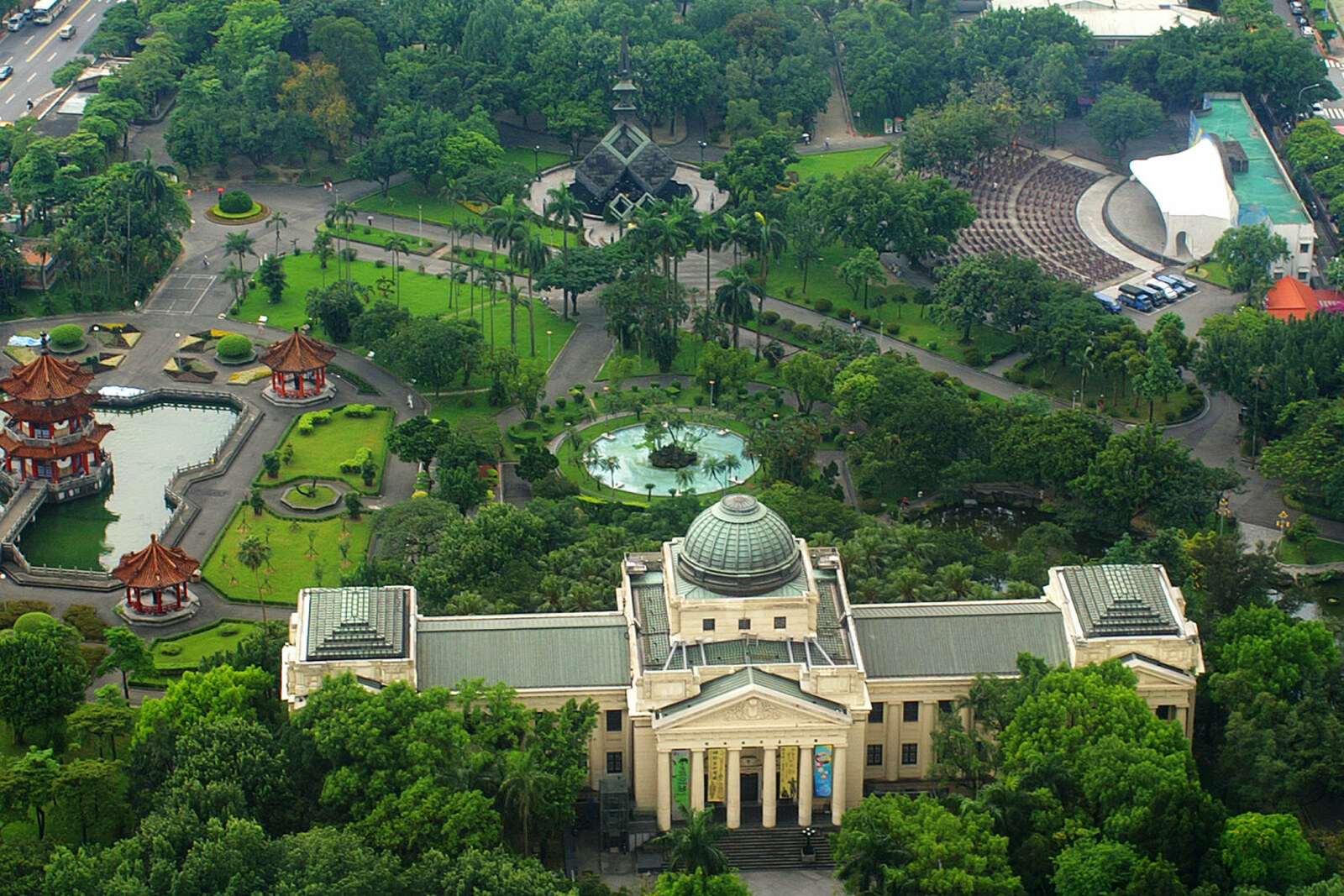
- 228 Peace Memorial Park: story on the “Central Taipei: Power and Memory” route
The park will link a familiar date to the place from which city residents tried to speak to the whole island.
- A.S. Watson & Co. Building: story on the “Dadaocheng: Dihua Street and River Trade” route
The surviving emblem makes it possible to read a dispute on the façade between the supplier, the owner, and his former apprentice.
- Bopiliao Historic Block: story on the “Mengjia and Ximending: Old West Taipei” route
It will explain why one row of shop houses acquired two street-facing sides.
- Dadaocheng Theater: story on the “Dadaocheng: Dihua Street and River Trade” route
This stop shows how stagecraft had to be broken down into lessons in order to pass it on to people outside the troupe.
- Dadaocheng Wharf: story on the “Dadaocheng: Dihua Street and River Trade” route
The finale will connect the route’s houses and warehouses with the trade wager that brought Formosa Oolong onto the American market.
- Jingfu Gate: story on the “Central Taipei: Power and Memory” route
The gate will help distinguish the nineteenth-century stone structure from the twentieth-century superstructure.
- Koo's Dadaocheng Residence: story on the “Dadaocheng: Dihua Street and River Trade” route
This stop connects the family's fortune in salt with the kindergarten and choir that took over the empty house.
- Longshan Temple: story on the “Mengjia and Ximending: Old West Taipei” route
Here you will see why the shrine was, for settlers, a place of prayer, judgment, and mutual aid all at once.
- National Chiang Kai-shek Memorial Hall and Liberty Square: story on the “Central Taipei: Power and Memory” route
The finale will bring together architecture, ceremony, and the monumental image of power in one square.
- National Taiwan Museum: story on the “Central Taipei: Power and Memory” route
This stop poses the route’s central question: what happens to a monument when power changes.
- National Theater and National Concert Hall: story on the “Central Taipei: Power and Memory” route
The pair of halls serves to move from the state memorial to the stage and a personal return.
- North Gate (Cheng'en Gate): story on the “Mengjia and Ximending: Old West Taipei” route
The route ends at the only city gate to preserve its Qing-era appearance.
- Pedestrian Ximending: story on the “Mengjia and Ximending: Old West Taipei” route
It will show that the pedestrian district emerged after a long experiment that initially failed to bring the expected result.
- Presidential Office Building: story on the “Central Taipei: Power and Memory” route
The building shows how postwar reconstruction prepared a new center of government.
- Qingshan Temple: story on the “Mengjia and Ximending: Old West Taipei” route
Adds to Mengjia a community temple that sought protection during an epidemic.
- Taipei 228 Memorial Museum: story on the “Central Taipei: Power and Memory” route
The former radio station will show the price of one voice and the long life of a person after an arrest.
- Ten Consecutive Buildings: story on the “Dadaocheng: Dihua Street and River Trade” route
Here, the vanished route of goods from riverboats through family-run production to street stalls will come into view.
- The Red House: story on the “Mengjia and Ximending: Old West Taipei” route
It links the former municipal market with the theatrical and cinematic life of Ximending.
- Xiahai City God Temple: story on the “Dadaocheng: Dihua Street and River Trade” route
Here, the shared shrine of migrant merchants will be joined by personal pleas for marriage.
- Xiyuan Road–Buddhist Article Street: story on the “Mengjia and Ximending: Old West Taipei” route
It shows how steady demand from the temple turned a family craft into the specialization of an entire street.
- Yongle Market: story on the “Dadaocheng: Dihua Street and River Trade” route
The story of one apprentice will show how the trade in fabric rolls became help for those who cannot find what they need among ready-made goods.
- Zhongshan Hall: story on the “Mengjia and Ximending: Old West Taipei” route
It explains why the former public hall received a new name after a fifteen-minute ceremony.
Nearest audio-route stop: 228 Peace Memorial Park — 20 m in a straight line, route Central Taipei: Power and Memory
Nearest audio-route stop: Presidential Office Building — 70 m in a straight line, route Central Taipei: Power and Memory
Nearest audio-route stop: Longshan Temple — 50 m in a straight line, route Mengjia and Ximending: Old West Taipei
Nearest audio-route stop: Xiyuan Road–Buddhist Article Street — 100 m in a straight line, route Mengjia and Ximending: Old West Taipei
Nearest audio-route stop: Bopiliao Historic Block — 10 m in a straight line, route Mengjia and Ximending: Old West Taipei
Nearest audio-route stop: Xiahai City God Temple — 10 m in a straight line, route Dadaocheng: Dihua Street and River Trade
Nearest audio-route stop: Jingfu Gate — 110 m in a straight line, route Central Taipei: Power and Memory
Nearest audio-route stop: A.S. Watson & Co. Building — 140 m in a straight line, route Dadaocheng: Dihua Street and River Trade
Nearest audio-route stop: National Chiang Kai-shek Memorial Hall and Liberty Square — 30 m in a straight line, route Central Taipei: Power and Memory
Nearest audio-route stop: 228 Peace Memorial Park — 70 m in a straight line, route Central Taipei: Power and Memory
Nearest audio-route stop: 228 Peace Memorial Park — 80 m in a straight line, route Central Taipei: Power and Memory
Nearest audio-route stop: The Red House — 90 m in a straight line, route Mengjia and Ximending: Old West Taipei
 Guide On Map