 Guide On Map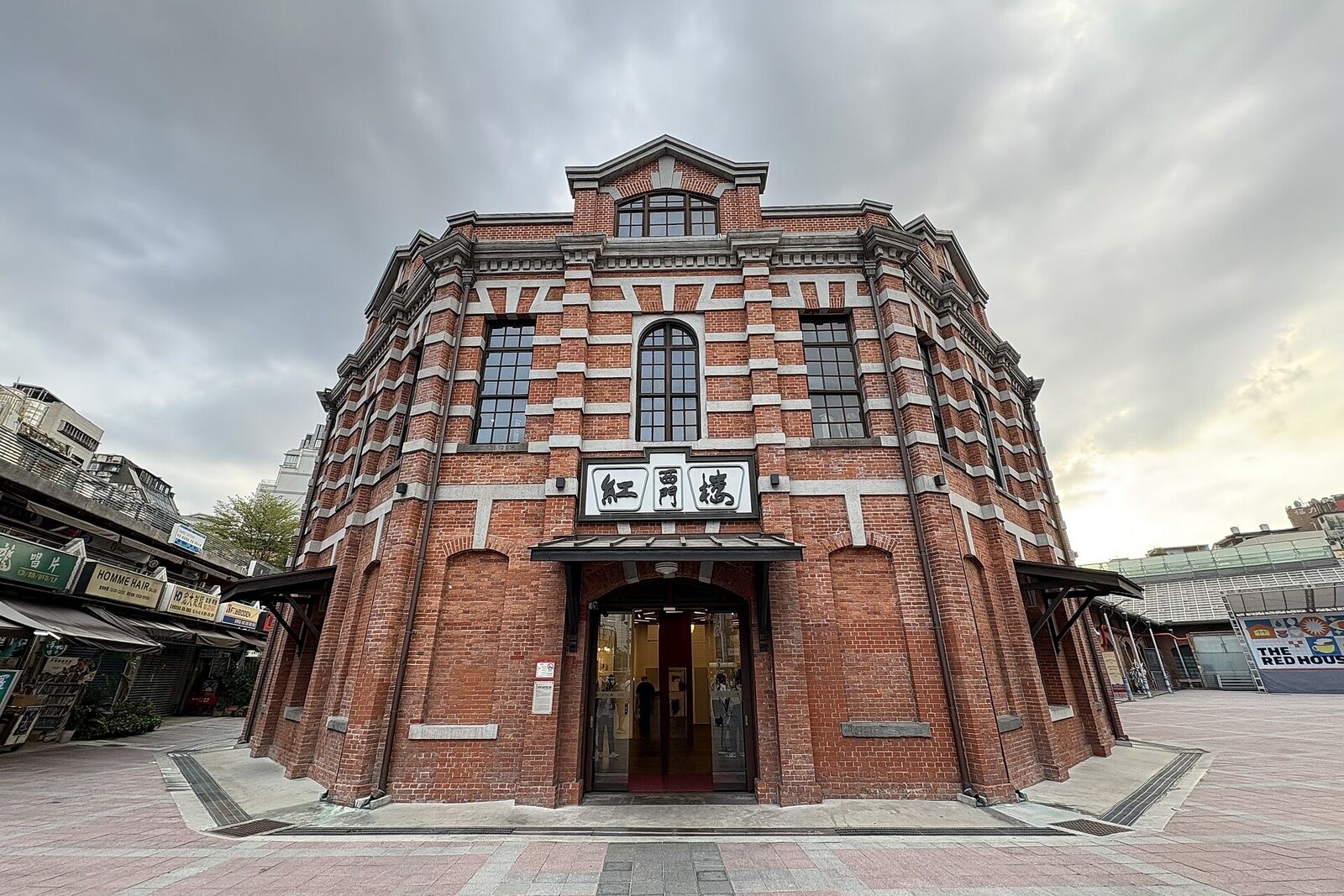
Look around first
What to notice
- The red-brick octagonal building
- The cross-shaped building
- The second-floor stage
- Small retail workshops
The story of the place
The octagonal red-brick building served as the entrance section of a model municipal market designed by Kondo Juro at the beginning of the last century. The two-story premises were given over to books, haberdashery, and other dry goods, while vegetables, meat, and fish were sold in the connected cross-shaped building. The market is gone, but the building plan preserves the former division: the brick building now contains an exhibition and shops of Taiwanese designers, while small retail workshops operate in the cross-shaped building.
On March fourteenth, nineteen forty-nine, the Shanghai entrepreneur Chen Huiwen opened the Huyuan Theater—“Shanghai Garden”—in this octagonal building. Chen rented the premises to earn money from performances for recent arrivals from the mainland. He invited Shanghai performers onto the stage: Peking opera, popular songs, and spoken acts were performed here. Audiences were offered something like the Shanghai tea theater they missed in their new city.
For this venture, Chen chose a former market hall. In nineteen oh eight, the architect Kondo Juro built the entrance section of a model municipal market here. The octagonal building sold haberdashery, books, and other dry goods, while vegetables, meat, and fish were sold in the adjoining cross-shaped building. After the war, the former market clientele disappeared, but the vacant two-story hall stood in the middle of an established entertainment district. Chen set up a stage inside and installed more than three hundred seats.
The first opening ended as early as October. Officials judged part of the repertoire to be “yellow songs,” meaning indecent popular entertainment, and ordered the theater closed. In December, Chen brought back performances under the name People's Theater, making Peking and Yue—meaning Cantonese—opera the foundation of the program. Magic tricks, storytellers' tales, xiangsheng—comic dialogues by two performers—and farces then appeared here. In nineteen fifty-one, the hall was named Red House Storytellers' House: “red” referred to the brick walls, while “storytellers' house” directly stated what audiences paid for.
By the middle of the decade, it was already a professional theater with permanent troupes. For performers who had left their former theatrical milieu, it provided work and an audience; for Chen, it remained a commercial venture. Officially, he was listed as the theater's director and headed the city's hairdressers' association. At the same time, Chen belonged to the Shanghai Green Gang. In nineteen fifty-eight, he was arrested as a member of a criminal organization and sent to one of the outer islands for forced reeducation and vocational training. He lost both his freedom and the theater, but the stage he had created continued operating without him.
In nineteen sixty-three, new managers adapted the hall for use as a movie theater and shortened the name to The Red House. The first floor is now occupied by an exhibition and shops of Taiwanese designers, while the second has again been given over to performances. Chen's arrangement with more than three hundred seats has not survived: the present hall holds about two hundred spectators. Behind it remains the cross-shaped building of the former market, where small retail workshops once again stand.
Useful on site
Tuesday–Thursday 11:00–20:00, Friday 11:00–21:00, Saturday 11:00–22:00, Sunday 11:00–21:00; closed Monday. Weekend market: Saturday 14:00–22:00, Sunday 14:00–21:30.
Checked: date not specified. Check the official source before visiting.First, take in the building's shape from the square. Treat the exhibitions, performances, and events inside as a separate program whose availability is worth checking in advance.