 Guide On Map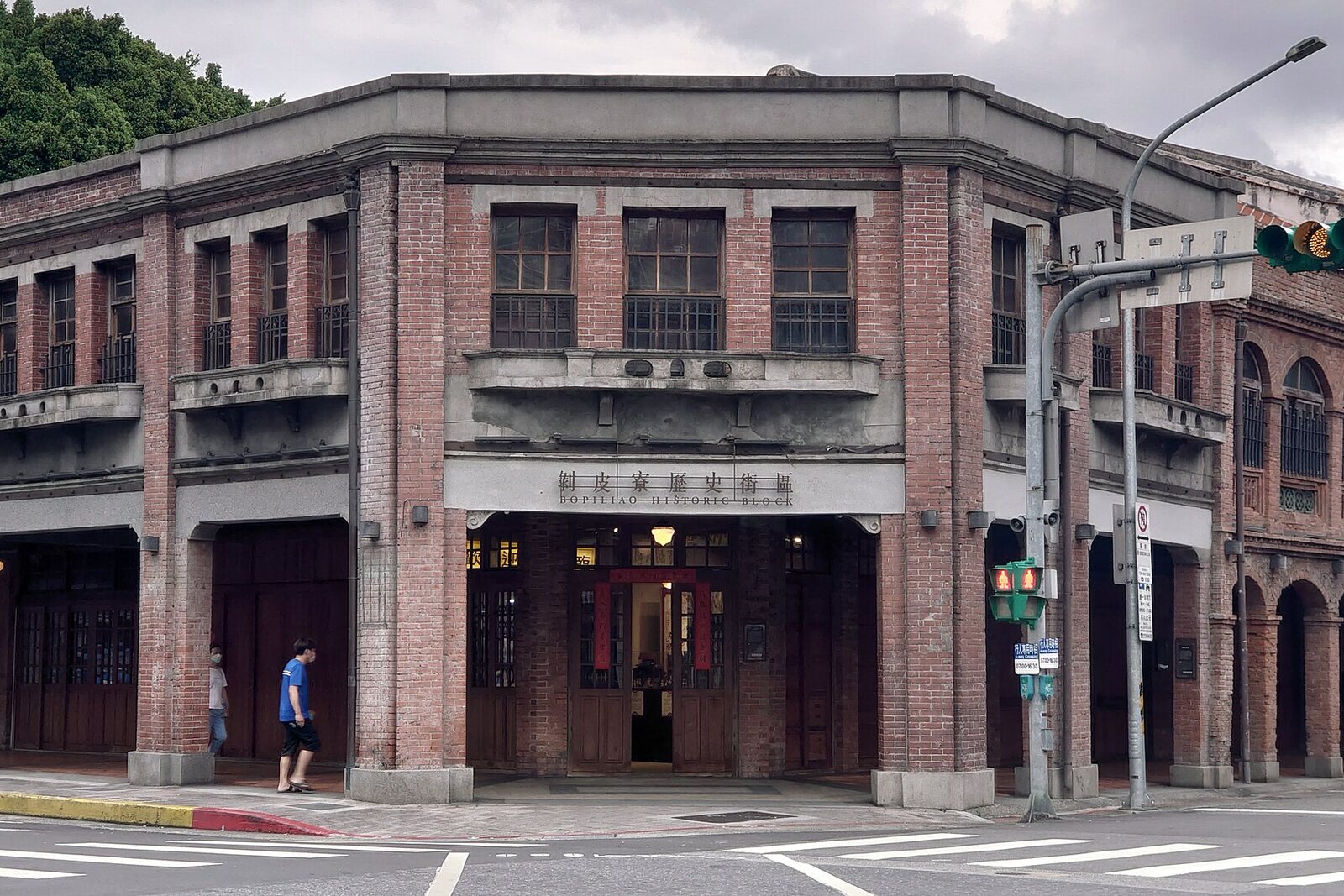
Look around first
What to notice
- Red-brick facades
- Arcades facing Guangzhou Street
- Doors on the Kangding Road side
- The Chinese character of the Song surname
The story of the place
Under the arcades along Guangzhou Street runs a row of narrow shop houses stretching deep into the block. When Kangding Road was the road between Mengjia and Guting, rice, coal, grocery, and tea shops operated here. Goods were sold in the front room, and the family lived behind it or one floor above. Later, the block was spared major redevelopment, and after restoration the former shops became a place for exhibitions and classes on the city's history.
Bopiliao's red-brick facades face present-day Guangzhou Street, but the original entrances to these same houses are on the other side—in the narrow, winding Kangding Road. The shop owners once turned their businesses around by one hundred eighty degrees so as not to be left without customers.
Until the beginning of the twentieth century, the lane was part of the road between Mengjia and the settlement of Guting. Goods were carried along it to the markets of Mengjia. Rice merchants, coal dealers, grocers, and tea-house owners lived along the route. Their houses were built long and narrow: goods were sold in the front room, while the family lived at the back or upstairs. Their income depended on the people passing the door.
Then officials of the Japanese colonial administration began straightening Taipei's streets. They laid out broad roads on a rectangular grid, including present-day Guangzhou Street. Customers and carts moved there, and the former shopping street was left off to one side.
The owners of the southern row of houses moved their main entrances to Guangzhou Street and built brick facades with arcades on the side facing the new road. In some especially deep buildings, people divided the space with a wall into two shops, leaving an inner courtyard between them. The former entrances became back doors, and the main street turned into a lane.
The new facades were meant for trade, not decoration. In the morning, wooden door panels were removed and used as tables and shelves for goods. At the Song family's grain shop, the owners placed the Chinese character of their surname above; milling machines remain inside. By moving their shop windows toward the new flow of customers, the merchants were able to continue their business, although the old side of their houses had lost its former traffic.
The name Bopiliao itself does not prove that bark was stripped or hides were tanned here. In old contracts, it was written in different ways: Beipiliao, Fupiliao, Fudiliao. Researchers consider the gradual change in local pronunciation the most convincing explanation; stories about workshops that processed bark and leather remain versions.
In nineteen forty-one, the block was set aside for the expansion of neighboring Lao Song Elementary School. Residents were forbidden to make major alterations to the houses, and this restriction inadvertently preserved the old layout. After restoration, the block opened to the public in two thousand nine. Exhibitions and classes on the history of Taipei now take place in the former shops.
One row of houses still has two commercial sides: the arcades face Guangzhou Street, while behind them, on Kangding Road, remain the doors of the street that was main before the shops were turned around.
Useful on site
Tuesday–Sunday: outdoor spaces 09:00–21:00, indoor spaces 09:00–18:00; closed Monday. Changes are possible because of bad weather or city orders.
Checked: date not specified. Check the official source before visiting.Do not limit yourself to individual facades: walk the entire lane and compare its two sides. Even when the interiors are closed, the main story can still be read from outside.