 Guide On Map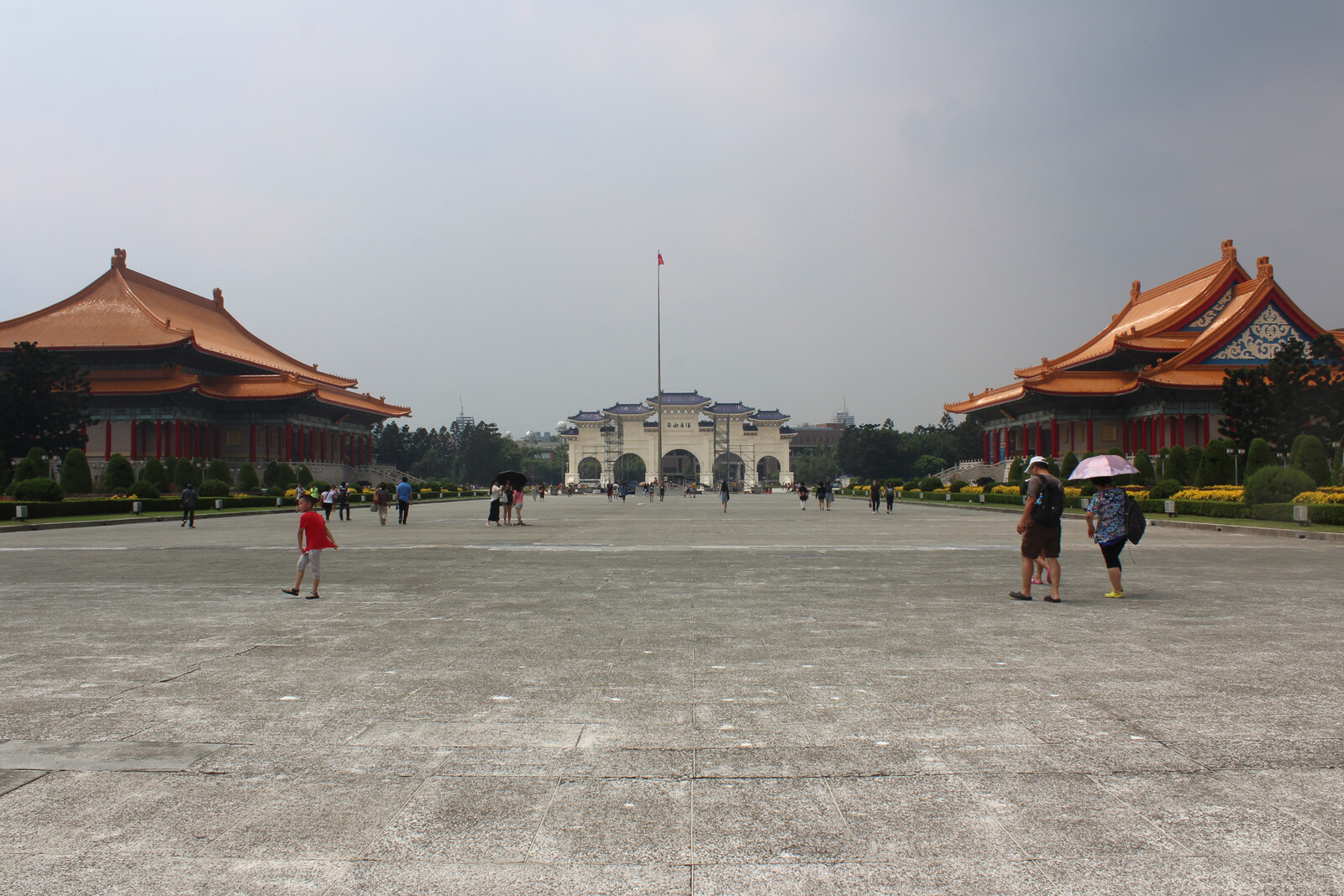
Look around first
What to notice
- Two palace-like pavilions
- The red columns of the National Theater
- Stages in the buildings opposite each other
- The concert hall's organ pipes
The story of the place
Two palace-like pavilions stand opposite one another, and the theater's red columns mark the entrance to one of them. They were erected as part of the memorial complex on a site that had previously housed military institutions and was later intended for a business center. Modern technology lies behind their traditional appearance: one building hosts theater, opera, and dance, while the other is designed for orchestral and chamber music. Mounted behind the National Concert Hall's stage is a mechanical organ made for the National Concert Hall, with four thousand one hundred seventy-two pipes.
On October thirty-first, nineteen eighty-seven, the side doors of the stages in the two buildings swung open at the same time. In each hall, a gong sounded three times. At the National Theater, the leading role was performed by Koo Cheng-chiu, a star of Peking opera who was about to return to the main stage after thirty-four years away from the profession.
She arrived in Taipei at the age of twenty, in nineteen forty-eight. Her own troupe had been invited from Shanghai for two months of performances at the Yongle Theatre. The shows sold well, the contract was extended, and then the civil war cut off the performers' route back. Dozens of actors and their relatives settled directly in the theater building. When the previous tenant gave up the venue, Koo Cheng-chiu arranged with the owner to share the proceeds and continued performing: for almost five years, ticket sales paid for food and housing for the entire troupe.
In nineteen fifty-three, she married, dissolved the troupe, and left the professional stage. The actors scattered among other troupes and taught the next generation of performers. Koo herself appeared only at rare charity and ceremonial performances.
For the opening of the National Theater, the organizers invited her specifically. Koo Cheng-chiu played Cai Wenji in the production New Return of Wenji to Han. After a long separation, the play's heroine is bought back from the Xiongnu and returned to her homeland, but to do so she must leave her children behind. That same evening, in the building opposite, the National Concert Hall, a choral symphonic poem was performed. The two simultaneous performances explained the purpose of the pair better than any plaque: one stage was intended for theater, opera, and dance, the other for orchestral and chamber music.
Both halls were built as the second part of the memorial complex. Military institutions had stood here before, and then the site was to be turned into a business center. After Chiang Kai-shek's death, the plan changed, and two palace-like pavilions with modern stage and acoustic equipment were erected for future performances. A mechanical organ made especially for the concert hall was installed there; its four thousand one hundred seventy-two pipes are still mounted behind the stage.
The opening did not bring Koo Cheng-chiu back to daily performances. That same year, she received the National Award for Arts for her special contribution, later recorded ten operas for television, and preserved her roles on music albums. The old Yongle Theatre, where her performances fed the troupe stranded in Taipei, has been demolished. The grand hall for which she stepped onto the stage once more stands behind the red columns of the National Theater.
Useful on site
Visitor services and open areas of the cultural center are usually listed as daily 12:00—20:00; access to the halls depends on events and tickets. The surrounding square functions as part of the memorial park.
Checked: June 29, 2026. Check the official source before visiting.From outside, the ensemble's state staging is easy to read. The organ and the layout of the halls are accessible only with separate entry; do not expect to see them during an ordinary visit to the square.