 Guide On Map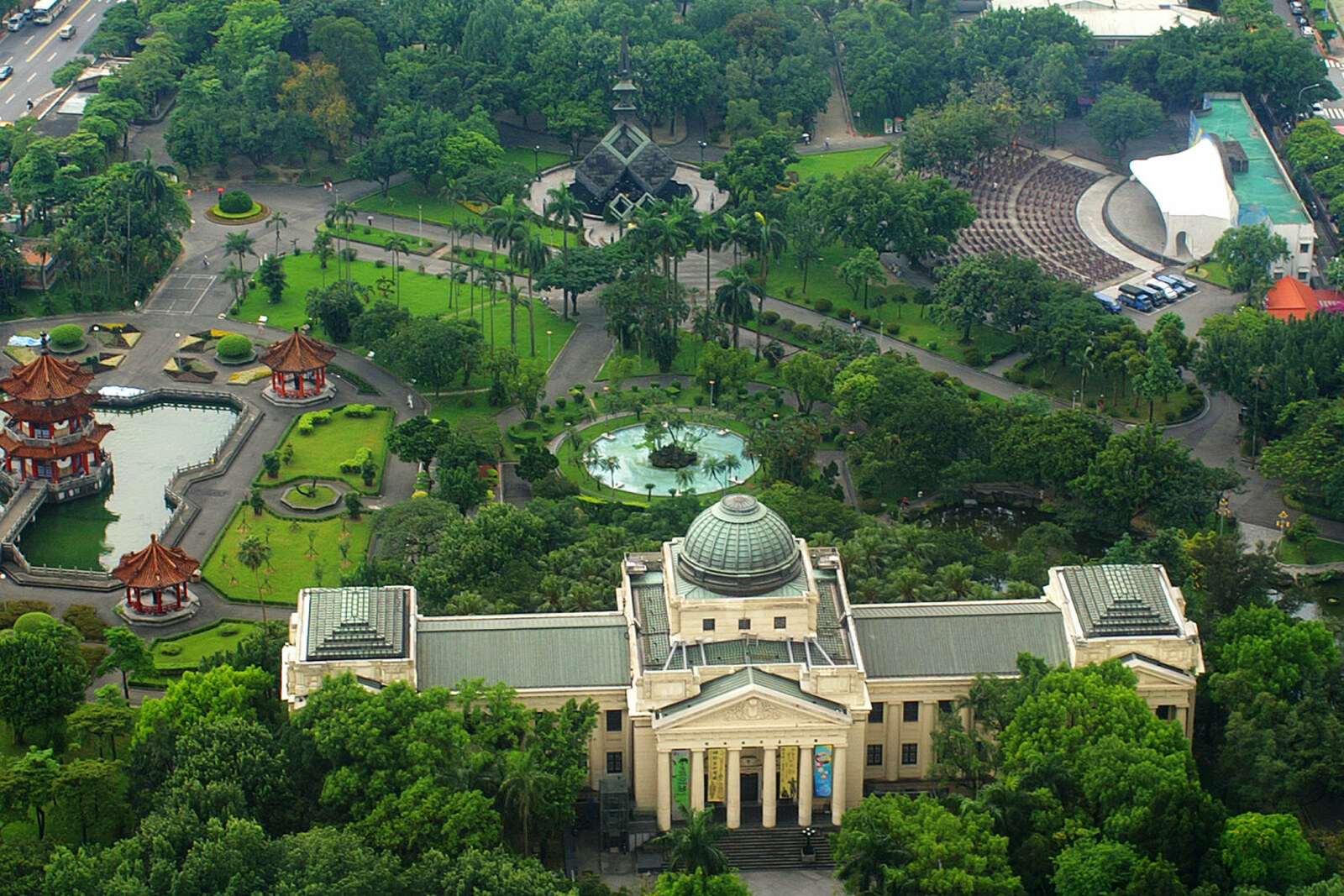
Look around first
What to notice
- Park paths
- 228 Memorial
- Building of the former Taiwan Broadcasting Station
The story of the place
Among the park paths stands the building of the former Taiwan Broadcasting Station. The radio studio inside the park made it possible to speak to many listeners at once, and these walls now house the Taipei 228 Memorial Museum. The park itself was renamed in memory of those who died, and its name preserves the date February twenty-eighth.
On March seventh, nineteen forty-seven, Wang Tian-deng entered the radio station in the middle of what was then New Park. He was a provincial representative and led the information group of the 228 Incident Settlement Committee: the committee sought an end to the violence and reforms from Taiwan’s administration. Wang made his living exporting tea; his trading company had branches beyond the island. He had something to lose when he sat down before the microphone.
Japanese rule over Taiwan had ended two years earlier. The island had passed under the administration of the Republic of China, and Chen Yi headed its administration. Residents faced inflation, shortages, state monopolies, corruption, and access to senior posts that was almost closed to Taiwanese people.
The spark was the fate of Lin Jiang-mai, a forty-year-old widow who sold cigarettes. On the evening of February twenty-seventh, agents of the tobacco monopoly took her goods and money. The woman asked them to return at least part of them; otherwise, she had no money to buy food. One of the agents struck her on the head with a pistol, and as he retreated, his colleague fired into the crowd and fatally wounded a random passerby.
The next day, residents demanded that the shooter be handed over and those responsible punished. When the procession approached the provincial administration building, the guards opened fire. At around two in the afternoon, part of the crowd came to New Park. The paths did not bring people here: inside the park stood the Taiwan Broadcasting Station, from which it was possible to address many listeners at once.
The participants took over the studio and went on the air. They reported the beating of the cigarette seller, the killing of the passerby, and the shooting at the administration building; they accused officials of corruption and of taking food off the island. The broadcast was addressed to the whole island. Sources disagree over whether the relay station carried the signal beyond Taipei; what is beyond dispute is that it was here that city residents first tried to turn a local clash into an island-wide message. Demonstrations soon began in other cities as well.
On March first, representatives of the city residents created the 228 Incident Settlement Committee. Chen Yi agreed to negotiate with it and addressed the public on the radio himself. At the same time, he asked Chiang Kai-shek, chairman of the national government, to send troops to suppress the demonstrations.
Wang Tian-deng took part in the negotiations and drew up thirty-two demands. Committee members added another ten: they proposed abolishing unpopular monopolies, guaranteeing freedom of speech and assembly, and expanding Taiwanese participation in governing the island. When Chen Yi rejected the program, Wang came to the radio station in New Park and announced this on the air.
On March eighth, the 21st Division landed in Keelung. Soldiers began mass shootings and arrests. On March tenth, Chen Yi dissolved the committee. On the following morning, people who identified themselves as employees of the 4th Military Police Regiment took Wang Tian-deng from his home. He was killed.
In nineteen ninety-six, New Park was renamed in memory of those who died. “228” in its name is the date, February twenty-eighth. The building from which Wang Tian-deng broadcast his demands four days before his arrest has survived: it now houses the Taipei 228 Memorial Museum.
Useful on site
Open around the clock, free entry; individual museum buildings inside the park operate on their own schedules.
Checked: June 29, 2026. Check the official source before visiting.Do not hurry straight to the next building: leave time to read the inscriptions and examine the different layers of remembrance. It is better to listen to the discussion of state violence without filming at the same time.