 Guide On Map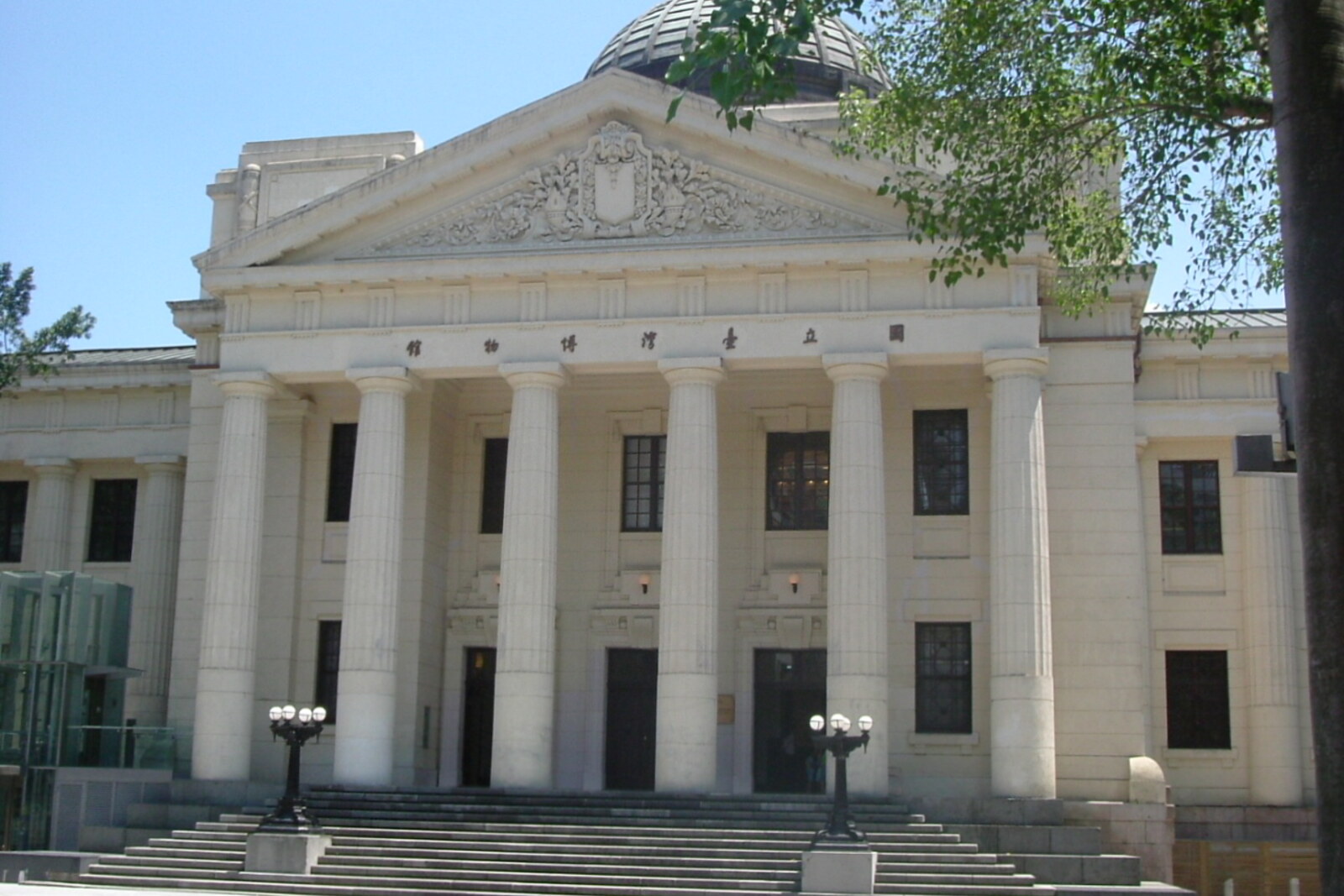
Look around first
What to notice
- The dome
- The marble staircase
- Corinthian columns
- Stained-glass windows with bamboo and wisteria
The story of the place
The current halls contain displays about Taiwan’s nature and the island’s cultures. The occasion for the first gathering was an exhibition for the opening of the railway on the western coast: specimens from nature and objects from the lives of different local communities were collected for it, and the collection was then preserved. The side wings were too cramped for it from the first days, so part of the basement was set aside for exhibits; above them is a high hall with a marble staircase and thirty-two Corinthian columns. The facade faces the edge of former New Park, toward the road to the station square, while bamboo and wisteria recur in the stained-glass windows and lamps.
On April eighteenth, nineteen fifteen, around six hundred officials and invited guests gathered beneath this dome. The ceremony was dedicated to two men whose bronze figures already stood in the niches of the grand hall.
Kodama Gentarō was the Japanese Governor-General of Taiwan and sought to consolidate the island’s colonial administration after its conquest. His closest assistant, Gotō Shinpei, a physician and head of the civil administration, worked to ensure that officials first documented the territory they had acquired: they conducted a population census, measured and registered land, studied local customs, reorganized taxes and public health services. The information they obtained made it possible to collect revenue and control the inhabitants more precisely. Kodama held posts in Japan at the same time and was often absent, so Gotō largely directed the day-to-day reforms.
In nineteen six, Kodama left office and soon died, while Gotō departed to head the South Manchuria Railway Company. Their supporters decided to leave a large commemorative building in Taipei. A newspaper supporting the plan compared the future memorial to the Arc de Triomphe in Paris. The organizers considered public spending on such an honor inappropriate and began collecting donations. Koo Hsien-jung, one of Taiwan’s wealthiest entrepreneurs, was chosen as the committee’s vice chairman: they expected money, connections, and the participation of the local elite from him.
The northern edge of what was then New Park—today’s 228 Peace Memorial Park—was set aside for construction. The facade faces the road that led directly to Taihoku station square, as the Japanese administration called Taipei. Work began in nineteen thirteen, and two years later Koo Hsien-jung delivered a laudatory poem in honor of Kodama and Gotō at the opening.
Yet the new memorial housed an institution that had arisen before it. In nineteen eight, the field researcher Mori Ushinosuke was preparing an exhibition for the opening of the railway along the island’s western coast. More than ten thousand minerals, plants, animals, economic specimens, and objects from the lives of Taiwan’s various peoples were collected for it. Mori explicitly called the railway celebrations the museum’s sole reason for coming into being. It was decided to preserve the temporary exhibition, and after the memorial was completed, it was moved here. The committee transferred the building to the Governor-General’s Office, and museum displays opened in the side halls in August nineteen fifteen. This is how Taiwan’s oldest operating museum came into being, devoted to the island’s nature and cultures.
The dimensions of the rooms still reveal the original plan. The grand hall was given a dome, a marble staircase, and thirty-two Corinthian columns, while the exhibition wings proved so cramped that staff immediately filled part of the basement with exhibits. The stained-glass windows and lamps repeat the family emblems of the men to whom the building was dedicated: Kodama’s military fan with five bamboo leaves and Gotō’s hanging wisteria.
After nineteen forty-five, both bronze statues were removed from the places intended for them. Large vases now stand in the niches, the emblems remain beneath the dome, and the figures of Kodama and Gotō were not destroyed: they were entered into the museum catalogue and put into storage. The people for whom this hall was built became its exhibits themselves.
Useful on site
Tuesday—Sunday 09:30—17:00; ticket office 09:30—16:30; closed Monday, Lunar New Year’s Eve, and the first day of the Lunar New Year. Regular ticket — 30 New Taiwan dollars.
Checked: June 29, 2026. Check the official source before visiting.Even without entering, this stop works from the facade. If you go inside, distinguish the content of the current displays from the building’s original purpose.