 Guide On Map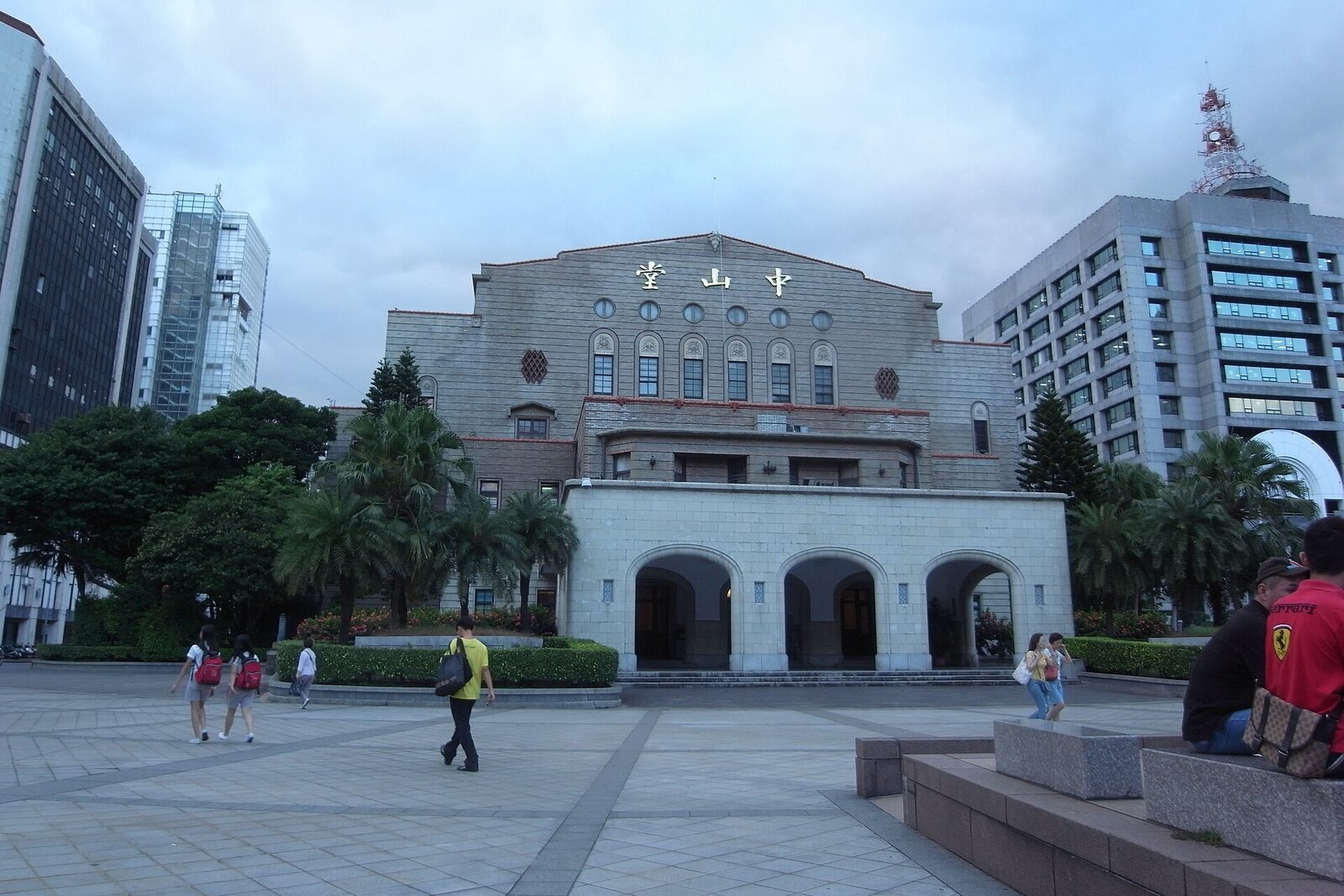
Look around first
What to notice
- Facade of the public hall
- Main hall
- Bronze statue of Sun Yat-sen
- The name “Zhongshan Hall”
The story of the place
Behind the austere facade is a large public hall designed for more than two thousand people: the Japanese administration built it for official gatherings and film screenings. Part of the former residence of the Qing viceroy was demolished for its construction, so the new city building took the place of the old authority. The bronze statue of Sun Yat-sen in the square appeared later, while the revolutionary leader himself died before the building was constructed. Concerts, dance performances, and theatrical productions now take place inside the main hall.
On October twenty-fifth, nineteen forty-five, two tables were set facing each other behind this facade. Chen Yi, the appointed head of the new Taiwanese administration, sat at one; he had been tasked with accepting the surrender of Japanese forces. At the other sat Ando Rikichi, Taiwan’s last Japanese governor-general and commander of the Tenth Army. He was to hand over to Chen Yi the soldiers, institutions, and property that he himself had administered until recently.
The hall was chosen for precisely its intended purpose. The Japanese administration had built it for large official gatherings and film screenings. Taipei was then called Taihoku in Japanese, and the building was called the Taihoku City Public Auditorium. Part of the former residence of the Qing viceroy was demolished to make way for it. Construction was timed to Emperor Hirohito’s accession to the throne; in nineteen thirty-six, a hall seating more than two thousand people opened. Nine years later, a ceremony with the opposite meaning was needed here.
The victors of the Second World War had already set the terms. Chen Yi handed Ando an order: Japanese units in Taiwan were to cease resistance, disarm, and await further instructions. Ando signed a receipt in brush calligraphy. His chief of staff, Isayama Haruki, carried the document across the hall and handed it to Chen Yi. The Japanese delegation was ordered to leave. The whole ceremony took a quarter of an hour, after which Chen Yi announced on the radio that the surrender had been accepted.
The signature did not release Ando from service. Chen Yi appointed the former governor-general to head the Japanese liaison bureau. Ando now transferred archives, enterprises, and property to the new administration, gathered disarmed servicemen, and organized the return of Japanese soldiers and civilians to their homeland. By his own orders, he had to dismantle the system he had headed. When repatriation was nearing its end, Ando was arrested on charges of war crimes committed during his previous service in China. He was sent to a Shanghai prison; he did not live to see trial and took poison.
After the ceremony, the new administration renamed the public hall Zhongshan Hall. Zhongshan is the Chinese name of Sun Yat-sen, the revolutionary leader and first provisional president of the Republic of China. Sun Yat-sen himself had never been here: he died before the building was constructed. His name appeared on the facade because the arriving officials chose the founder of the republic as their main symbol.
Today, the main hall hosts concerts, dance performances, and theatrical productions. The name given after the fifteen-minute ceremony has remained, and four years after the renaming, a bronze statue of Sun Yat-sen was installed in the square in front of the building.
Useful on site
The facade and square can be viewed from outside at any time. Visitor information states 09:30–17:00, but a separate notice limits weekend visits to two slots for the painting area; the interior may close for events and requires advance booking.
Checked: date not specified. Check the official source before visiting.Treat this primarily as an exterior stop. Plan visits to the halls and events inside separately, and do not assume free access.