 Guide On Map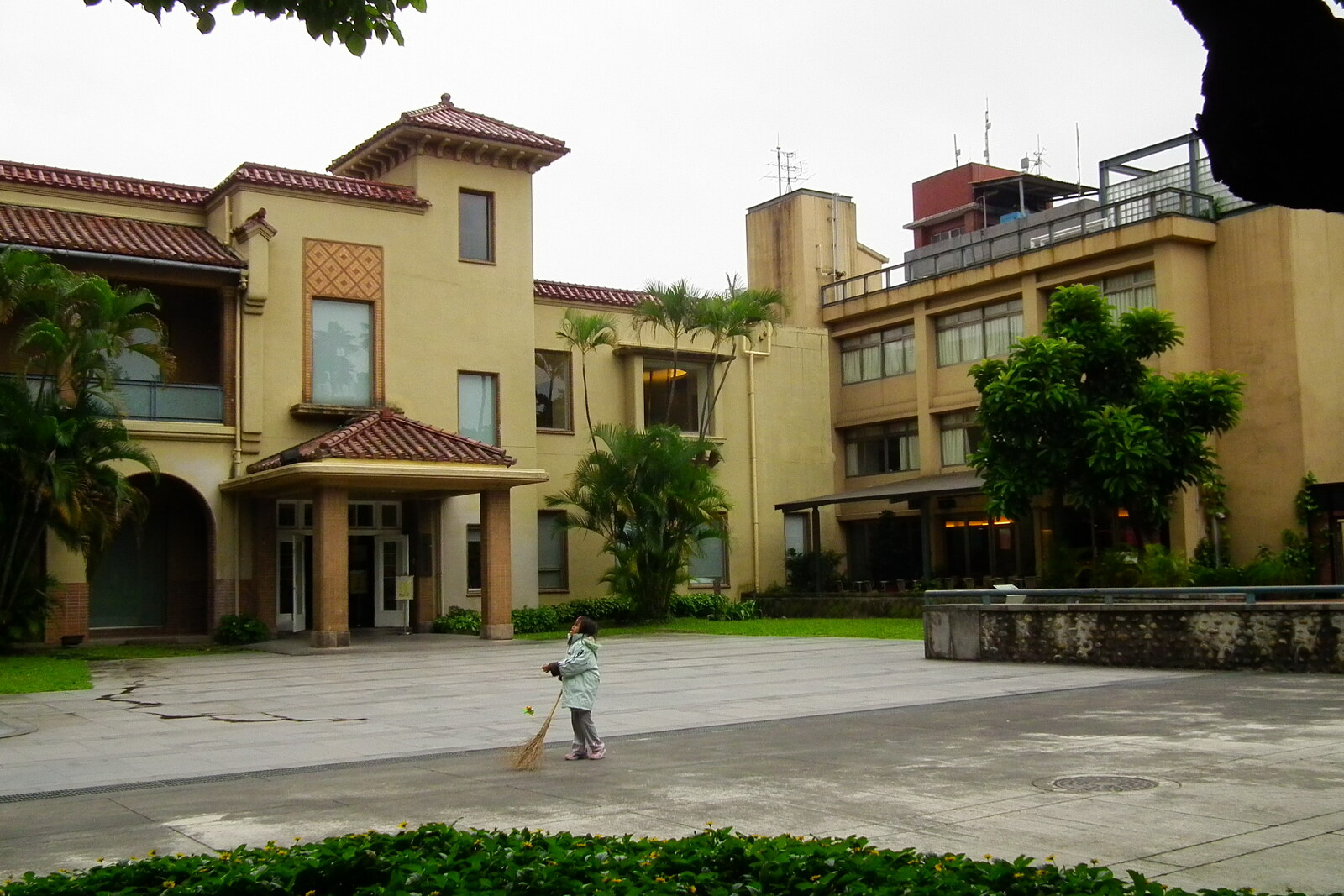
Look around first
What to notice
- The façade of the former radio station
- The museum sign
- The entrance to the permanent exhibition
The story of the place
The museum occupies the former Taiwan Broadcasting Station, from which recorded addresses and news prepared by announcers and engineers went on the air. Behind the radio station façade, the permanent exhibition now begins by returning the building to its former work. In nineteen ninety-seven, it opened as the Taipei 228 Memorial Museum, linking these rooms to the memory of the people who served here.
In March nineteen forty-seven, Tseng Chi-lin made his living here with his voice. He came to Taiwan alone, joined the Taiwan Broadcasting Station, and read the news in Taiwanese—the local variety of Southern Min. For many island residents, such an announcer was necessary: officials' orders were written in literary Chinese, which far from everyone understood.
After the 228 Incident, the head of the administration, Chen Yi, decided to address the residents by radio. He wanted to announce that those who had fired shots would be tried, the injured would receive compensation, detainees would be released on bail, and officials and public representatives would sort out what had happened together. Tseng was ordered to take engineers and recording equipment, go to the administrative office, and translate the speech. Chen Yi read the text in Chinese, then Tseng repeated it in Taiwanese. The recording was broadcast from here.
This service did not protect him. The next day, Tseng was arrested. On March eleventh, while he was on duty at the broadcasting station and was supposed to protect the equipment from damage, military police officers came for him. On the way, he tried to escape; he was shot through the left calf, blindfolded, and driven to a pretrial detention center with a gun held to his head.
Tseng spent eleven days in a room without daylight. Then he was transferred to a military prison. Investigators nearly secured a death sentence, but they found no evidence for such a charge. The announcer was then convicted of “violating order.” He was released in nineteen forty-nine, after spending almost two years in custody.
Tseng did not return to his former microphone. The only person to visit him in prison was the dancer Chang Kuei-chu. After his release, she helped him join a family theater troupe. He played drums, trumpet, and saxophone, and later began composing music for theater, film, and Taiwanese opera. Police continued to summon him for nighttime talks. He then burned old documents, changed his name, year and place of birth, and even understated his education on forms. Tseng Chi-lin became the composer Tseng Chung-ying.
In nineteen ninety-seven, the former radio station opened as the Taipei 228 Memorial Museum—named for the date of the event that determined the fate of the announcer and his colleagues. In two thousand fifteen, museum staff organized an exhibition here about Tseng and invited the ninety-three-year-old former announcer to tell what had happened. The current permanent exhibition begins with the history of the Taiwan Broadcasting Station—in the very building Tseng was guarding on the day of his arrest.
Useful on site
Tuesday—Sunday 10:00—17:00; closed Monday; free admission. Capacity restrictions and rules against flash photography, tripods, and selfie sticks apply inside.
Checked: June 29, 2026. Check the official source before visiting.If the museum is unavailable, listen to the story outside: the value of this stop lies in the former station building itself. Plan an interior visit separately.