 Guide On Map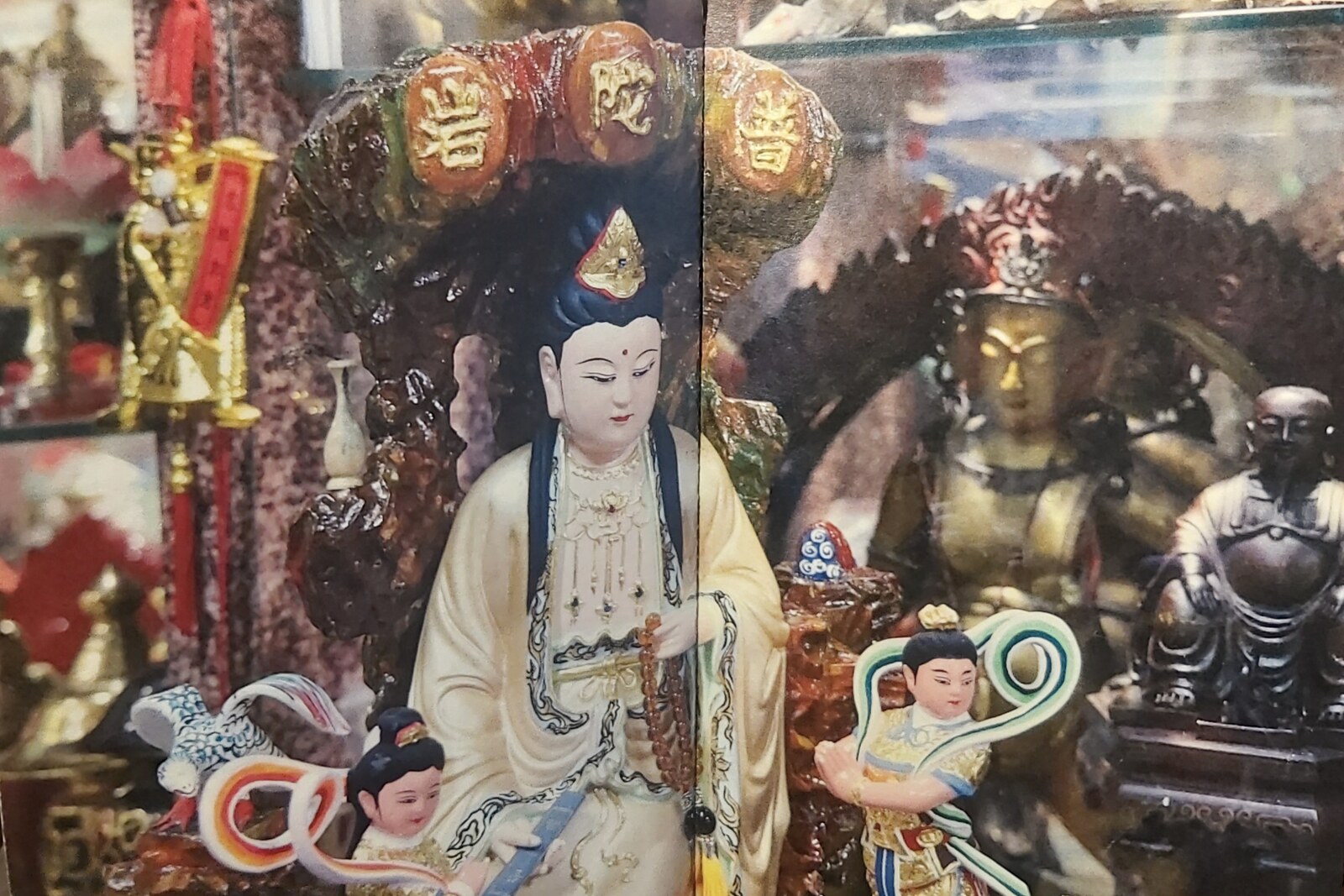
Look around first
What to notice
- Buddhist and Taoist figures
- Household altars
- Incense burners
- Bundles of ritual money
The story of the place
In Xiyuan's shop windows, Buddhist figures stand beside Taoist deities, household altars, incense burners, and bundles of ritual money. The name “Buddhist Article Street” covers only part of the trade. Craftspeople here help choose an auspicious day to begin work, carve and gild a statue, perform the “opening the light” ritual—touching its eyes, ears, and mouth with a brush—and then install the altar in a home or temple. A customer orders the entire process, from a piece of wood to an object of worship.
This was how Li Banlu, a craftsman from Fuzhou who arrived in Taiwan in the late nineteenth century, made his living. He moved north, fulfilling commissions at temples, and stopped near Longshan Temple: new statues were constantly needed there, and pilgrims became customers for household devotional figures. In eighteen ninety-five, Li opened Longshan Buddhist Implements. Families at the time often made do with painted paper figures—cheap but short-lived. At Li's workshop, they began by molding a clay form, covering it with paper, removing the clay after it dried, then painting the remaining shell and covering it with gold leaf. The result was a light, hollow statue that could last longer.
Large temple figures had to be made on site. The men of the Li family would leave for long periods, moving from one shrine under construction to another; in their absence, the grandmother kept the household and cared for the children. Li Ziyong, the founder's grandson, began working beside his father while still a teenager. By the age of twenty, he had made two guardians of the main altar for Longshan Temple. Later, more than four hundred apprentices and apprentices of his apprentices passed through his workshop.
It was this family's success that turned the neighborhood into a specialized street. According to Li Ziyong's recollections, after the war, owners of neighboring glass and paint shops saw the stream of orders. They began buying finished statues wholesale from Longshan Buddhist Implements and displaying them among their own goods. Some later learned the craft or hired craftspeople. By the nineteen eighties, dozens of shops were operating here, along with more than a hundred carvers, molders, gilders, and painters.
Now customers more often choose a finished figure from a shop window: custom work takes months, and before the carving is complete, its result cannot be compared with a neighboring figure. So craftspeople are rarely seen at the entrance, although about two dozen shops still sell statues and altars, set dates for consecration, and arrange household shrines.
The Longshan Buddhist Implements family shop remains at one hundred forty-two and one hundred forty-four Xiyuan Road; Li Ziyong passed it on to his sons. And in the temple's main hall stand two clay guardians that he made when he was eighteen or nineteen years old. Only a few minutes' walk separate his sons' workshop from their father's first major work.
Useful on site
The street is accessible as an ordinary city street; the shops have no single set of hours, so plan for daytime and early evening hours, and check each specific shop separately.
Checked: date not specified. Check the official source before visiting.These are working shops, not exhibition halls. View the windows from the street, and ask permission before photographing a craftsperson or the interior.