 Guide On Map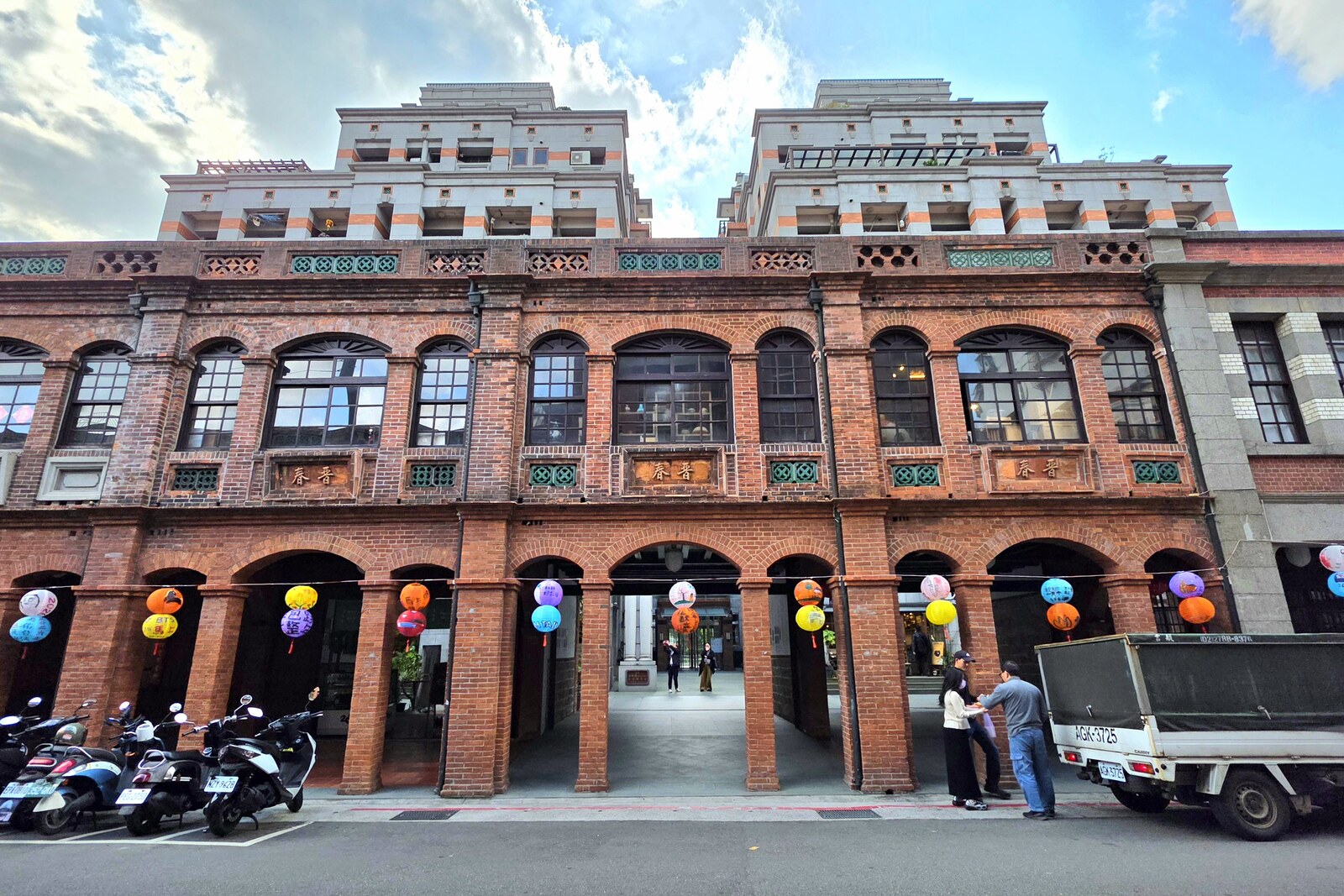
Look around first
What to notice
- Red-brick facades
- Round arches
- Stone reliefs bearing trading house names
- Modern residential building behind the facades
The story of the place
Beneath the semicircular openings, a row of family-run trading houses extended along Dihua Street. The street-facing section was commercial; behind it were living rooms, and farther back were warehouses and rice-cleaning machinery, sometimes nearly eighty meters from the entrance. Five families milled rice here, while the sixth made sewing thread. When two-story brick houses replaced the single-story adobe structures, the owners aligned the facades and kept stone plaques with the firms' names above the openings.
Of each of the ten red-brick houses before you, only the front section survives. Beyond the arches, the former courtyards, living rooms, warehouses, and workshops are gone: a modern residential building has taken their place. This boundary was drawn by six families—the heirs of merchants for whom the houses were both homes and sources of income.
Five families operated rice mills here, and the sixth ran a sewing-thread factory. At the beginning of the twentieth century, the location by Taipei Bridge was particularly convenient for millers. Boats brought unprocessed rice to the bank of the Tamsui River; from the pier, sacks were delivered directly to the houses' rear gates. Some plots stretched for nearly eighty meters. Grain-cleaning machinery and warehouses stood at the back, the owners lived in the middle section, and at the street they took orders and sold processed rice. The millers bought harvests from farmers, processed them, and resold them: the whole family's income passed through the house from the riverside gate to the counter.
In nineteen twelve, the Japanese colonial administration required the former single-story adobe buildings to be replaced with two-story brick ones. The families rebuilt their properties while preserving the long commercial layout. The ten facades were given a uniform height, round arches, and stone reliefs bearing the firms' names. This was how the row later came to be called Ten Consecutive Buildings, although there were six owners.
The war deprived the millers of their usual market. Rice distribution came under state control; some owners tried producing soy products, printing, or grocery trade, while others closed down. In the end, all five rice mills ceased operating. The family that made sewing thread moved its factory to Guishan and continued the business there. By the nineteen eighties, the long houses stood empty.
When the plots were slated for redevelopment, the six families agreed to demolish the middle and rear sections, but kept the front sections in memory of the ancestors who had begun trading here. The red-brick facades and arcade were reinforced with a steel frame, and the new residential building was set farther back. The old names of the trading houses are still visible above the arches. Behind them, there is no longer an eighty-meter route from boat to rice mill and counter: it ends at the entrance to the modern residential building.
Useful on site
Open street; individual shops operate on their own schedules.
Checked: date not specified. Check the official source before visiting.View the row from the opposite side of the street and do not linger in front of active entrances.