 Guide On Map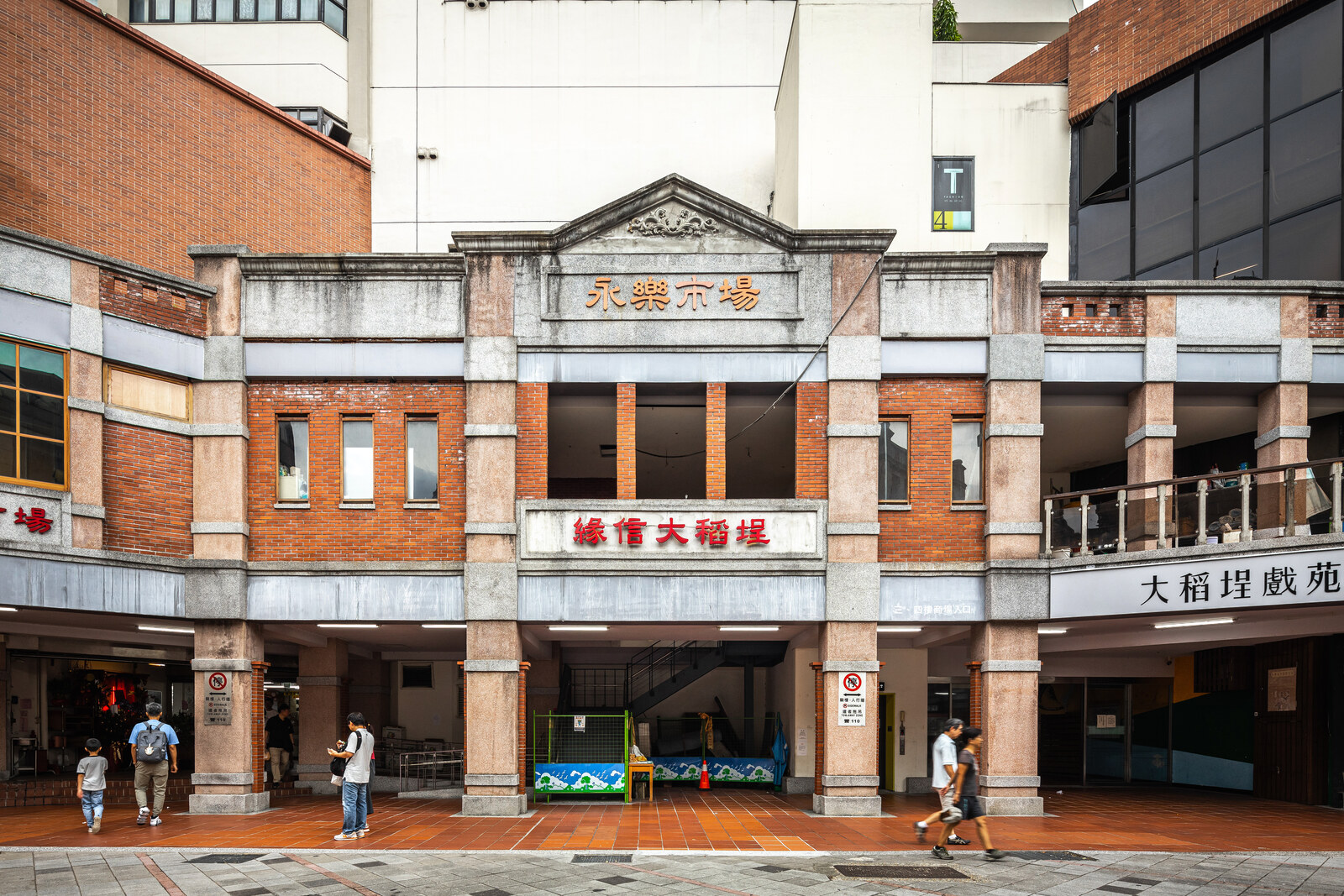
Look around first
What to notice
- Rolls of fabric
- Counters on the second floor
- Sewing workshops on the third floor
- The Lixin sign
The story of the place
On the second floor of the current building, counters lined with rolls of fabric stretch out, while tailors and sewing workshops work above. This vertical arrangement grew out of Dadaocheng’s river trade: silk and printed cotton from different countries arrived at Dadaocheng Wharf, and merchants of imported cloth settled nearby. When ready-made clothing was bought less often, people chose a length of fabric here for a tailor; buttons, zippers, and lace were kept alongside the fabrics. After the merchants moved, food remained below, while everything needed for sewing rose to the two upper floors.
The name “Yongle” remains from the neighborhood that existed here under the Japanese administration. The market itself opened in nineteen oh eight as Dadaocheng New Market, and in nineteen twenty-two it was given the neighborhood’s name. It primarily sold food and everyday goods.
Fabrics came to occupy the market thanks to the river. Silk and printed cotton from different countries arrived at Dadaocheng Wharf, and merchants of imported cloth settled near the market. Ready-made clothing was bought less often than it is now: people chose a length of fabric and took it to a tailor. Fabric sellers gradually filled the courtyard and the neighboring streets; buttons, zippers, and lace were sold here as well.
Wang Zhou-lan came to old Yongle when he was still a boy. His family needed money, so he hired himself out as an apprentice to a fabric merchant. At that time, the market consisted of simple wooden structures. Wang delivered rolls by bicycle to Taipei’s sewing workshops, counted the goods, and kept the accounts.
According to Wang’s recollections, the owners tested apprentices in a rather straightforward way: they left small banknotes and coins in the shop, then watched to see whether they disappeared. Wang did not take the money. The owner entrusted him with managing the business, and the apprentice learned the whole trade—from receiving a roll of fabric to settling accounts with a customer. In the early nineteen eighties, he opened his own shop, Lixin.
The old market was dismantled in nineteen eighty-two. Three years later, the merchants were housed in the current building: food remained on the first floor, fabric sellers occupied the second, and tailors and sewing workshops the third. Wang became one of the first owners in the new Yongle.
At that time, the main customers did not come for just one meter. Garment factories and tailoring shops ordered whole batches, and the seller was also responsible for the quality of the dyeing and the delivery deadline. Later, mass-produced ready-made clothing displaced custom tailoring, many factories left Taiwan, and there were far fewer of the former orders.
Wang Zhou-lan did not close the shop. He began taking on almost any work connected with sewing, from clothing to sofa covers. Students and designers began bringing him difficult projects when a pattern did not fit together or the chosen material behaved differently than expected.
The wooden counters among which the owner laid out coins to test an apprentice are no longer here. Wang Zhou-lan still works with his wife at Lixin on the third floor. On the second, sellers measure out fabric, and one floor above, Wang helps turn that length of fabric into something not found among ready-made goods.
Useful on site
An operating market; the hours of different sections and shops may vary.
Checked: date not specified. Check the official source before visiting.If the market is open, move without rushing and ask permission before photographing sellers, craftspeople, or their goods.