 Guide On Map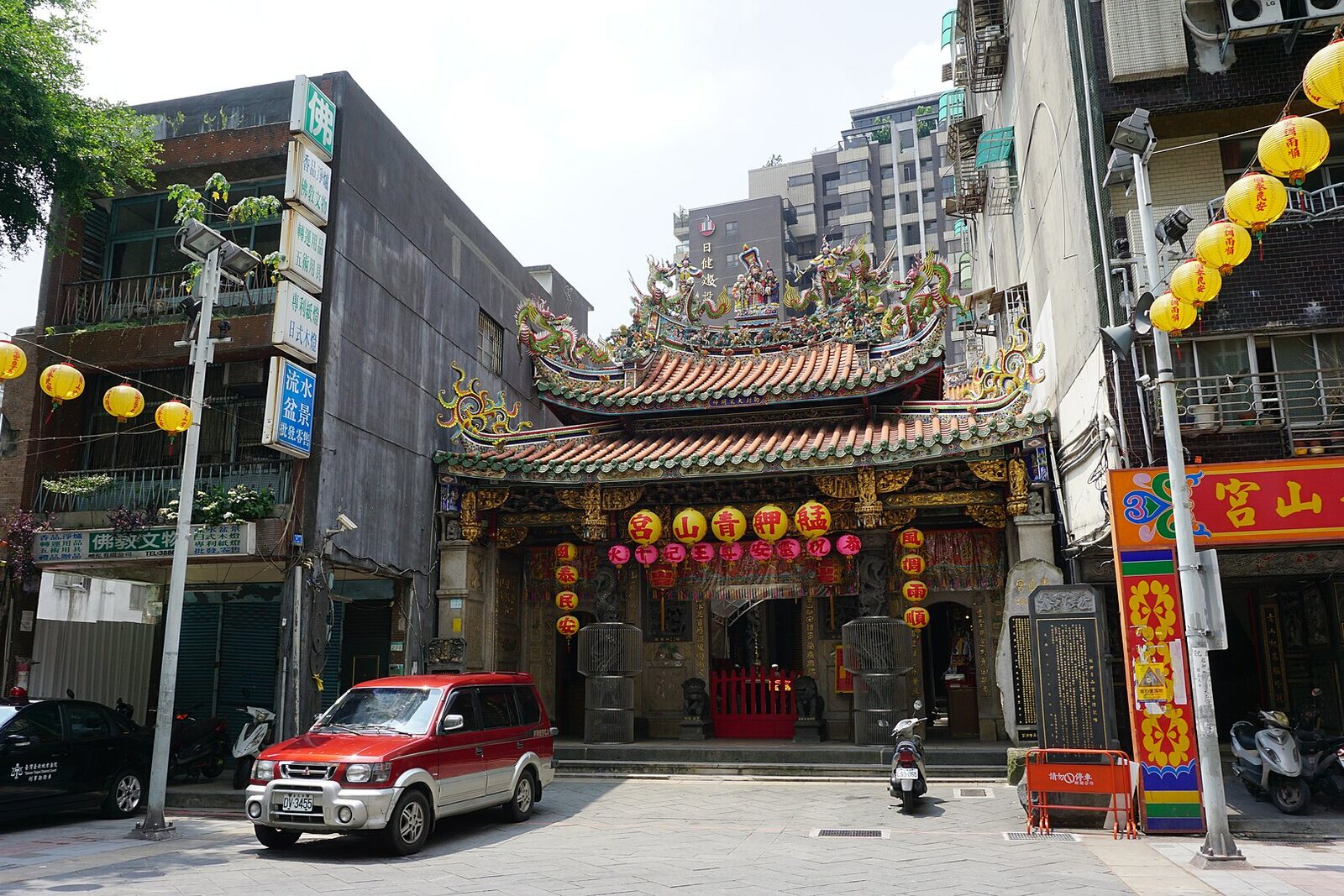
Look around first
What to notice
- The main image of Qingshan Wang
- Figures of the eight heavenly offices
- Figures of judges
- Guards with a cangue and a chain
The story of the place
The main image is surrounded by eight heavenly offices, judges, generals, and guards; the guards hold a cangue and a chain. This is how the authority attributed here to judging misdeeds, punishing evil, and protecting the district from evil spirits is shown. Before the annual procession through the city streets, participants first perform this ritual: bareheaded, kneeling, they address the prince three times with a request to open court. Then the image, with its heavenly retinue, is carried through southern and northern Wanhua for two nights, and on the third day the circuit becomes a grand festival.
In eighteen fifty-four, fishermen who had moved to Mengjia from Hui'an County brought here a statue of their fellow countryman and patron. An epidemic was underway in the settlement; people were falling ill and dying. The newcomers hoped that the deity they trusted at home would protect them in Taiwan as well.
This patron is called Qingshan Wang, the Prince of Qingshan, or Ling'an Zunwang, the Venerable Prince of Ling'an. Behind the title stands the military commander Zhang Gun—recorded another way as Zhang Gun. His biography exists in several versions: one places him in the third century, another in the tenth. Both link Zhang to the defense of the Hui'an coast. After his death, residents began to venerate the commander as a local protector. The name Qingshan comes from Green Mountain near Hui'an, where, according to tradition, his fortification and a temple dedicated to him stood.
Temple tradition tells that porters in Mengjia met the arriving statue at the river wharf. On Old Street, the palanquin suddenly became so heavy that the people could not continue on their way. They cast divination blocks and interpreted the answer this way: Qingshan Wang intended to remain here. A small shrine was set up for the statue. The stories of the immovable palanquin and miraculous healings belong specifically to tradition; something else is historically confirmed: the image was brought during an epidemic, the number of worshippers quickly grew, and people from Hui'an raised money for a permanent temple.
In eighteen fifty-six, the street elders decided to move the shrine to the present site, where imported goods were traded. Construction took three years. Fishermen and merchants, whose families and livelihoods were threatened along with them by the disease, gained their own temple and an association of fellow countrymen here. They also began to thank Qingshan Wang each year for deliverance from the epidemic.
The interior arrangement shows what kind of protector they brought. On either side of the main image stand eight heavenly offices: supervision, longevity, reward for good, punishment for evil, and others. Nearby are judges, guards holding a cangue and a chain, and generals. Qingshan Wang is credited with the duties of a judge: examining misdeeds, detaining evil spirits, and guarding his district.
Before the annual circuit, procession participants enter the temple, remove their head coverings, kneel down, and three times ask the prince to begin court. Then people carry out his statue together with the judges and guards. For two nights, the procession checks the streets of southern and northern Wanhua, and on the third day it makes a grand festival circuit. The image brought by the fishermen still leaves this hall as though its judicial district begins beyond the temple walls.
Useful on site
Daily 06:00–22:00. On the twentieth days of the tenth lunar month, during the festival of Qingshan Wang, crowds, processions, and street closures are possible.
Checked: date not specified. Check the official source before visiting.In the cramped temple, do not linger in passageways or in front of altars. During a rite or preparations for a procession, give way to the participants.