 Guide On Map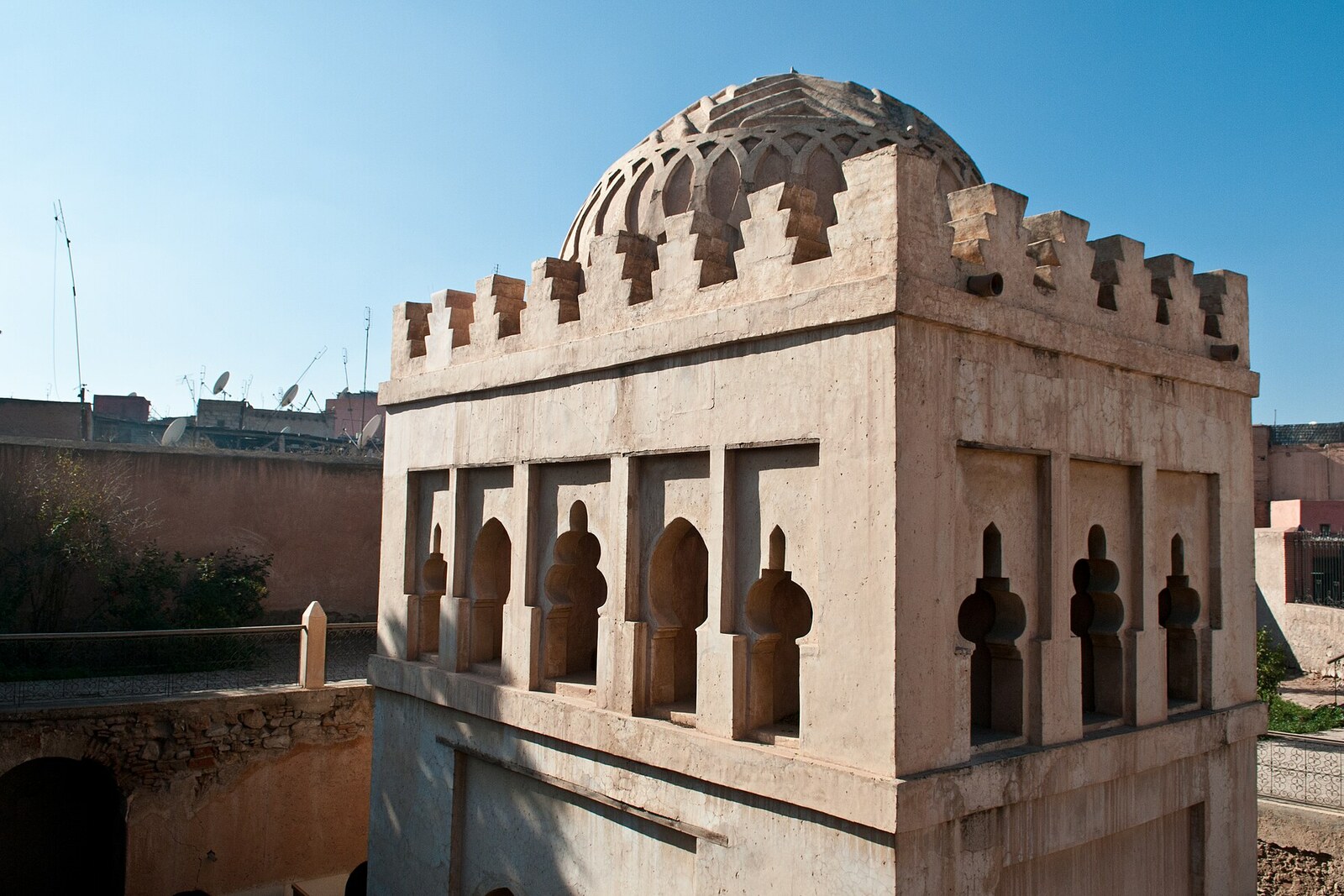
_(2).jpg)
This place does not have an audited photo yet.
Selected place
Almoravid Koubba
Local name: القبة المرابطية
Here you will see how engineers brought water to a new capital and how a useful structure became a dynastic monument.
Start with 23 highlights or open the complete catalog of 138 curated places.
Highlights include Almoravid Koubba, Bab Agnaou, Bahia Palace, Ben Youssef Madrasa, Dar El Bacha, El Badi Palace Ruins.
We have connected important places into ready-made walks with a clear order, stories and practical details.
Start with 23 highlights, or reveal all 138 curated places.
Local name: القبة المرابطية
Here you will see how engineers brought water to a new capital and how a useful structure became a dynastic monument.
Here you will see how engineers brought water to a new capital and how a useful structure became a dynastic monument.
Here you will see how the design of an entrance turned a meeting with the ruler into a supervised test.
The ending will explain why, of a court dignitary’s estate, it was above all the building’s decoration that survived.
The student rooms explain why the new dynasty needed an educational center of its own.
This is where the thread begins of how a private residence became a place of political calculation—and its failure.
The ruins make it possible to distinguish the grandeur that could be carried away from the structure that remained in place.
One biography will show what a storyteller’s income depended on and why the trade did not continue in the family.
Here it will become clear why international heritage-protection rules had to change for the sake of oral traditions.
An archaeological discovery will explain why the two structures formed a single sanctuary.
A legend will test whether the city's most conspicuous landmark can become a reliable hiding place.
The garden shows how inheritance fragmented the riad, and how restorers assembled it again parcel by parcel.
The finale will explain how a private collection became a public archive and how to read old photographs critically.
The separated watering place will be the last evidence of the quarter's forced redevelopment.
Here, water connects the Saadian remaking of the neighborhood with the everyday life of its new residents.
This stop will show how a religious oath turned a struggle for the throne into a lawful change of sultan.
This stop will show that later plaster can not only hide old decoration, but also preserve it.
The fate of Dar Menebhi shows how a ministerial residence became a school and then a museum.
The square will connect the palace quarter with the Mellah craft that survived changing craftspeople and customers.
A family shop will show how local trade was reshaped for the tourist customer.
Here, a family mausoleum begins with a political assassination and a son's continuation of the war.
The shift from farriers to varied trade will explain how the main entrance to the market changed.
The surviving order of trade will reveal this courtyard's most burdensome former function.
One minyan that never comes together will show how a small community exists alongside a museum and a tourist route.
Nearest audio-route stop: Saadian Tombs — 50 m in a straight line, route Kasbah of Marrakech: Palaces and Power
Nearest audio-route stop: Mouassine Fountain — 40 m in a straight line, route Koutoubia Mosque, Jemaa el-Fnaa, and the Souks of Marrakech
Nearest audio-route stop: Maison de la Photographie de Marrakech — 90 m in a straight line, route Northern Medina: Palaces, Gardens, and Madrasa
Nearest audio-route stop: Ben Youssef Madrasa — 30 m in a straight line, route Northern Medina: Palaces, Gardens, and Madrasa
Nearest audio-route stop: Dar El Bacha — 30 m in a straight line, route Northern Medina: Palaces, Gardens, and Madrasa
Nearest audio-route stop: Maison de la Photographie de Marrakech — 10 m in a straight line, route Northern Medina: Palaces, Gardens, and Madrasa
Nearest audio-route stop: Almoravid Koubba — 50 m in a straight line, route Northern Medina: Palaces, Gardens, and Madrasa
Nearest audio-route stop: Jemaa el-Fnaa: the northern circles — 40 m in a straight line, route Koutoubia Mosque, Jemaa el-Fnaa, and the Souks of Marrakech
Nearest audio-route stop: Koutoubia Esplanade — 10 m in a straight line, route Koutoubia Mosque, Jemaa el-Fnaa, and the Souks of Marrakech
Nearest audio-route stop: Koutoubia Esplanade — 90 m in a straight line, route Koutoubia Mosque, Jemaa el-Fnaa, and the Souks of Marrakech
Nearest audio-route stop: Le Jardin Secret — 20 m in a straight line, route Northern Medina: Palaces, Gardens, and Madrasa
Nearest audio-route stop: Almoravid Koubba — 50 m in a straight line, route Northern Medina: Palaces, Gardens, and Madrasa
Nearest audio-route stop: Maison de la Photographie de Marrakech — 80 m in a straight line, route Northern Medina: Palaces, Gardens, and Madrasa
Nearest audio-route stop: Maison de la Photographie de Marrakech — 80 m in a straight line, route Northern Medina: Palaces, Gardens, and Madrasa
Nearest audio-route stop: Souk Zrabi — 100 m in a straight line, route Koutoubia Mosque, Jemaa el-Fnaa, and the Souks of Marrakech
Nearest audio-route stop: Mouassine Fountain — 10 m in a straight line, route Koutoubia Mosque, Jemaa el-Fnaa, and the Souks of Marrakech
Nearest audio-route stop: Place des Ferblantiers — 10 m in a straight line, route Kasbah of Marrakech: Palaces and Power
Nearest audio-route stop: Saadian Tombs — 10 m in a straight line, route Kasbah of Marrakech: Palaces and Power
Nearest audio-route stop: The Mellah and Lazama Synagogue — 10 m in a straight line, route Kasbah of Marrakech: Palaces and Power