 Guide On Map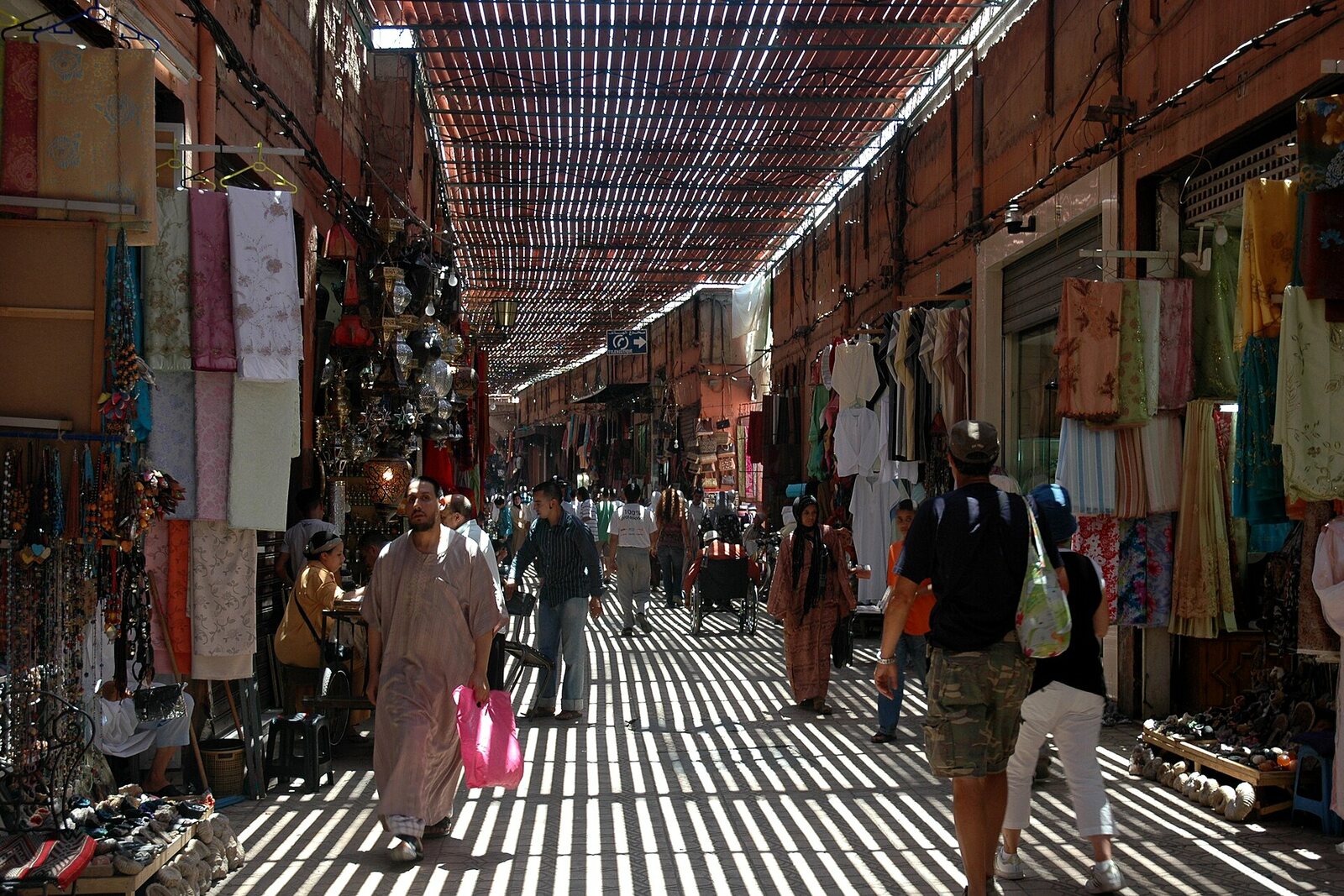
Look around first
What to notice
- Covered passage
- Semmarine signs
- Cloth and clothing shops
- Lamps
The story of the place
A covered commercial street called Semmarine runs from Jemaa el-Fnaa Square to the markets near Ben Youssef Mosque. Stalls open directly onto its narrow passage, while craftspeople’s work traditionally extended into the side alleys. Today, fabrics, kaftans, leather goods, and lamps flicker past in the flow beneath the canopies; this passage leads farther into the medina’s branching market.
As late as the beginning of the twentieth century, blacksmith-farriers worked at the entrance to this covered passage. The name Semmarine is connected with them: it is said to derive from the Arabic word “masmar”—a nail.
The farriers’ customers chose this spot for them. A caravan driver transporting goods from the south would leave a horse or mule here, then go shopping. While the owner bargained deep in the market, the craftsman put the animal’s hooves in order before the next journey. The farrier lived on this unavoidable stop. The caravan driver risked time and cargo: an animal that lost a horseshoe outside the city held up the entire load.
That is why the trade was located right at the main entrance from Jemaa el-Fnaa. Beyond it began the central commercial street leading to the markets near Ben Youssef Mosque. Along it, sellers displayed finished goods, while many craftspeople worked in the side alleys. It was convenient for an animal’s owner to leave it with the farrier first, then walk through the shops and collect it on the way back.
In the twentieth century, residents and traders increasingly approached the markets from the direction of Jemaa el-Fnaa: new neighborhoods were being built outside the walls, and the city’s flow shifted toward the square. At the same time, horses and mules ceased to be the main transport for deliveries. The farriers lost their former income and left Semmarine. Their shops were taken over by cloth and clothing merchants, who needed space at the busiest entrance.
Now kaftans, bedspreads, carpets, leather goods, lamps, and souvenirs are sold here. The passage no longer has a single craft specialization: it serves as a commercial entrance to a branching system of neighboring souks. The southern entrance remains in the same place, and the signs still bear the name of the craftspeople who earned money from horseshoe nails.
Useful on site
The public passage is open as part of the medina; shop trading activity is usually variable and depends on the day, prayers, heat, holidays, and sellers’ private decisions.
Checked: June 30, 2026. Check the official source before visiting.Before the stop, keep close to the edge of the passage and check that you are not obstructing traffic. Do not begin lengthy bargaining without intending to buy, and leave calmly if the item or price does not suit you.