 Guide On Map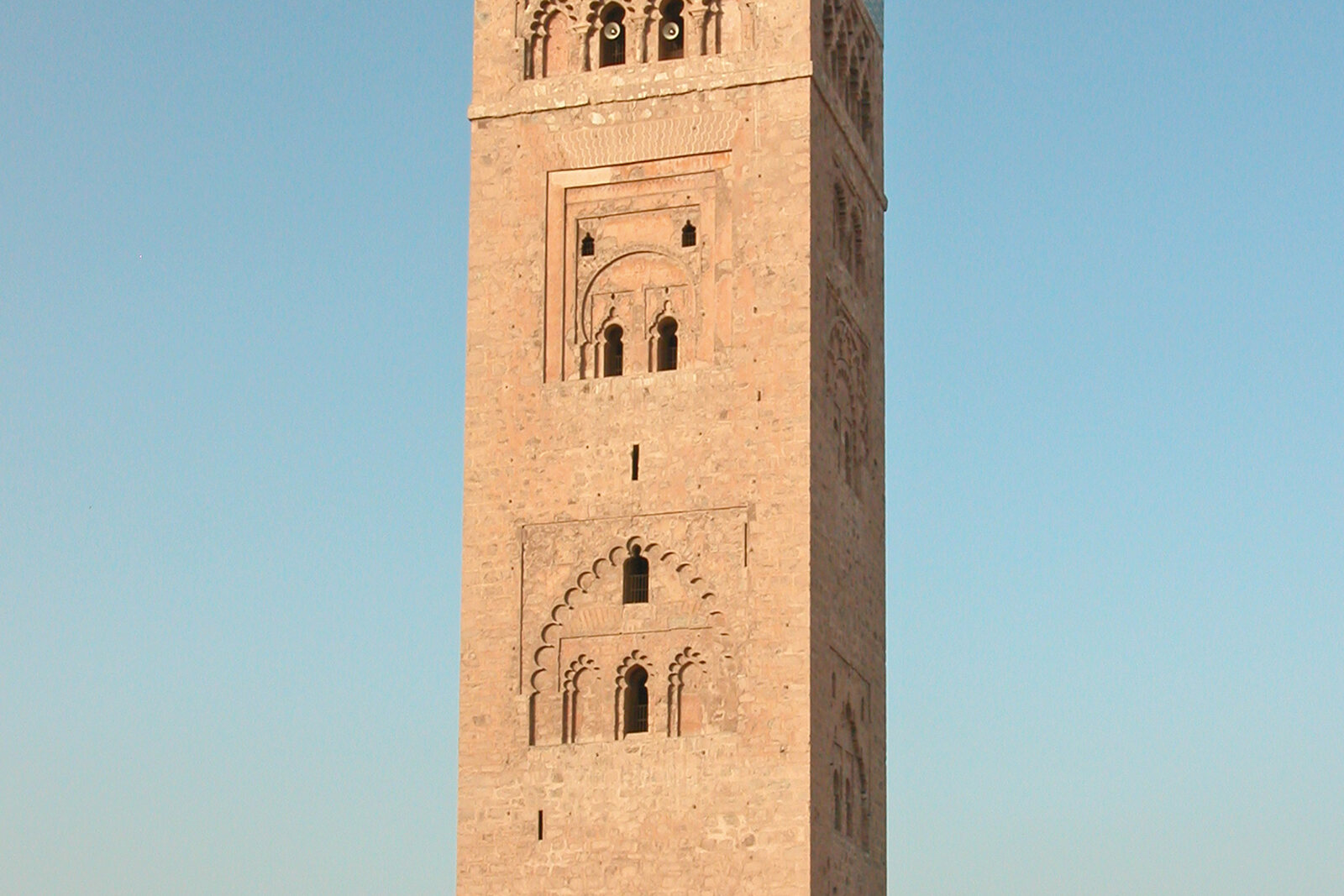
Look around first
What to notice
- The minaret tower
- The upper platform
- The copper balls on the spire
The story of the place
The stonework of this tower becomes finer toward the top: this is how the builders made the upper tiers, built of local sandstone and brick, lighter. The square minaret stands at the eastern corner of Koutoubia Mosque, beside the main prayer hall. Its facades are divided into five bands of carved arches and green-and-white ceramic. Above them, a row of small copper balls is held on the spire.
The tower was built for the work of one person. The muezzin—a religious attendant who tells worshippers the time of prayer—climbed to the upper platform and gave the call in each of the four directions in turn. This was repeated five times a day, from the pre-dawn prayer until night. Now loudspeakers carry the voice, while the old route remains inside the minaret: six chambers are stacked one above another, with a broad sloping ramp running around them. It leads to a height of almost seventy meters without a long staircase.
Where the muezzin's ascent ended, the legend of the golden ball begins. It is a legend, not an established historical episode. In one old version, the wife of the Almohad caliph Yaqub al-Mansur is called Aisha. The caliph decided to divorce her, marry another woman, and take back the jewelry he had previously given her himself. Aisha wanted to keep the jewelry, but understood that any chest would be found in the palace, while anyone who agreed to hide her gold risked their life.
She turned to Bouchaib al-Miskin, known as the Pauper. He was a goldsmith: every day he melted down other people's bracelets, rings, and necklaces, but after work received only a small payment. Bouchaib wanted to marry Rana, the daughter of a weaver from the souk, but could not raise the bride price her father demanded. Aisha promised to pay as much as was needed for the wedding.
Bouchaib reasoned that the caliph would order buried gold sought in the ground, and gold thrown into water sought by divers. He proposed giving the treasure to fire and air. The craftsman melted Aisha's jewelry, enclosed the precious stones inside a golden ball, and at night climbed the minaret and used it to replace the smallest copper ball on the spire.
After the divorce, Aisha returned to her father's house. The caliph's men searched the palace, the townspeople's houses, and bodies of water, but did not find the jewelry. Bouchaib received the promised payment, paid the bride price, and married Rana. The gold, if the storyteller is to be believed, remained above the city, where the muezzin climbed every day.
A row of balls is still strung on the spire. They are made of riveted copper sheets; there is no confirmed golden ball among them. The old legend adds one final test, also legendary: workers supposedly noticed that when struck, one ball did not sound as resonantly as the others. It is impossible to test this from the ground.
Useful on site
Exterior viewing in an open urban space; the relief, the green band near the top, and the proportions are best seen in side light. Interior access is not included in the route.
Checked: June 30, 2026. Check the official source before visiting.Listen from outside, choosing a spot away from the main flow of pedestrians. The balls at the top are best viewed with a camera's zoom, without stepping into the roadway for a photograph.