 Guide On Map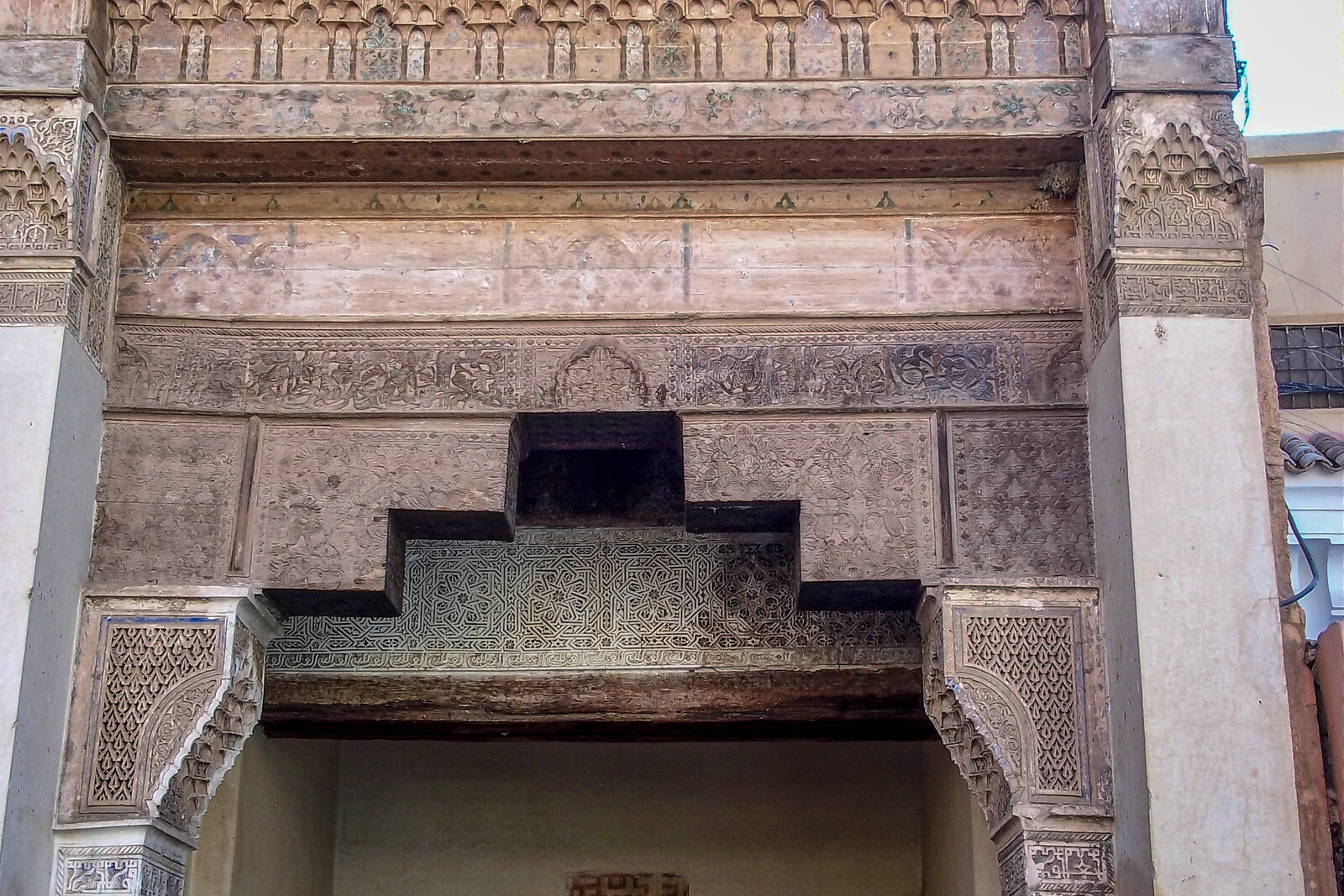
Look around first
What to notice
- Three vaulted arches
- Decorated niche
- Wooden bar
- Dry basins
The story of the place
The water here served the hammam, the ablutions room, and the outdoor water source visited by neighborhood residents, merchants, and pack animals. Three vaulted openings lead to low watering troughs, while farther right a carved niche survives with a separate basin for people; a wooden barrier kept animals away from it. The basins are dry now because the old water supply has been disconnected from the city network.
In fifteen fifty-seven, the new Saadian sultan Abdallah al-Ghalib ordered this quarter cleared. Marrakech's Jewish families then lived among Muslims, especially densely here. They had homes, synagogues, a cemetery, and craft shops. Many earned their living through trade and metalworking. The sultan planned to turn Marrakech into the capital of his dynasty and wanted to create a model Muslim quarter in the center.
The residents were ordered to move to the kasbah, the royal fortress in the south of the city. There, on the site of the former sultans' stables, they were assigned the walled Mellah—an separate Jewish quarter. This was a forced move, not a temporary relocation for the duration of construction. People had to establish homes, workshops, markets, and synagogues anew. The Mellah lasted until the twentieth century; the old cemetery remained here, and the neighboring mosque was later built directly over it.
When the former courtyards stood empty, Abdallah al-Ghalib ordered the Mouassine Complex built. Work began in fifteen sixty-two and took about a decade. Everything the new quarter required was assembled nearby: a Friday mosque, a school, a library, a hammam, an ablutions room, and an outdoor water source. The fountain was placed specifically by the hammam and the ablutions room so that all these structures could be supplied by one system. From the street, water could also be taken by those who had no need to enter the mosque.
The arrangement preserved the order of the earlier street. Three simple vaulted arches opened onto watering troughs for donkeys, mules, and horses that brought goods into the city. On the right stood a separate, richly decorated niche with water for people. A crosswise wooden bar kept pack animals from reaching the human basin. The sultan's charity here was intended at once for residents, merchants, and their transport.
The name “Mouassine” is older than the complex itself. Its origin is disputed. A popular version links it to a family of sherifs, descendants of the Prophet, said to have lived nearby, but historians have found no trace of such a family. A more likely version derives the name from cutlers—craftsmen whose shops stood on the main street even when Jewish families lived here.
Now water no longer flows in the fountain: the old system has been disconnected from the city network. What remains are the three arches of the former watering place and the decorated niche for people—the dry facade of the complex with which Abdallah al-Ghalib occupied the cleared quarter.
Useful on site
The fountain's street facade can be viewed from the passageway. The neighboring religious, museum, and domestic spaces have separate hours; do not treat interior access as included without a current check.
Checked: June 30, 2026. Check the official source before visiting.View the fountain from the street, without blocking the passageway or expecting access to neighboring buildings. Do not drink the water unless you are sure the source is intended for drinking.