 Guide On Map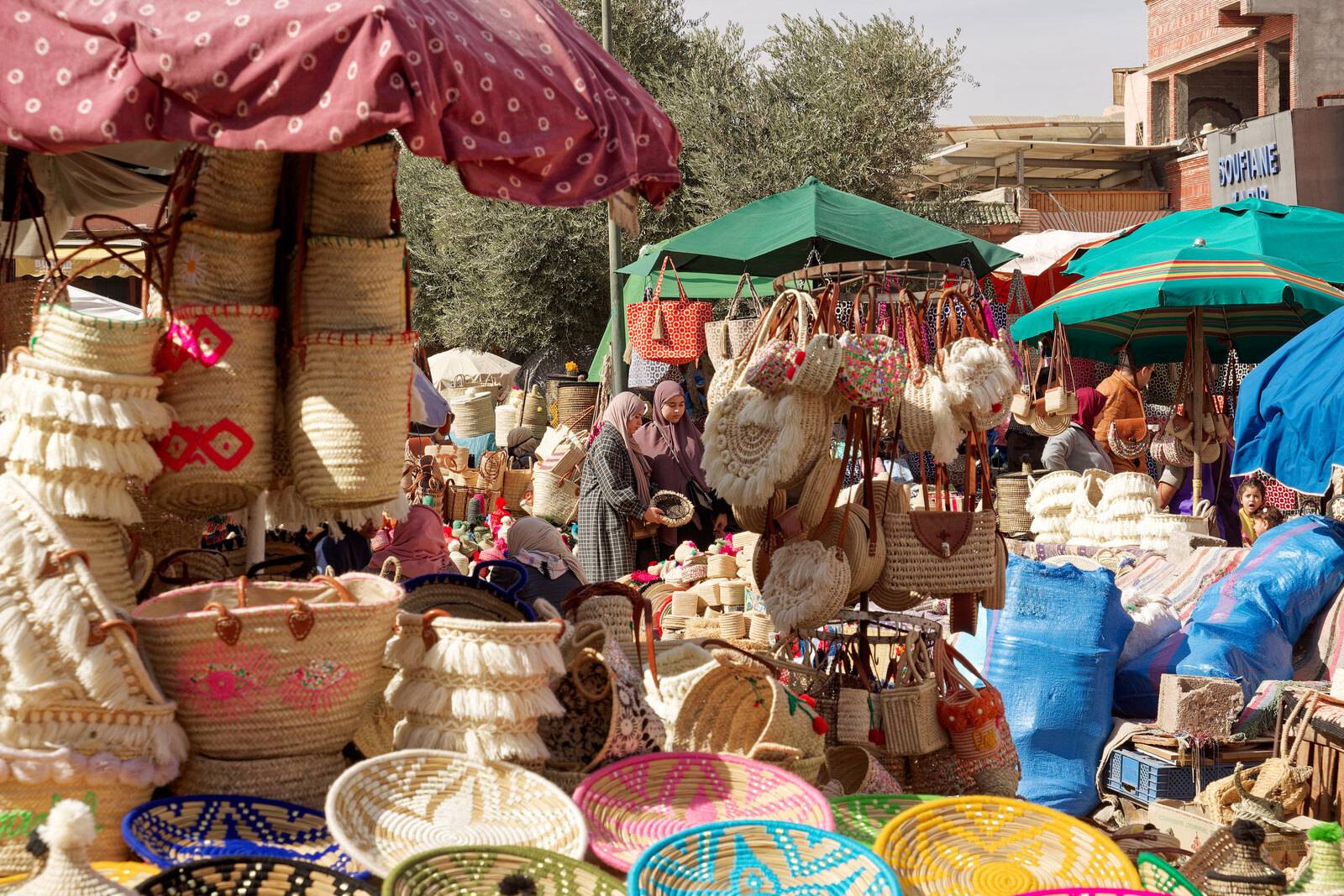
Look around first
What to notice
- Triangular square
- Herbalist shops
- Baskets
- Straw hats
The story of the place
In Moroccan speech, a “rahba” is an open grain market, while “kedima” means old. Merchants from mountain and desert regions were already coming here under the Almoravids. They brought wheat, barley, food supplies, and fodder for animals. The market needed open space for sacks and pack animals. At that time it lay east of Qasr al-Hajar—the Stone Palace of the first rulers of Marrakech, which no longer exists. This was the city’s first grain rahba; its age remained in the name.
The open triangle now occupied by stalls took shape as a public square through a very specific decision. In nineteen thirty-six, a municipal commission proposed expropriating a plot that was called Rahba Kedima in the documents themselves. The plot belonged to a habous: property whose income was intended for religious or charitable purposes. An ordinary official order was not enough to transfer it to the city.
On March nineteenth, the commission approved the plan. In June, the administration conducted a month-long inquiry. Then the Grand Vizier Mohammed el Mokri, the highest official under the sultan, gave the decision the force of a decree: the plot was to be expropriated to create a square. On October twenty-eighth, the French Resident-General Charles Noguès approved the decree for implementation, and the work was assigned to city services. Thus an old commercial place name passed onto an officially created public space. The decree itself contains neither the names of the plot’s former users nor information on how they reacted to the expropriation.
Nine years later, a herbalist’s shop belonging to Jamal’s family was already on the edge of the square. He had worked there since childhood. An atrophied leg had closed off many occupations to him, and the family trade became an income he could keep. After his grandfather’s death, Jamal inherited the shop together with his father.
At the turn of the millennium, Jamal decided to focus on visitors: one tourist spent more money than a local customer. He stationed two assistants at the entrance who spoke several languages. They offered saffron, mint, argan oil, musk, and ready-made spice blends. His father sat farther inside the shop and still served Marrakech residents who came for familiar remedies.
His father refused to spend money on renovating the premises. The jars gathered dust, and some of the goods were hardly ever opened. It was precisely this appearance that convinced many visitors they had found an “authentic” herbalist. By the middle of the two thousands, tourists made up about three quarters of Jamal’s customers; the old shelves helped sell a new version of the family business.
The shop number is not given in the field record, and it cannot be claimed that Jamal’s family still trades here. Herbalists selling saffron, mint, oils, and blends still stand along the present-day square, while basket and straw-hat sellers occupy the center. Beneath their stalls remains the plot that merchants once filled with grain and that Mohammed el Mokri secured for the city by his decree.
Useful on site
The square and passageways are accessible as part of the urban fabric; trading activity changes with the time of day and the calendar. Do not include fixed opening hours for individual shops without a recent check.
Checked: June 30, 2026. Check the official source before visiting.Do not taste or apply unfamiliar mixtures without understanding their ingredients. A seller’s medical promises do not replace professional advice, and agree on a henna design and the price in advance.