 Guide On Map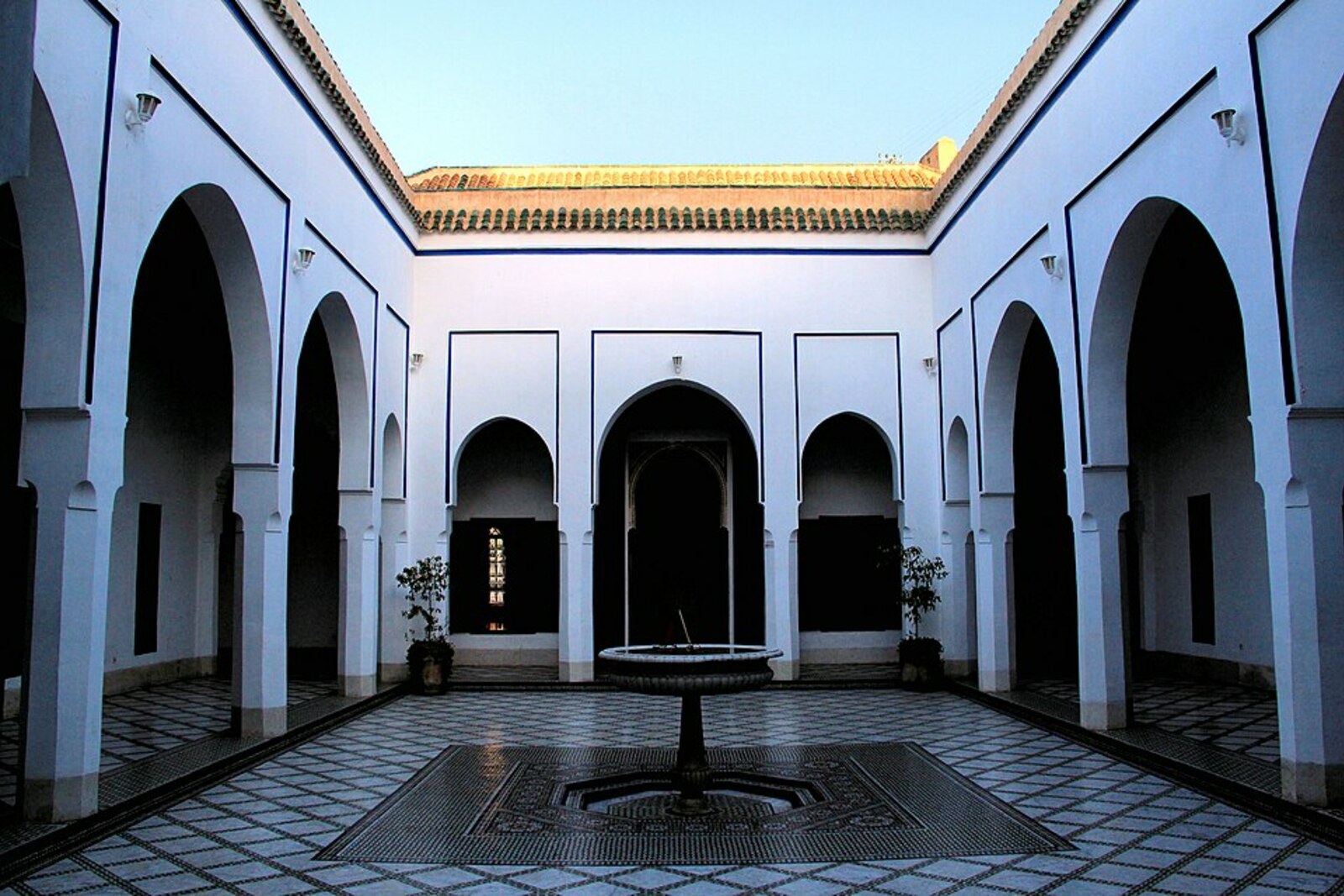
Look around first
What to notice
- Carved plaster
- Tile mosaics
- Marble floors
- Painted cedar ceilings
The story of the place
Si Moussa’s house stood on this site. Neighboring plots were bought up around it, and courtyards were joined with passageways, forming a palace complex of riads, garden courtyards, living quarters, and reception rooms. Carved plaster, tile mosaics, marble floors, and painted cedar decorate the halls, while the small riad contained the council chamber, where state affairs were handled.
In the last days of spring nineteen hundred, guards were posted at the gates of Bahia Palace. Inside, Ba Ahmed was dying—the grand vizier, that is, the first minister and regent to the young Sultan Moulay Abd al-Aziz. Doctors kept him going with oxygen inhalations, while relatives, wives, servants, and slaves waited: with the master’s death, their own fate would be decided.
Ba Ahmed came from a family of court slaves that had managed to rise to the highest offices. He was backed by neither the ruling dynasty nor an influential tribe. His wealth came from service to the sultan, and he could lose it along with his position. When Sultan Hassan I died in eighteen ninety-four, it was Ba Ahmed who secured the accession of his young son Abd al-Aziz. The new sultan appointed him grand vizier, but for the next six years it was the regent who directed state affairs.
Ba Ahmed then began building around the house of his father, Si Moussa. He bought up neighboring plots, joined courtyards with passageways, and commissioned craftsmen to decorate the halls with carved plaster, painted cedar, and mosaics of glazed tile. This is how an intricate sequence of riads, garden courtyards, living quarters, and reception rooms arose. The small riad contained the council chamber, where Ba Ahmed dealt with state affairs. The name Bahia Palace means “The Shining.” According to a popular legend, the vizier’s favorite wife was named Bahia, and the palace was named for her; no reliable document confirming this dedication has survived.
When Ba Ahmed died, the guards locked the gates. According to the testimony of a contemporary who was in Marrakech at the time, people inside broke open chests and safes, pulled out documents, and hid precious stones. Meanwhile, the vizier’s body was carried out of the palace. Sultan Abd al-Aziz walked behind the bier and wept at the funeral of the man who had put him on the throne and kept him there for six years.
On his return, the sultan’s first act was to sign a decree confiscating Ba Ahmed’s property. This was a court custom: a deceased dignitary’s possessions passed to the ruler. For several days, pack animals carried carpets, bedding, furniture, and safes away from here. The wives and servants were forced to surrender what they had managed to hide. The family was expelled without means, and the sultan took the slaves for himself—keeping some and selling others.
There are almost none of Ba Ahmed’s belongings in today’s halls. What could not be carried away was what the craftsmen had attached to the building itself: carved plaster, tile mosaics, marble floors, and painted ceilings. The palace, which the vizier had enlarged until the last months of his life, stood empty within days of his death.
Useful on site
Paid monument; current hours, tickets, and closed rooms should be checked before entering.
Checked: June 28, 2026. Check the official source before visiting.Do not rush to look for one main hall: the palace’s meaning unfolds through its sequence of spaces and changing light.