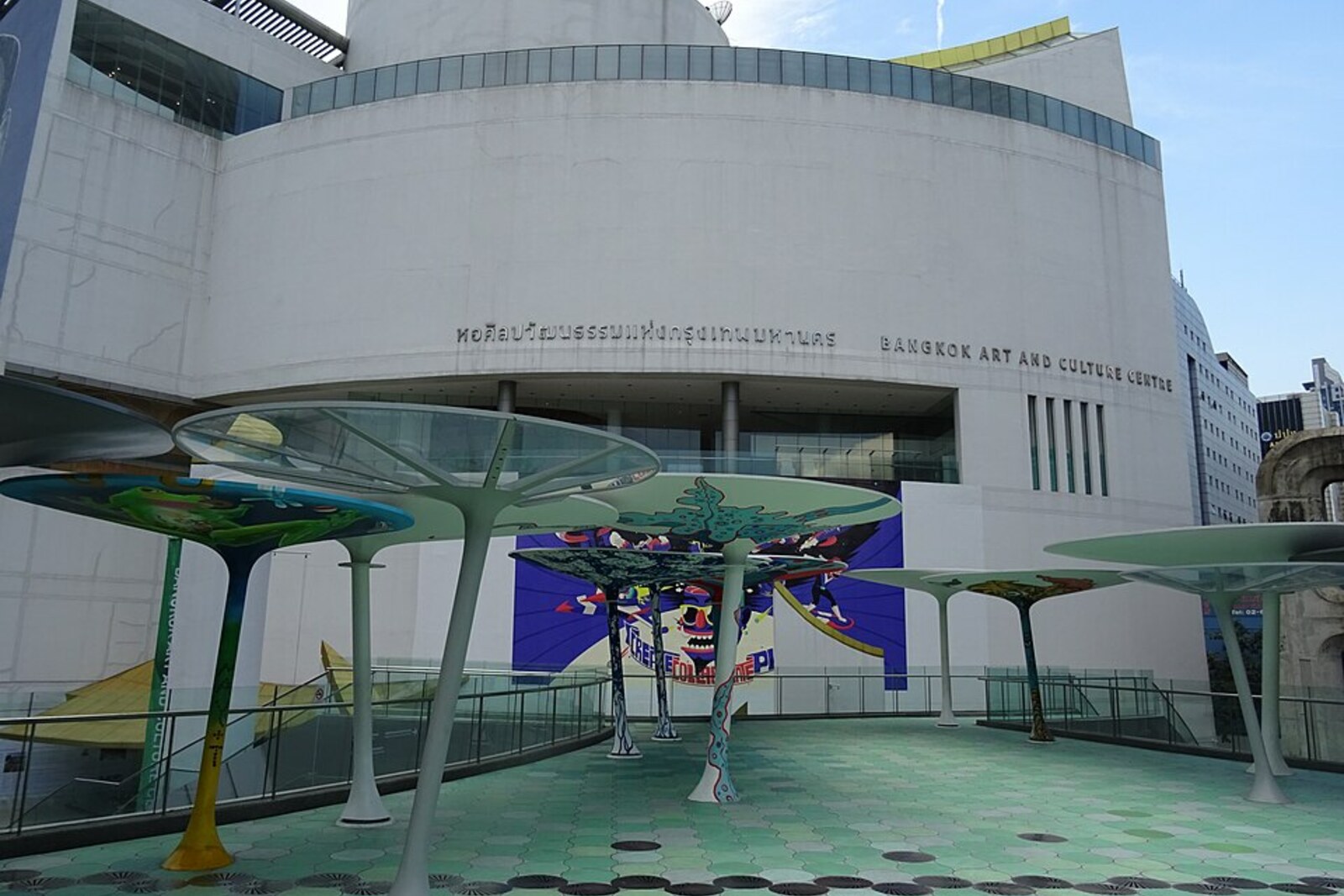
- Bangkok Art and Culture Centre: story on the “Baan Krua and Siam: Silk, Art, Trade” route
This stop will show at what cost a public art center took over a site intended for commerce.
- Democracy Monument: story on the “Bang Lamphu between Ratchadamnoen Avenue and the Chao Phraya River” route
It will show how a political project changed a royal avenue and left its own version of the coup there.
- Jim Thompson House: story on the “Baan Krua and Siam: Silk, Art, Trade” route
Here you will see how a residence, a private collection, and a dispute with the state came together in one museum.
- Wat Arun: story on the “Royal Bangkok: Rattanakosin and Thonburi” route
The finale on the far bank will show what a royal temple loses when the capital moves away.
- Wat Pho: story on the “Royal Bangkok: Rattanakosin and Thonburi” route
The temple will show how knowledge was brought out of manuscripts and onto walls accessible to ordinary townspeople.
- Bangkok City Pillar Shrine: story on the “Royal Bangkok: Rattanakosin and Thonburi” route
Here, the birth of the capital is given an exact minute and two surviving physical witnesses.
- Hua Lamphong Railway Station: story on the “Yaowarat Road and Talat Noi: Commercial Bangkok” route
The dead-end track layout explains why a routine depot inspection ended in disaster in the passenger hall.
- Khao San Road: story on the “Bang Lamphu between Ratchadamnoen Avenue and the Chao Phraya River” route
Shows how a family’s livelihood reshaped an entire neighborhood around travelers’ needs.
- MBK Center: story on the “Baan Krua and Siam: Silk, Art, Trade” route
This stop explains both the complex's name and its rows of independent sellers.
- Phra Sumen Fort: story on the “Bang Lamphu between Ratchadamnoen Avenue and the Chao Phraya River” route
It will take you back to the history of the builders whose forced labor closed off the new capital's northwestern corner.
- Santichaiprakarn Park: story on the “Bang Lamphu between Ratchadamnoen Avenue and the Chao Phraya River” route
It will take the route from the city's defenses to the struggle for a tree in which residents found the name of their neighborhood.
- Song Wat Road: story on the “Yaowarat Road and Talat Noi: Commercial Bangkok” route
The river trade corridor explains why a small bank was immediately entrusted with sums greater than its own capital.
- Tha Tien and the river crossing: story on the “Royal Bangkok: Rattanakosin and Thonburi” route
The pier returns the route to the everyday city—trade, the market, and the way across the river.
- Wat Bowonniwet Vihara: story on the “Bang Lamphu between Ratchadamnoen Avenue and the Chao Phraya River” route
It will link the struggle for the throne to the monastic reform that outlived its founder.
- Wat Mangkon Kamalawat: story on the “Yaowarat Road and Talat Noi: Commercial Bangkok” route
Here it becomes clear why the trading community needed a permanent monastery and its own recognized leader.
- Wat Traimit Witthayaram and the Golden Buddha: story on the “Yaowarat Road and Talat Noi: Commercial Bangkok” route
This stop will show how a failed move forced people to reassess the value of a familiar sacred statue.
- Yaowarat Road: story on the “Yaowarat Road and Talat Noi: Commercial Bangkok” route
A broad commercial street will reveal the dispute over whose homes had to make way for the new road.
- Chinatown Gate at Odeon Circle: story on the “Yaowarat Road and Talat Noi: Commercial Bangkok” route
The arch will link the entrance to the commercial district with an attempt by the royal family and the community to overcome postwar alienation.
- Pathumwan Skywalk: story on the “Baan Krua and Siam: Silk, Art, Trade” route
The final stop will show how a private initiative changed an urban skywalk for people with different mobility.
- Phra Athit Road: story on the “Bang Lamphu between Ratchadamnoen Avenue and the Chao Phraya River” route
It brings back, behind a high fence, the evening when the river exit proved more important than the ceremonial gates.
- Soi Ram Buttri: story on the “Bang Lamphu between Ratchadamnoen Avenue and the Chao Phraya River” route
It will explain the lane's curve and the name that outlived the canal and the brick crossing.
Nearest audio-route stop: Grand Palace and Wat Phra Kaew — 10 m in a straight line, route Royal Bangkok: Rattanakosin and Thonburi
Nearest audio-route stop: Sampheng's Trading Alleys — 10 m in a straight line, route Yaowarat Road and Talat Noi: Commercial Bangkok
Nearest audio-route stop: Sanam Luang — 10 m in a straight line, route Royal Bangkok: Rattanakosin and Thonburi
Nearest audio-route stop: Siam Square — 10 m in a straight line, route Baan Krua and Siam: Silk, Art, Trade
Nearest audio-route stop: Khlong Saen Saep — 10 m in a straight line, route Baan Krua and Siam: Silk, Art, Trade
Nearest audio-route stop: Talat Noi and So Heng Tai Mansion — 10 m in a straight line, route Yaowarat Road and Talat Noi: Commercial Bangkok
Nearest audio-route stop: Wat Traimit Witthayaram and the Golden Buddha — 70 m in a straight line, route Yaowarat Road and Talat Noi: Commercial Bangkok
Nearest audio-route stop: Phra Sumen Fort — 100 m in a straight line, route Bang Lamphu between Ratchadamnoen Avenue and the Chao Phraya River
Nearest audio-route stop: Democracy Monument — 70 m in a straight line, route Bang Lamphu between Ratchadamnoen Avenue and the Chao Phraya River
 Guide On Map