 Guide On Map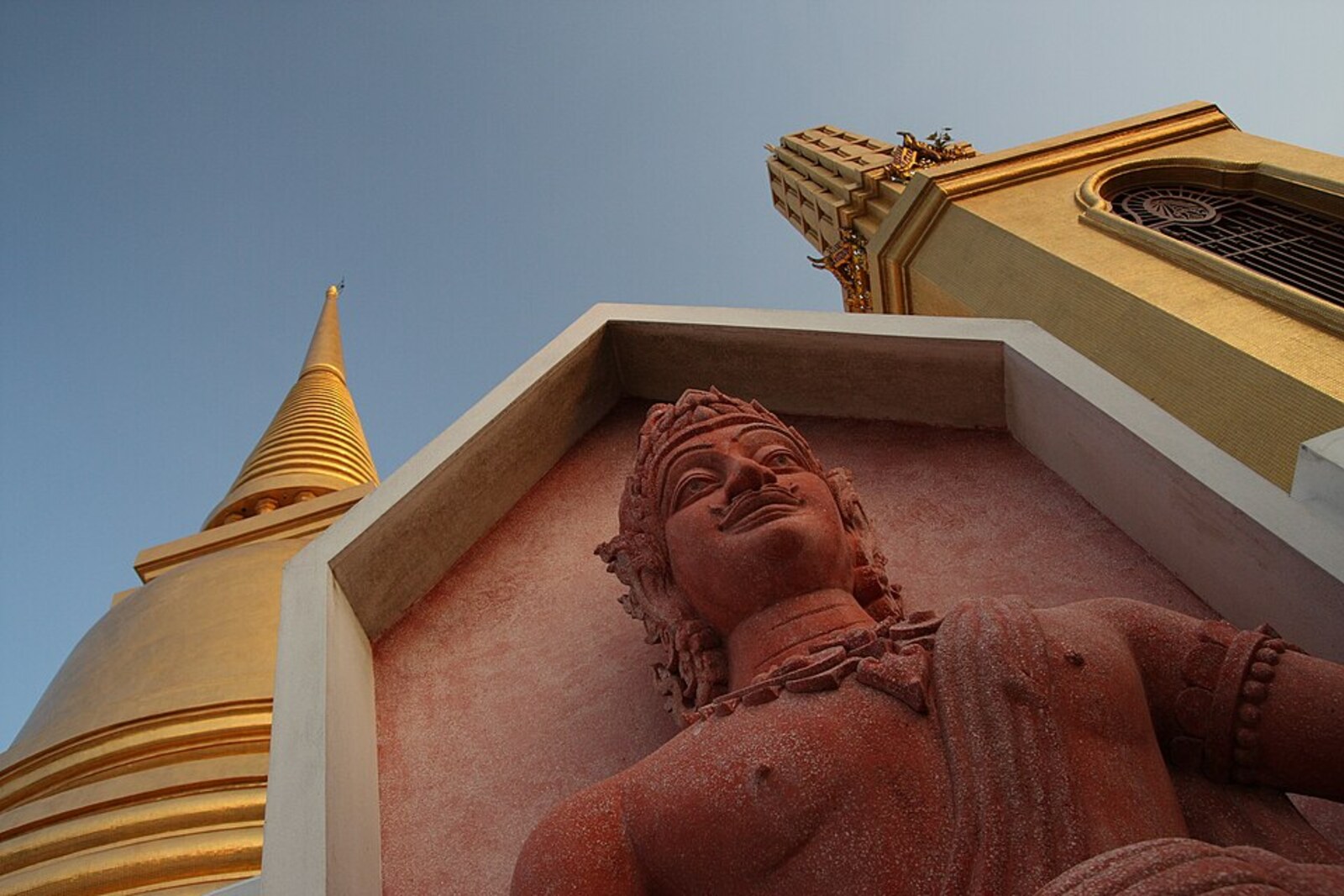
Look around first
What to notice
- The three-story Pra Tamnak Panya house
- The northern gable
- A crown between two five-tiered umbrellas
The story of the place
Wat Bowonniwet Vihara remains an active monastery and the main center of Dhammayut Nikaya, one of the two major traditions of Thai monasticism. Its name comes from Pali words meaning “excellent dwelling.” At first, the name was simpler: Wat Mai, the New Monastery. It had no abbot until Rama III placed here a man who had once been a possible claimant to his throne.
Prince Mongkut took monastic vows in eighteen twenty-four, shortly before the death of his father, Rama II. For the twenty-year-old prince, this was an ordinary temporary vow. After the king's death, a council of nobles chose Mongkut's older and more experienced half-brother as his successor. He became Rama III. Mongkut, the queen's son and a possible rival, remained in monastic robes: in this way he did not enter the struggle for the throne and protected himself from court intrigues.
This caution was followed by twenty-seven years of strict monastic life. At dawn, Mongkut went barefoot to collect alms, ate what was placed in his bowl, and took no food after noon. He studied Pali texts and concluded that many Siamese monks followed the discipline prescribed by Buddha too loosely. Among Mon monks, he found an ordination lineage that he considered more exact, underwent ordination again, and gathered his own community. It received the name Dhammayut Nikaya, “those who adhere to the Dhamma,” the teaching of Buddha.
In eighteen thirty-six, Rama III invited his half-brother to lead Wat Mai. The appointment turned a small group of reformers into a recognized monastic school. For the new abbot, the king ordered the three-story Pra Tamnak Panya house to be moved from the Grand Palace and reassembled in the residential part of the monastery.
Mongkut required his disciples to understand the meaning of Pali chants, follow the monastic discipline, and explain the teaching to ordinary people in everyday language. Sermons were to be delivered in their own words, without reading from a manuscript. In eighteen thirty-seven, only five of his followers lived here; later, the number of monks exceeded one hundred. Wat Bowonniwet Vihara became a place people came to for ordination and study.
After Rama III died in eighteen fifty-one, the council chose Mongkut as king. By his own explanation, refusing could have caused civil strife, so the former claimant accepted the offer, left the monastery, and removed his monastic robes at the palace. He ascended the throne as Mongkut (Rama IV). His fellow reformer, Prince Pavares, became the next abbot and led Dhammayut Nikaya; therefore, the monastic tradition did not leave this place with its founder.
Pra Tamnak Panya remains in its original location. On its northern gable stands the personal emblem of its first resident: a crown between two five-tiered umbrellas. In Thai, “mongkut” means “crown.” Early on the morning of April third, eighteen fifty-one, the prince was taken from here to the palace; his house and the community he founded remained in the monastery.
Useful on site
An active monastery; plan a daytime exterior/courtyard visit and check the current signs at the entrance.
Checked: June 28, 2026. Check the official source before visiting.Observe temple etiquette and keep quiet; if the main hall is closed, do not try to enter service or monastic areas.