 Guide On Map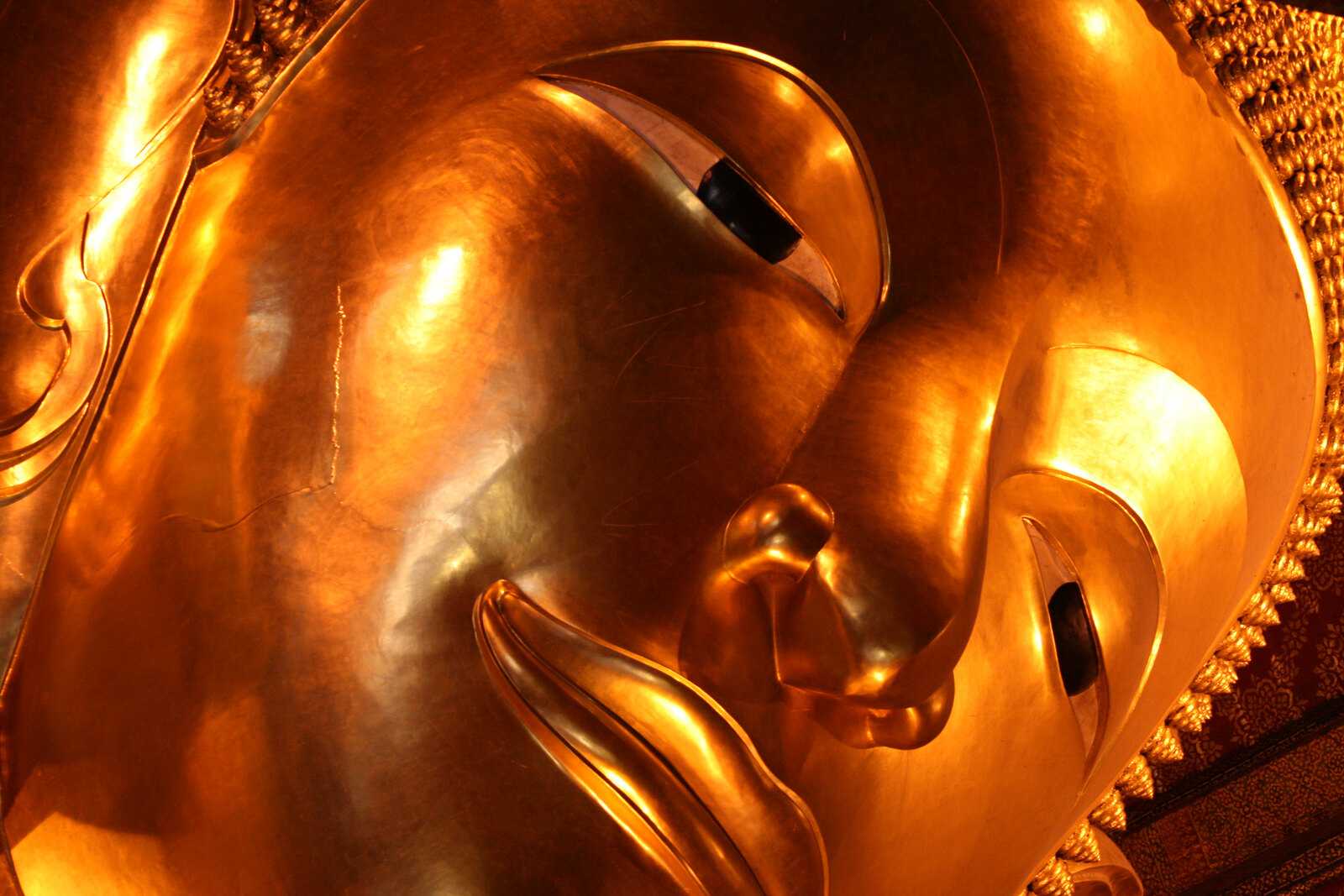
Look around first
What to notice
- The figure of the Reclining Buddha
- Mother-of-pearl images on its feet
- Stone inscriptions
- Diagrams of massage lines
The story of the place
A healer bringing a prescription to Wat Pho for a stone inscription had to swear that he had personally treated people with that remedy and achieved a good result. The prescription was then checked by the chief court physician, Phraya Bamroeratchaphat. The first was responsible for the remedy he gave to the sick; the second served as a physician at court and was responsible for selection. Only after their review did an engraver transfer the text onto stone, where an error could no longer be quietly corrected as it could in a manuscript.
This was how King Nangklao, King Rama III, gathered medical knowledge during the major reconstruction of Wat Pho. In eighteen thirty, he ordered the works of healers, poets, historians, and experts in Buddhist texts to be brought here. Siam was changing rapidly: Christian missionaries were bringing printing presses, Western medicine, mechanics, and astronomy. King Rama III did not prevent new knowledge from entering the country, but he feared that the old knowledge would vanish together with those who carried it. Many works existed in manuscripts that were difficult for an ordinary townsman to access.
For an open collection, the king chose a temple beside the palace. People of different social ranks already came here, and the walls of the galleries and pavilions offered enough room for texts and illustrations. The familiar name Wat Pho remained from the earlier Wat Photharam, the monastery of the bodhi tree, the species of fig tree under which, in Buddhist tradition, Siddhartha Gautama attained enlightenment. King Rama I rebuilt the old monastery as the royal temple of the new capital; his grandson turned the temple walls into a publicly accessible library.
About fifty court scholars and educated monks, led by the abbot, Prince Paramanuchitchinorot, compiled and edited the texts. Engravers placed the slabs on the walls, columns, windows, and beams of twenty-five structures. Buddhist teachings, poetry, history, information about provinces and peoples, medicinal prescriptions, and diagrams of the human body's massage lines appeared side by side. Of the surviving collection, six hundred eight inscriptions are devoted to medicine, massage, and exercises.
During the same reconstruction, King Rama III commissioned the enormous figure of the Reclining Buddha. Its pose depicts the Buddha's final moments before entering parinirvana, while mother-of-pearl images on its feet list one hundred eight auspicious signs. The statue was enclosed in a separate hall, while the knowledge was spread throughout the temple—where it could be read between prayer, study, and the monastery's daily tasks.
In nineteen fifty-five, the Wat Pho Traditional Medical and Massage School was opened inside Wat Pho. Its classrooms still occupy the temple pavilions. On the walls around them remain formulas that a healer could once pass to an engraver only after taking an oath.
Useful on site
Official visiting hours: daily 08:00–19:30, ticket 300 baht; free for children under 120 cm.
Checked: June 28, 2026. Check the official source before visiting.Observe the temple dress code; do not hold up the flow around the Reclining Buddha, and do not mistake the Chinese statues for local yakshas.