 Guide On Map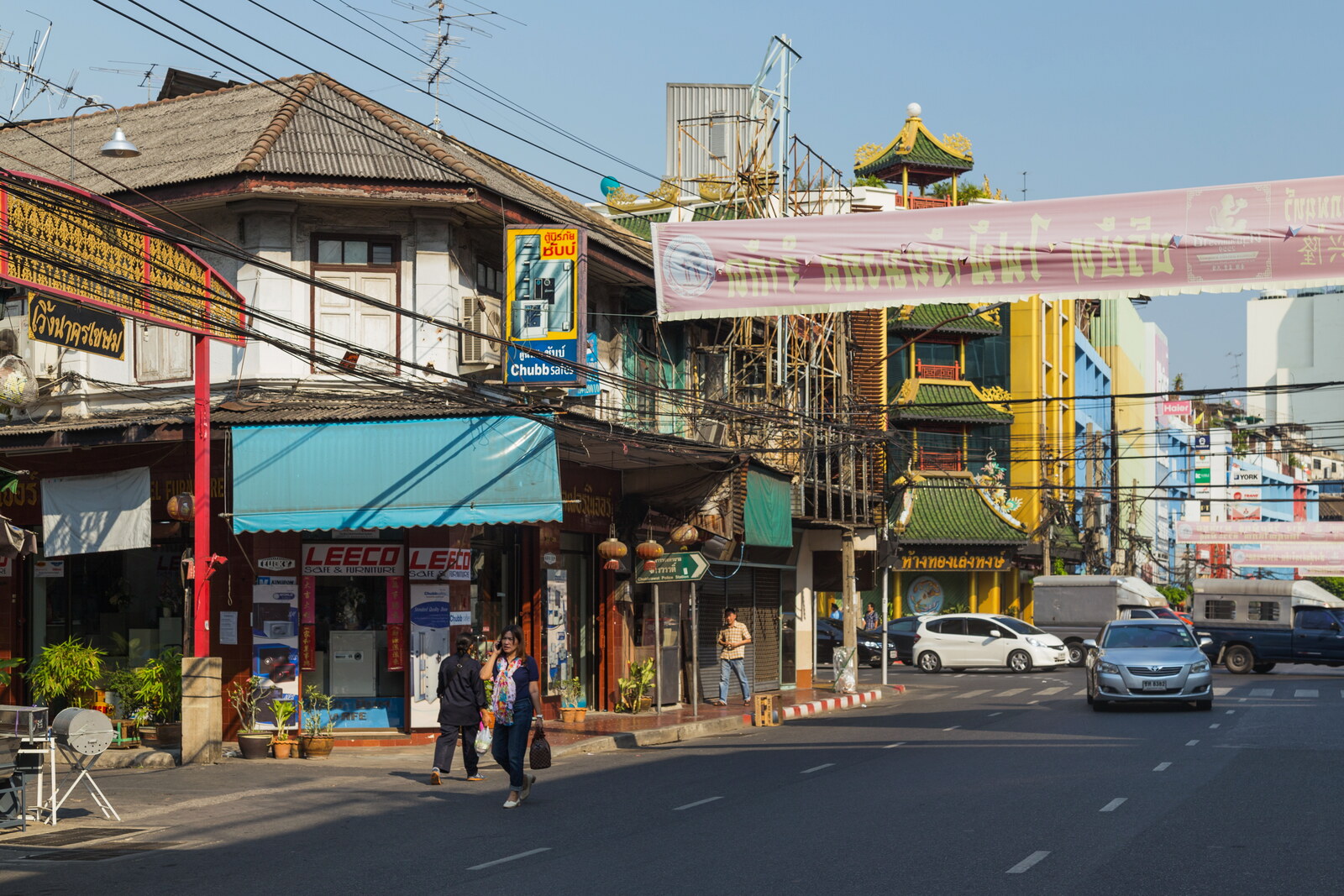
Look around first
What to notice
- The curved line of the carriageway
- Two-story commercial houses
- Red displays of gold shops
- The sign for Yaowarat's eighth alley
The story of the place
Along the broad carriageway, officials bought land, built two-story commercial houses, and rented the premises to traders. Their broad frontages face old Sampheng, where trade once took place in cramped alleys; now banks, dried-goods shops, and red displays of gold shops stand side by side here. When many shops close, food sellers occupy part of the sidewalk. The road curves noticeably, so it is associated with the body of a dragon and good fortune in trade, although the construction papers do not record such an intention.
In eighteen ninety-four, the residents of Trok Tao submitted a collective petition to the king. Officials were marking out a new road through their neighborhood. When stakes fell on the house of a noble owner or on an expensive building, the residents saw the line moved. The new marker fell on the homes of people without titles. The petitioners wrote that they would lose their homes, while the road would still turn out crooked.
King Chulalongkorn (Rama V) ordered it built for trade. Sampheng was already a cramped Chinese commercial district of Bangkok, but goods and customers passed through narrow alleys. At the beginning of eighteen ninety-two, the Department of Public Works had to issue a special announcement: rumors of an impending land seizure had frightened owners, and some were rushing to sell plots cheaply. Officials assured them that they would take only a strip for the carriageway.
When the marking began, keeping that promise proved difficult. The Minister of the Metropolitan Administration pressed for residents to receive money for their land and would not hand disputed plots over to the builders. The Department of Public Works continued laying the road only where the land already belonged to the treasury or no one objected. Because of the dispute between the two ministries and the many owners, construction dragged on.
On June fourth, eighteen ninety-eight, King Chulalongkorn (Rama V) ended the dispute. The king reasoned that the new road would multiply the value of the land owners retained, while the government would charge no fee for passage. Owners were ordered to clear the strip; those who refused to dismantle their buildings were to be summoned to court. In nineteen hundred, the road opened. It took eight years to build, mainly because of these plots and houses.
Along the carriageway, officials acquired land, built two-story commercial houses, and rented them out. Traders gained broad frontages beside old Sampheng. That is where daytime Yaowarat Road comes from, with its banks, dried-goods shops, and red displays of gold shops. After many shops close, food sellers occupy part of the sidewalk.
The road's curves are commonly compared to the body of a dragon and considered auspicious for trade. This is an interpretation, not a documented intention of the planners: the construction papers preserve the moving of stakes, expensive houses, and the petition from Trok Tao residents.
The surviving documents do not directly explain to whom the name is dedicated. At first, the project was called Yuppharat; then King Chulalongkorn (Rama V) gave the road the name Yaowarat; both words refer to a young heir. Crown Prince Vajirunhis is therefore the most likely candidate—the first officially proclaimed heir of Siam, as Thailand was then called. He was to inherit the throne of King Chulalongkorn (Rama V), but died in eighteen ninety-five, while the road was still being laid. There is another interpretation: the “young ruler” may have been King Chulalongkorn (Rama V) himself, who ascended the throne at fifteen. The naming order does not resolve this dispute.
Trok Tao, for which the residents submitted the petition, was nevertheless cut through by the road. Its name survives in Yaowarat's eighth alley. Where one passage once ran from Sampheng to Charoen Krung Road, a broad carriageway now lies between its two parts.
Useful on site
Public street; shops and food operate on different schedules, and the evening street-food rhythm begins after daytime business.
Checked: June 28, 2026. Check the official source before visiting.Do not linger in front of shop entrances, and leave room for customers and deliveries. Choose food according to your own dietary restrictions, without assuming a dish's ingredients from its appearance.