 Guide On Map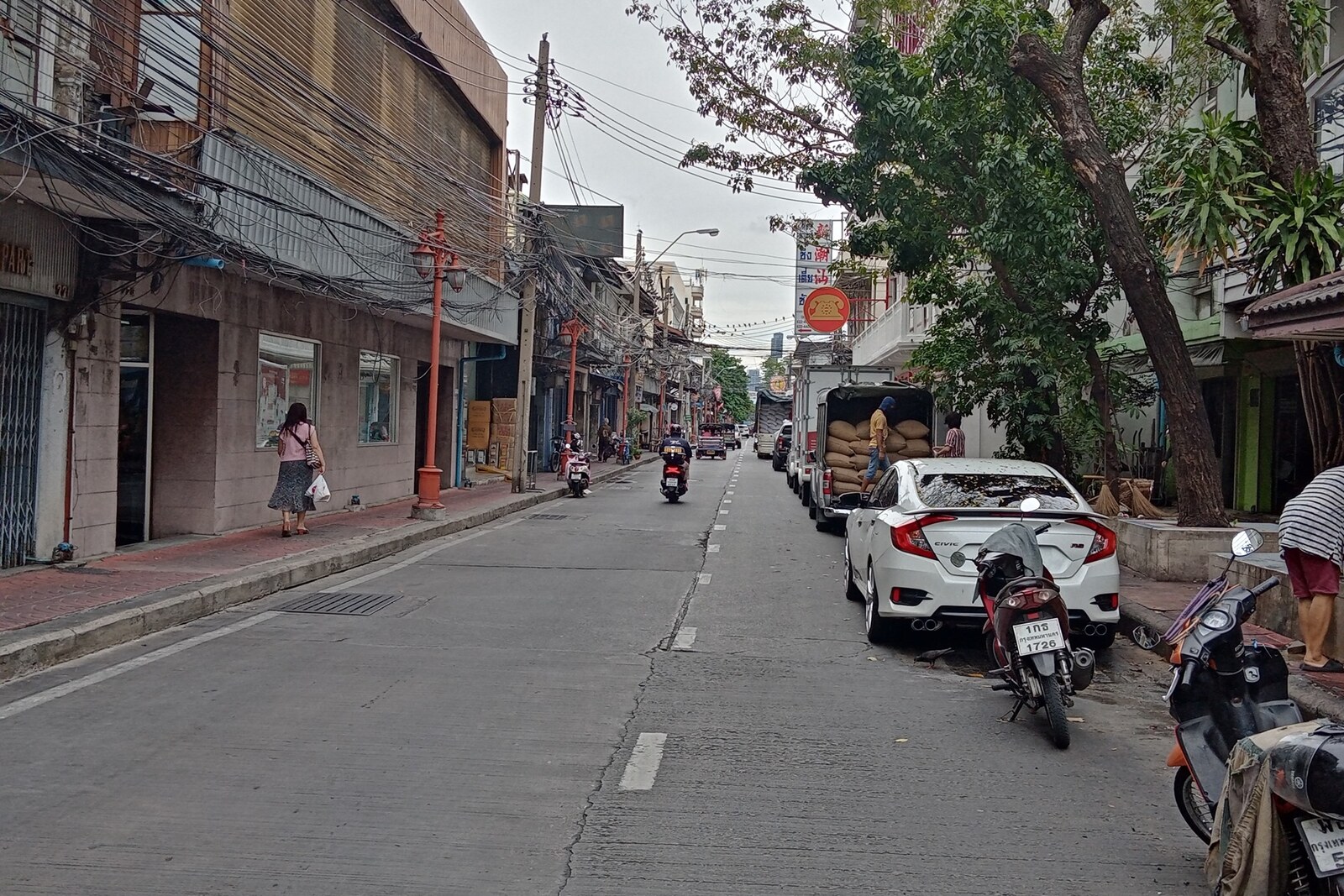
Look around first
What to notice
- Bangkok Bank branch
- Two-story commercial buildings
- Old warehouse facades
- Alleys leading to river piers
The story of the place
On December first, nineteen forty-four, Bangkok Bank opened at the corner of Ratchawong Road and Song Wat Road. The entire institution fit into two neighboring two-story shops: twenty-three employees, teller counters, and a safe. The war was still underway, so the celebration was brief; no commemorative gifts were ordered, and not even a group photograph was taken. According to the recollections of one of the first employees, in the very first hour traders deposited more than nine million baht into accounts. The bank's own capital was four million.
That result explains what Song Wat Road was at the time. After Japanese troops entered, branches of banks from countries in the anti-Hitler coalition closed. It became harder for Bangkok entrepreneurs to borrow money, transfer proceeds, and receive payment on trade bills before they fell due. The shortage of banking services was felt especially strongly here: goods moved from the river piers to warehouses, from the warehouses to the shops of Sampheng, and then farther across the country. The owner of a batch of rice, seeds, or flour needed money before the buyer had settled the bill in full.
The road itself appeared after the Sampheng fire. King Chulalongkorn (Rama V) ordered a new route laid along the Chao Phraya and, according to the accepted version, drew it himself in pencil on a map. The name “Song Wat” means “drawn by the king.” Traders used this corridor between the city and the water: alleys led to private piers, while warehouses for agricultural products, spices, and dried seafood stood nearby. The bank opened at the start of the road, where river trade met the business district of Ratchawong Road.
One of its founders was the thirty-four-year-old trader Chin Sophonpanich. The son of a sawmill worker, he began as a wage laborer, then went into construction materials and knew Bangkok's Chinese wholesalers well. For the new bank, that knowledge was more important than a spacious office: borrowers had to be assessed by their actual deals, stocks of goods, and reputation, rather than by a neatly prepared credit history.
In the first year, Chin remained a shareholder and director, without holding a staff position behind the bank counter. Then the first comprador resigned—a term used for an intermediary between the bank and Chinese traders. He brought in depositors, vetted those seeking loans, stood surety for them, and secured repayment of the debt. Chin took this work on himself. In the first six months of his service, the total amount of deposits almost doubled, while the loans he issued almost never turned into bad debts. Traders received working capital, and the bank gained clients who grew along with it.
In nineteen fifty-two, Chin became the bank's president. Two years later, he opened a branch in Hong Kong, the first overseas branch of a bank from Southeast Asia. The two shops on a trading corner had become one of the region's largest banking networks.
The head office moved to Silom long ago, but a Bangkok Bank branch still operates on Ratchawong Road near Song Wat Road. The first teller counter was nearby, in two cramped shops at the entrance to Ania Keng Alley.
Useful on site
Public street; individual cafés, galleries, shops, and events have different hours, so check specific places separately.
Checked: June 28, 2026. Check the official source before visiting.Most old buildings remain business or private premises, so view interiors only where entry is clearly permitted. Do not block loading at warehouse doors.