 Guide On Map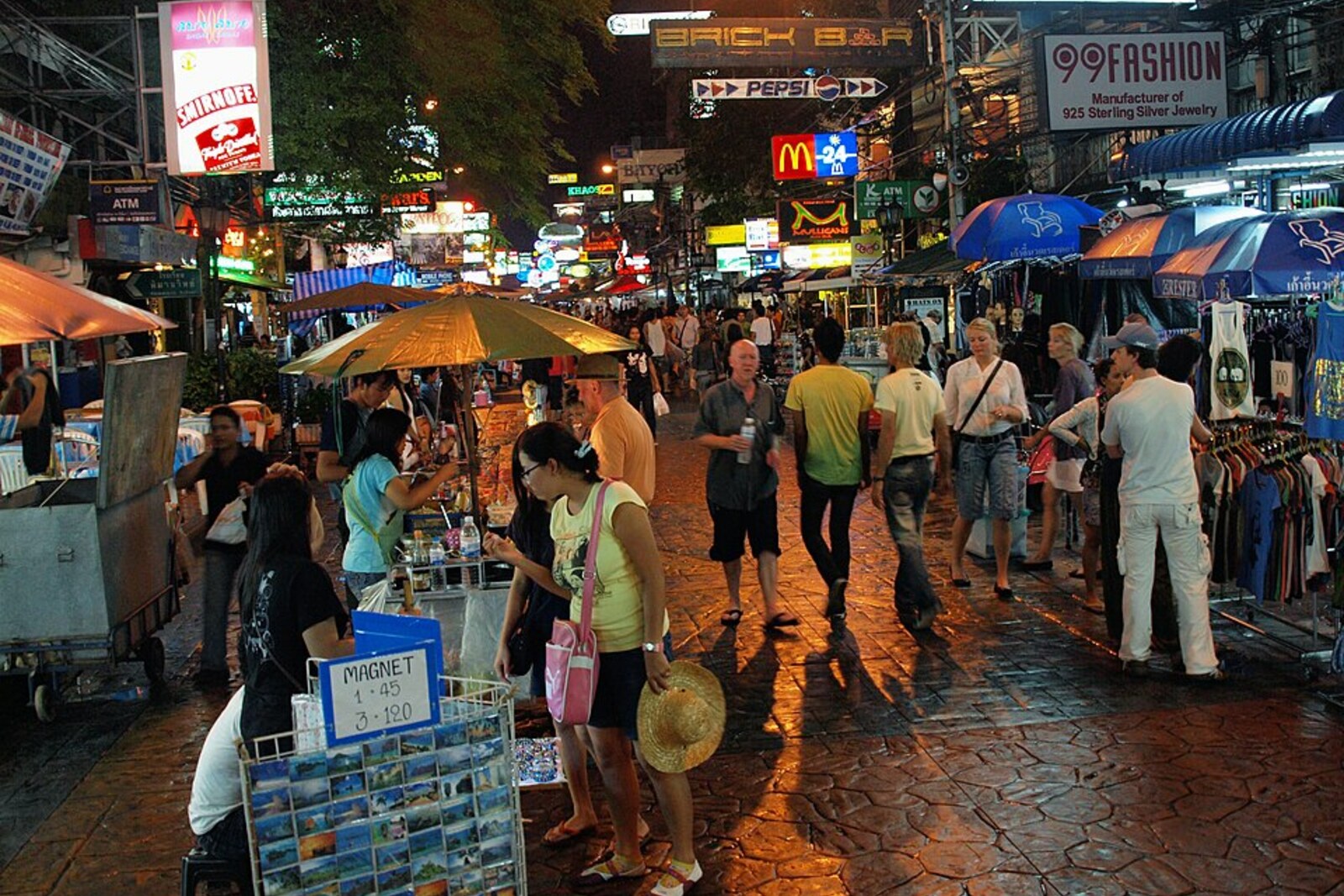
Look around first
What to notice
- The wooden house of the Detkajon family
- The intersection of Khao San Road and Tanao Road
- Guesthouse façades
The story of the place
Khao San translates as “milled rice.” The road was laid out in eighteen ninety-two through the commercial district of Bang Lamphu, where rice was delivered by river and canals. Later, barges gave way to trucks, merchants moved to other districts, but the name remained. The houses along the street sold shoes and groceries and repaired motorcycles; several cheap hotels took in wholesale traders arriving from the provinces.
In one such house, around nineteen eighty, Wongsawat Detkajon began letting foreign travelers stay overnight. He lived here with his family and at first did not build separate rooms for guests: strangers were given floor space in the shared living room. His daughter Rintipa was sixteen when the first Australian stayed with them. The family charged about a dollar fifty per person. For that income, the owners gave guests the part of the house where they themselves spent the day.
Soon Joe Cummings arrived, an American author preparing the first Lonely Planet guidebook to Thailand for people traveling on a small budget. He needed an inexpensive base near the Grand Palace and the main temples of old Bangkok. On Khao San Road, he found two hotels for provincial traders and three family guesthouses—V.S. Guesthouse, run by the Detkajon family, Bonny Guest House, and Tum Guesthouse. He included all five in the guidebook, published in nineteen eighty-two.
A year later, Cummings returned to update the book and found another five guesthouses. Neighbors saw that an empty room brought in steady income and began dividing their own homes into cheap rooms. Over the following decade, more than two hundred places to stay appeared on Khao San Road and in the neighboring lanes. Cafés, ticket offices, shops for travelers, and bars opened next. Today’s evening street grew from a very practical service: here, people could stay overnight cheaply, meet others following the same route, and buy their next ticket straight away.
At the intersection of Khao San Road and Tanao Road, the wooden house of the Detkajon family, built in the nineteen twenties, still stands. Over time, Wongsawat expanded the guesthouse to eighteen rooms, and after his death, his daughters took over the business. The first place he sold to a foreigner was not a room. It was the floor of the family living room.
Useful on site
Open city street; bars, shops, and events follow private/city schedules, and the evening is the noisiest time.
Checked: June 28, 2026. Check the official source before visiting.It is noisiest here in the evening; keep an eye on your belongings and do not stop in the middle of the flow of people to listen.