 Guide On Map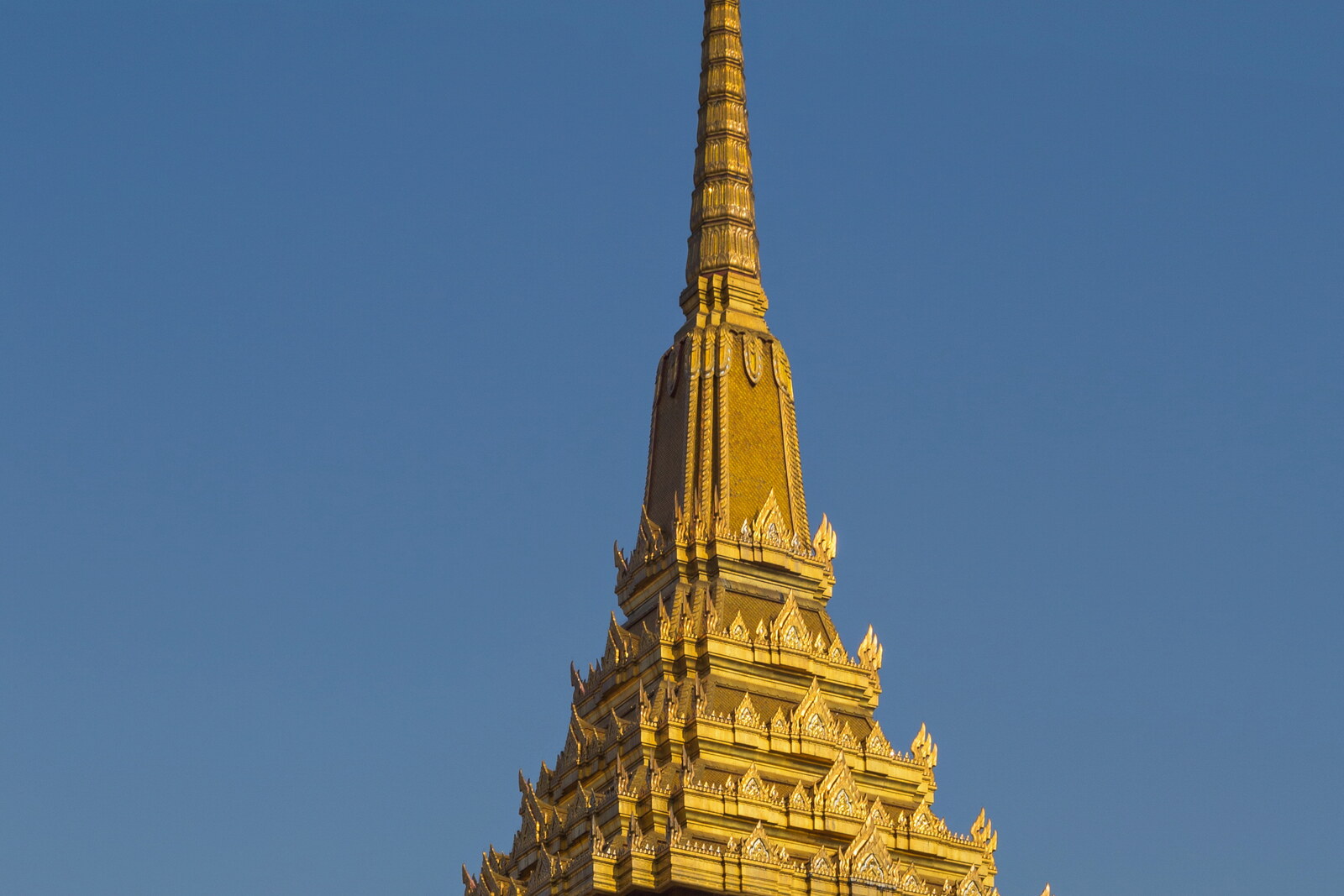
Look around first
What to notice
- Three-meter golden Buddha statue
- White tiered mondop
- Pieces of the plaster covering
- Old temple hall
The story of the place
Wat Traimit Witthayaram preserves an old legend about three Chinese friends, whom oral tradition names as its founders; no documents with their reliable names remain, but the current name has preserved that memory. In the white tiered mondop, a three-meter Buddha statue stands on the upper floor, while the lower rooms contain museums about its past and Bangkok Chinatown. People come with offerings, and display cases preserve pieces of the statue’s former plaster covering. It once stood at another monastery, whose site was later given over to a sawmill operation.
On May twenty-fifth, nineteen fifty-five, Abbot Phra Virathammuni was finally preparing to move an enormous Buddha statue into a new temple hall, after it had stood beneath a tin-roofed shelter for almost twenty years. Monks, novices, and workers rolled the figure onto round logs and tied it with ropes. They began lifting it before noon. By evening, they had managed to raise the statue only a few centimeters off the ground. A rope snapped, the Buddha statue crashed down, and some of the plaster chipped away.
Beneath it was a layer of black lacquer, and beneath the lacquer, gold. The move was stopped. The monks removed the rest of the covering and found a three-meter figure weighing about five and a half tons, cast from gold alloys of varying purity. They found a key in the base: the makers had provided for the statue to be taken apart into nine tightly fitted pieces and transported in sections. The people who had tried to lift it whole with ropes learned this only after it fell.
The Buddha was brought here in nineteen thirty-five. Its former home, Wat Chotanaram, also known as Wat Phraya Krai, had been abandoned; the site of the former monastery was being transferred for a sawmill operation. The monk Phra Maha Chiam Kamalo headed the committee assigned to remove the large plaster-covered statue from there. It was carried by truck, while telephone and tram wires along the route were lifted with long poles. No suitable hall could be found at the new location, so the Buddha was left beneath a shelter beside the old stupa.
At that time, this temple was called Wat Sam Chin—the temple of three Chinese people. Oral tradition says it was founded by three Chinese friends; reliable documents have not preserved their names. After a major reconstruction, the temple received its current name, Wat Traimit Witthayaram. The word “Traimit” also means three friends, so the new name preserved the memory of the legendary founders.
Who cast the statue, where it originally stood, and who covered it with lacquer and plaster are not known for certain. By its proportions and style of depiction, specialists attribute the Buddha to Sukhothai art, meaning the period between the thirteenth and fifteenth centuries. A common version says that people disguised the gold before an invasion to protect the sacred statue from plunder. It is a plausible explanation, but not a documented episode: it has no names or date.
After the fall, the monks installed the uncovered Golden Buddha in the temple hall. Wat Traimit Witthayaram became a place of pilgrimage, and a tall white mondop was later built for the statue—a building where the sacred statue occupies the upper floor, while museums of its history and Bangkok Chinatown are housed below. People worship before the Buddha and leave offerings. The museum display contains pieces of the plaster that workers had taken to be the surface of the statue on the day the rope gave way.
Useful on site
TAT: daily 08:00–17:00; check ticketing and access to the museum floors at the ticket office or on the signs.
Checked: June 28, 2026. Check the official source before visiting.Follow the temple dress code, speak quietly, and do not disturb prayer. Check access to the statue and exhibition rooms separately: they are different parts of the complex.