 Guide On Map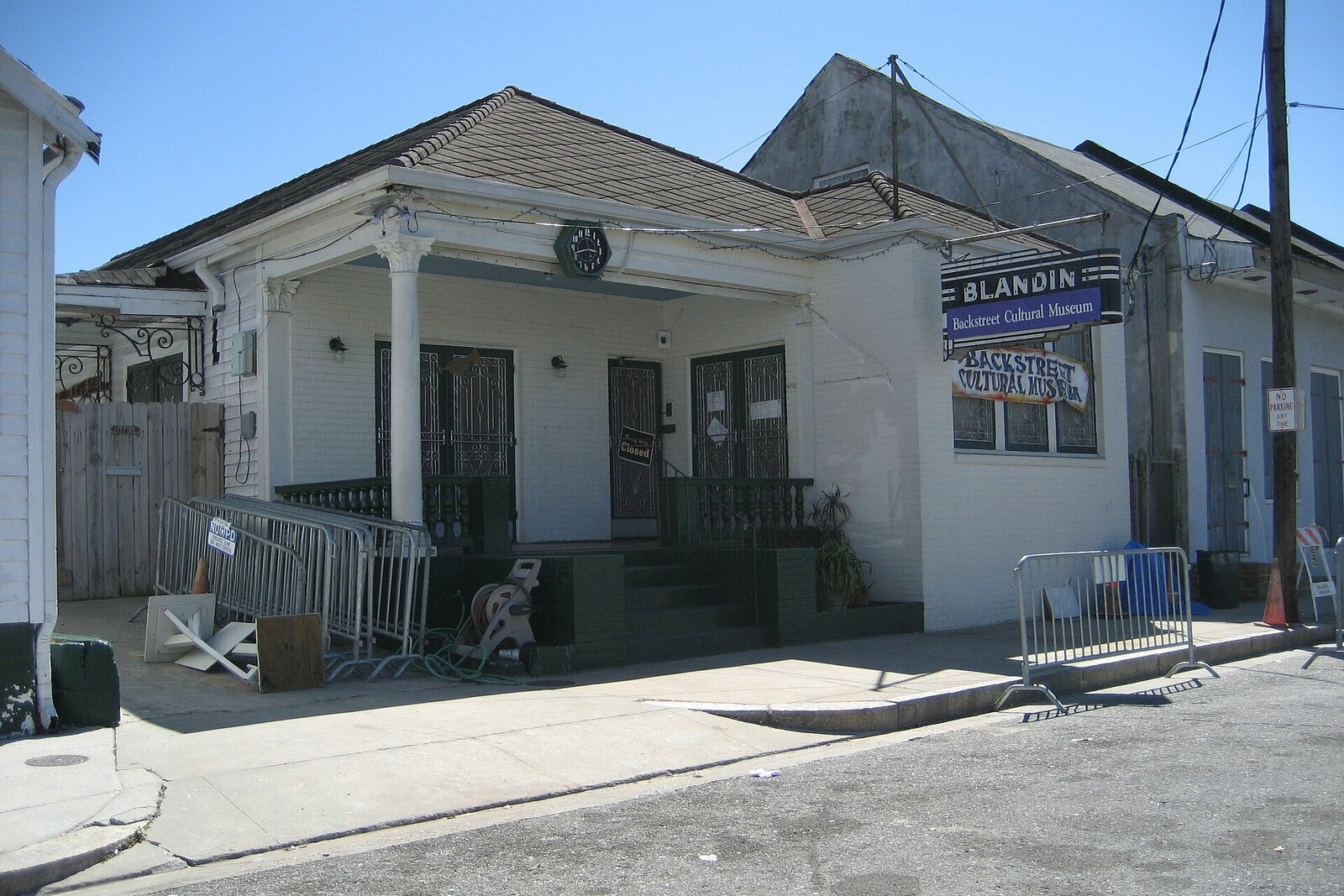

This place does not have an audited photo yet.
Selected place
Backstreet Cultural Museum
Local name:
The rescued collection will show how residents preserve tradition not only in objects, but also in parades.
Start with 20 highlights or open the complete catalog of 138 curated places.
Highlights include Backstreet Cultural Museum, Colonel Short's Villa, Commander's Palace, Congo Square, Dooky Chase’s Restaurant, French Market Arch: a frame for the old market.
We have connected important places into ready-made walks with a clear order, stories and practical details.
Start with 20 highlights, or reveal all 138 curated places.
Local name:
The rescued collection will show how residents preserve tradition not only in objects, but also in parades.
The rescued collection will show how residents preserve tradition not only in objects, but also in parades.
A private house connects the wealth of the cotton trade with wartime confiscation and the return of property.
A family quarrel leads here to the story of a restaurant that was saved and the unexpected cost of a culinary trend.
This is where the conversation begins about why police oversight did not stop the transmission of musical techniques.
The finale moves the struggle from the street to the room where nonviolent actions against segregation were prepared.
Here you will find out why an entrance with a French name leads to a twentieth-century urban reconstruction.
A vendor's personal story will show how remaking the market for visitors changed a family business.
The layout will link the family's costly conveniences with forced labor and surveillance in the rear wing.
The square's open center will explain why flag changes, military reviews, and punishments were held in the same place.
This stop will show how the city's burial system could not cope with a single day of an epidemic.
The finale will explain why commerce remained on these blocks after the public market disappeared.
Here, the scale of the change that road construction brought to Tremé’s commercial and community street becomes visible.
The surviving hall will link the city’s dances to musicians’ work on river steamboats.
Here you will see how an inheritance dispute shaped two long residential buildings.
This stop separates the documented story of people being freed from chains from the later reputation of a “haunted house.”
The purchase of church seats explains how free people of color secured places for their enslaved neighbors as well.
Here you will see how transportation turned former plantation land into an expensive suburb.
The former skating rink reveals the compromises that made it possible to bring a repeatedly remodeled building back to life.
The district's oldest surviving residence preserves the memory of a military contract that ruined its owner's family.
The finale will compare the port shoreline, closed off by warehouses, with the public riverfront.
Nearest audio-route stop: Royal Street: balconies, galleries, and legends — 80 m in a straight line, route French Quarter: market, houses, and riverfront
Nearest audio-route stop: Backstreet Cultural Museum — 10 m in a straight line, route Tremé: music, memory, and the fight for a place
Nearest audio-route stop: North Claiborne Avenue beneath Interstate 10 — 110 m in a straight line, route Tremé: music, memory, and the fight for a place
Nearest audio-route stop: Congo Square — 20 m in a straight line, route Tremé: music, memory, and the fight for a place
Nearest audio-route stop: French Market Canopies: the city behind the counter — 40 m in a straight line, route French Quarter: market, houses, and riverfront
Nearest audio-route stop: French Market Canopies: the city behind the counter — 40 m in a straight line, route French Quarter: market, houses, and riverfront
Nearest audio-route stop: Lafayette Cemetery No. 1 — 60 m in a straight line, route How the Garden District Was Built
Nearest audio-route stop: Jackson Square: stage of flags and punishments — 10 m in a straight line, route French Quarter: market, houses, and riverfront
Nearest audio-route stop: Jackson Square: stage of flags and punishments — 120 m in a straight line, route French Quarter: market, houses, and riverfront
Nearest audio-route stop: Perseverance Lodge No. 4 — 130 m in a straight line, route Tremé: music, memory, and the fight for a place
Nearest audio-route stop: Jackson Square: stage of flags and punishments — 80 m in a straight line, route French Quarter: market, houses, and riverfront
Nearest audio-route stop: Pontalba Buildings: Will in Cast Iron — 90 m in a straight line, route French Quarter: market, houses, and riverfront
Nearest audio-route stop: Perseverance Lodge No. 4 — 120 m in a straight line, route Tremé: music, memory, and the fight for a place
Nearest audio-route stop: Royal Street: balconies, galleries, and legends — 100 m in a straight line, route French Quarter: market, houses, and riverfront
Nearest audio-route stop: French Market Arch: a frame for the old market — 120 m in a straight line, route French Quarter: market, houses, and riverfront
Nearest audio-route stop: Gallier House: comfort and control — 120 m in a straight line, route French Quarter: market, houses, and riverfront
Nearest audio-route stop: St. Augustine Church and the Tomb of the Unknown Slave — 50 m in a straight line, route Tremé: music, memory, and the fight for a place
Nearest audio-route stop: Jackson Square: stage of flags and punishments — 70 m in a straight line, route French Quarter: market, houses, and riverfront
Nearest audio-route stop: Jackson Square: stage of flags and punishments — 120 m in a straight line, route French Quarter: market, houses, and riverfront
Nearest audio-route stop: Jackson Square: stage of flags and punishments — 80 m in a straight line, route French Quarter: market, houses, and riverfront