 Guide On Map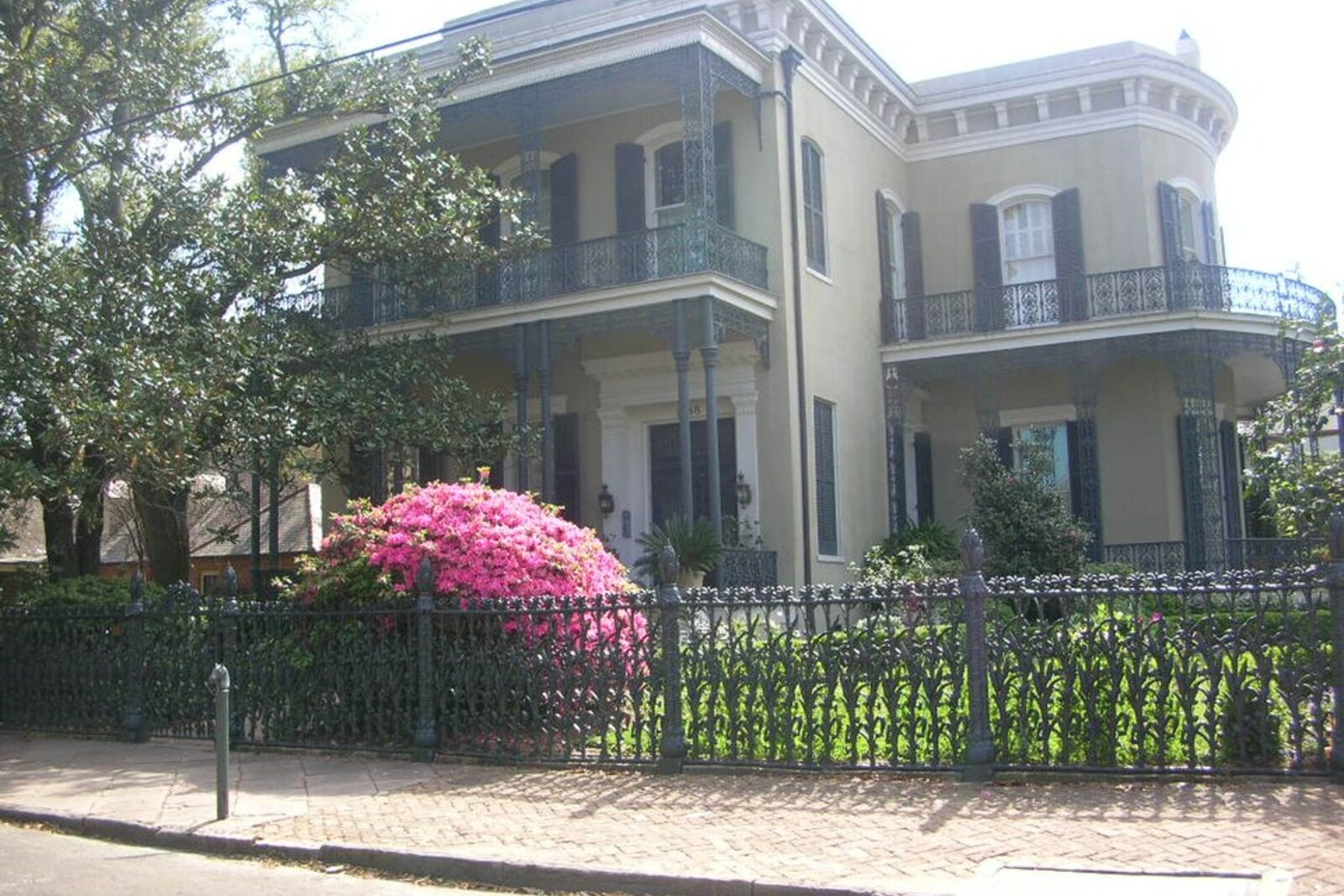
Look around first
What to notice
- Wrought-iron fence
- Cornstalks
- Morning glory
- Historic plaque
The story of the place
The cast-iron fence depicts cornstalks entwined with morning glory. According to a well-known legend, Robert Henry Short commissioned it for his wife, who missed the cornfields of her native Iowa. This is indeed only a legend: researchers of historic decorative metalwork connect the story with another fence on Royal Street. For Colonel Short's Villa, a more prosaic explanation is more likely—the design was offered in the eighteen fifty-eight catalog of the Wood and Perot foundry firm.
Behind the fence stands the house of the man whose surname remains in its name. Robert Henry Short, a Kentuckian who was called a colonel, did not make his living here through army service. He was a cotton commission merchant: he received consignments of cotton from planters, grown through the labor of enslaved people, sold the goods, and kept a percentage for himself. In June eighteen fifty-nine, Short hired the architect Henry Howard and the builder Robert Eustis to build a family villa at the corner of Fourth Street and Prytania Street.
They did not manage to finish the house before the Civil War. Short left for Kentucky, and the federal troops occupying New Orleans declared him an “absent rebel.” On September first, eighteen sixty-three, officials confiscated the unfinished villa.
In March of the following year, it was briefly made the official residence of Michael Hahn, the newly elected governor of the part of Louisiana controlled by the North. Then Major General Nathaniel Banks, commander of the federal troops in the Gulf of Mexico region, moved in. The private house of a cotton merchant became first a governor’s residence, then the home of a general from the army that had taken it from its owner.
After the war ended, Short returned. On August fifteenth, eighteen sixty-five, the federal government returned the property to him, and construction was completed soon afterward. Today, behind the corn fence, there is once again a private residence. Maps and the historic plaque read “Colonel Short's Villa”; the names Hahn and Banks remain only in the list of temporary occupants.
Useful on site
Private residence; viewing only from the street during reasonable daylight hours.
Checked: June 28, 2026. Check the official source before visiting.View the house only from the sidewalk, and do not put your camera through the fence: the villa remains a private home.