 Guide On Map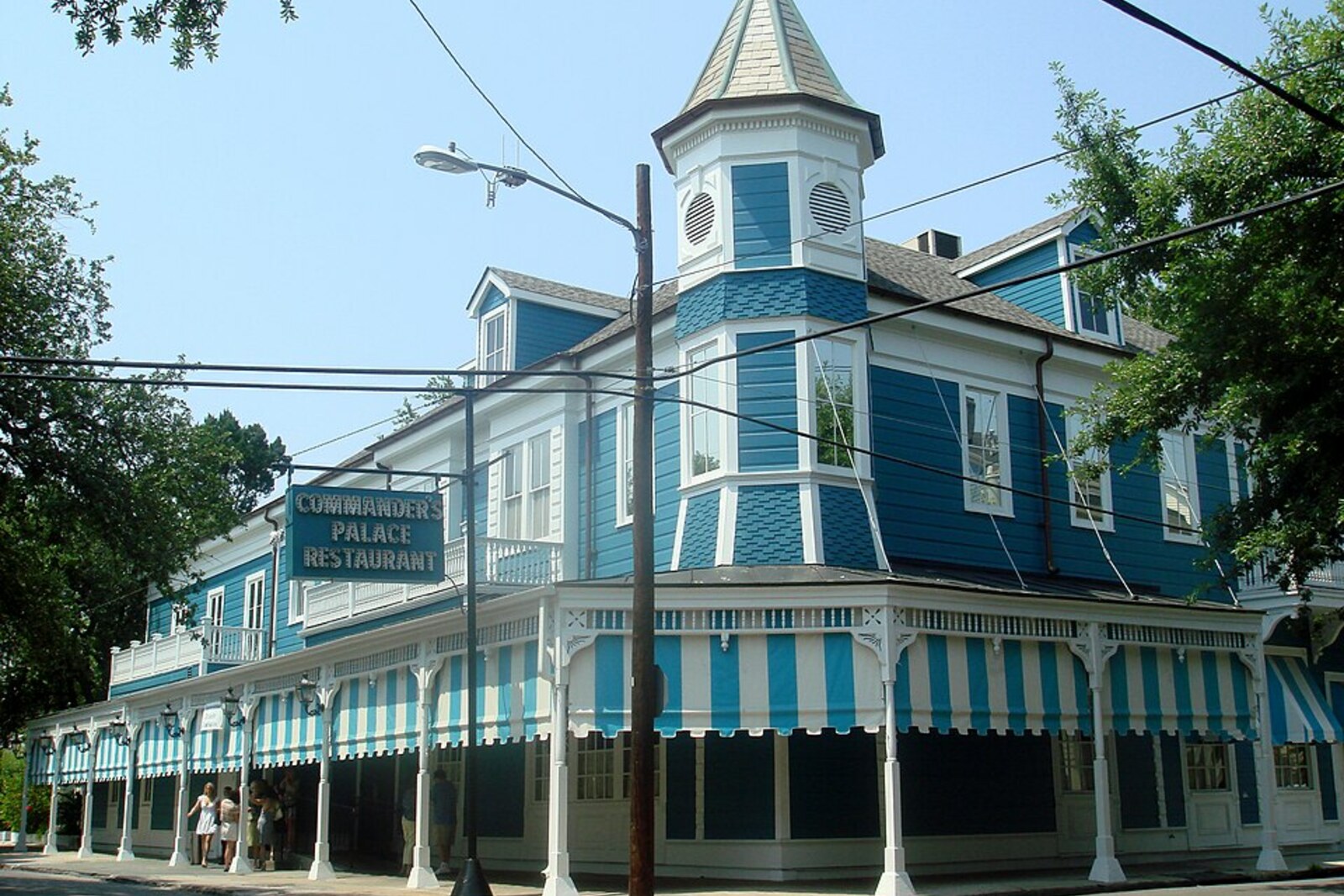
Look around first
What to notice
- The name above the entrance
- The restaurant entrance
The story of the place
From the street, the restaurant's sign and entrance are visible. Behind the door are formal dining rooms and a working kitchen; the Chef's Table stands in it, and diners now eat there. Formerly, the owners and cooks regularly gathered here to discuss the menu and look for ways to bring Cajun home-cooking techniques into polished restaurant service.
Commander is a surname. In eighteen ninety-three, Emile Commander opened the Palace saloon on this corner. The establishment became a restaurant, while the owner's surname remained above the entrance.
Another family defined the restaurant's modern role. In nineteen seventy-four, restaurateur Ella Brennan and four of her siblings quarreled with the relatives with whom they ran the famous Brennan's restaurant in the French Quarter. Their late brother's widow and her sons kept the original restaurant. Ella and her siblings lost the place to which she had given about thirty years and which had supported the family.
They already had a backup address. Five years before the split, the Brennans had bought Commander's Palace, but did not manage it day to day. Now Ella, Dottie, Adelaide, Dick, and John moved here and decided to compete with the best restaurants in New Orleans. The sisters took charge of the dining rooms, the brothers of the kitchen and renovations, while Ella was responsible for the food and service. Profit did not come at once: when asked when they understood that they had been saved, Dottie answered many years later: when they began making money.
Ella invited Paul Prudhomme, a cook from the Cajun part of Louisiana. He became the first American-born chef to lead the kitchen at Commander's Palace. On Wednesdays at three o'clock, the Brennans, Prudhomme, and other cooks gathered for mandatory discussions of the menu. Ella demanded that they bring new ideas and worked to make rural Cajun techniques fit for serving in a formal Garden District restaurant.
At one such meeting, she asked for redfish to be prepared the way fish is fried right after the catch. Who created the result remained disputed. In nineteen eighty-six, Ella said that the first version had been prepared by the German chef Gerhard Brill, who worked under Prudhomme, and that the dish had no sole inventor. Almost thirty years later, she recalled how Prudhomme developed the fish here into a version with butter, a thick spice mixture, and a blazing-hot cast-iron skillet. At Commander's Palace, it was called fried redfish. Prudhomme established the name “blackened redfish” later, after he left and opened his own restaurant.
Lines formed outside its doors. Prudhomme became one of the first American celebrity chefs, and fish, chicken, and meat began to be blackened across the country. Demand for redfish rose so sharply that commercial fishing for it in the federal waters of the Gulf of Mexico was banned in nineteen eighty-seven. Prudhomme, concerned about the consequences of his own fame, considered taking the dish off the menu and limited orders to one serving per table. The ban on fishing in these waters remains in effect to this day.
In the working kitchen at Commander's Palace, guests are still received at the Chef's Table, one of the first restaurant tables of its kind in the country. Ella recalled that their mandatory meetings eventually moved here. Now diners eat at this table; on Wednesdays at three o'clock, Brennan, Prudhomme, and Brill once debated here.
Useful on site
Operating restaurant; hours and dress code checked on the official website.
Checked: June 28, 2026. Check the official source before visiting.Viewing from outside is enough for the route. Visiting the restaurant is a separate plan that is worth arranging in advance.