 Guide On Map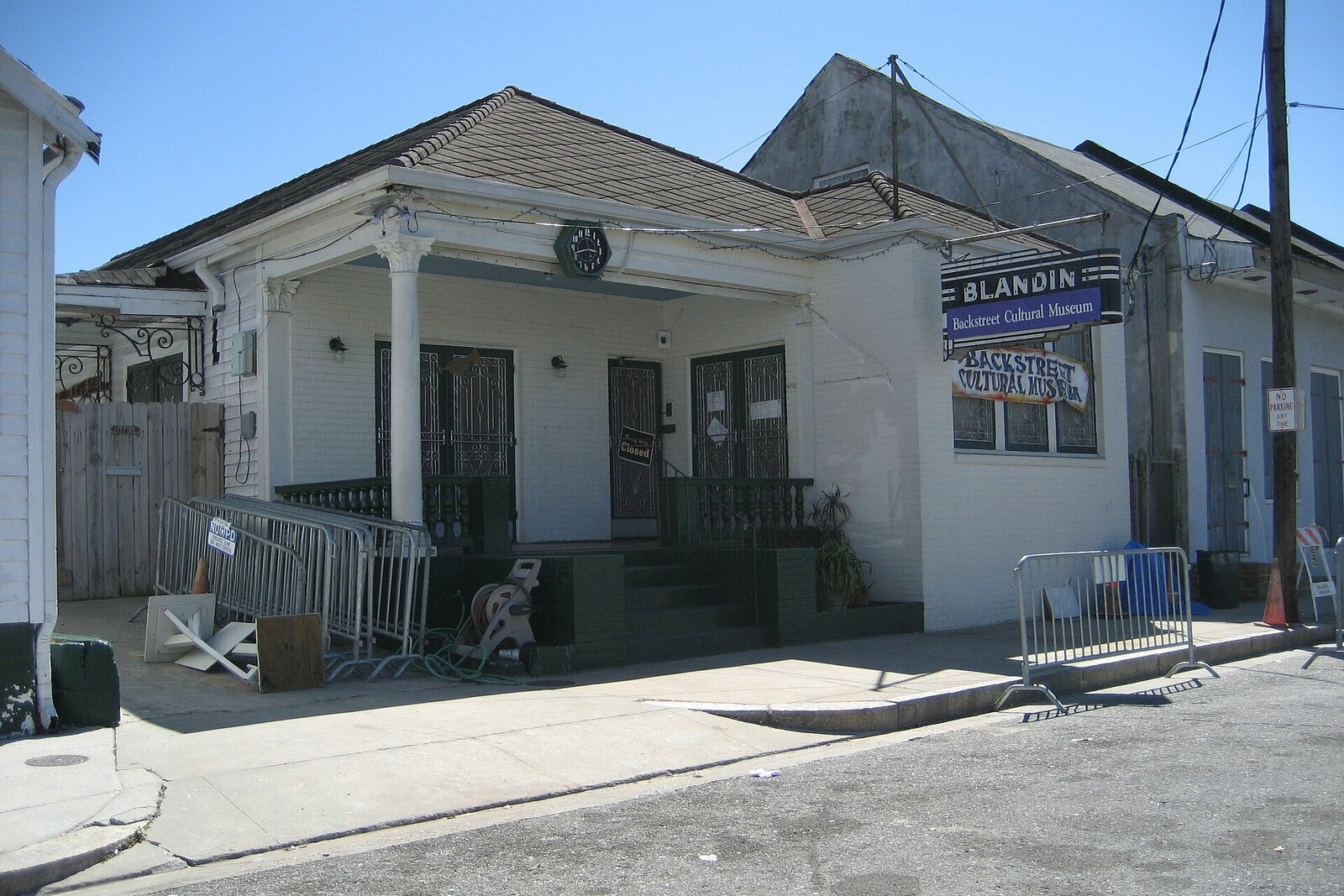
Look around first
What to notice
- Mardi Gras Indian costumes
- Parade umbrellas and ribbons
- Photographs of second lines
- Jazz funeral programs
The story of the place
This house on St. Philip Street holds hand-embroidered carnival outfits, umbrellas with ribbons, jazz funeral programs, photographs, and recordings of hundreds of street processions. The first exhibition occupied a two-car garage, and the collection was expanded by the participants in street societies themselves: they brought items along with the names of those who wore them. In old photographs, children recognize relatives, yet the display still shows only part of the collection.
On July ninth, two thousand twenty-two, a second-line parade made its way from the museum's former building to this house on St. Philip Street. In New Orleans, this is what they call the open part of a procession: the organizers and a brass band lead the way, followed by neighbors and anyone who wishes to join. That day, participants marked the return of the museum, which had been without premises for almost a year.
Its founder, Sylvester "Hawk" Francis, died in September two thousand twenty. Leadership passed to his daughter, Dominique Dilling-Francis: she had to preserve her father's collection and keep it in Tremé. A year later, Hurricane Ida knocked a tree onto the roof of the former museum—a former funeral home opposite St. Augustine Church. Water began coming inside. Dominique, together with volunteers, carried out the exhibits, dried them, and packed them into boxes. The collection required four large storage units. Most of the items were saved, but returning to the damaged building was impossible.
The story of one photograph explains the value of these boxes. In the nineteen seventies, Sylvester belonged to the Gentlemen of Leisure mutual aid society. Such clubs helped their members during illness and funerals, and on Sundays they held street parades. Once, a photographer demanded thirty-five dollars from Francis for his own portrait from a parade. Sylvester then bought a camera and an eight-millimeter film camera. He photographed carnival outings, jazz funerals, and second lines, made two copies, and gave one free to the person in the picture.
Participants responded in kind. Victor Harris, leader of the Mandingo Warriors, and members of other associations brought Francis embroidered costumes, umbrellas, and parade ribbons. In nineteen eighty-eight, he displayed the gifts and photographs in his two-car garage. From that first exhibition in the back streets of Tremé came the name “Backstreet”—literally, “a back alley.”
Joan Brown Rhodes, the owner of a funeral home and Francis's former employer, began bringing tour groups to the garage. When the Blandin Funeral Home, which belonged to her family, closed, she offered the vacated building for the collection. Francis hesitated at first, then agreed; the museum opened there in nineteen ninety-nine.
The main exhibits here are Mardi Gras Indian costumes. This is the historical name for Black urban groups whose members spend months hand-sewing beads, stones, and feathers, then meet in the streets on carnival days. Nearby are kept the clothing of mutual aid societies, items from the Baby Dolls women's groups, jazz funeral programs, photographs, and recordings of more than five hundred processions. Many items were brought by the people pictured in Francis's photographs, along with the story of who wore them.
That is why people come here both as to a museum and as to a headquarters for street traditions. In the photographs, children find relatives; on Mardi Gras days, Mardi Gras Indians, the Baby Dolls, and members of the North Side Skull and Bone Gang gather by the building; second lines also begin here and return here. Dominique changes the display because the rescued collection does not fit in its entirety in the galleries.
The former address was left without a museum after the hurricane. This door on St. Philip Street is the endpoint of the parade by which Tremé residents accompanied Backstreet from the old house to the new one on July ninth, two thousand twenty-two.
Useful on site
Officially open Tuesday through Saturday, 10:00—16:00. As of the date checked, an adult ticket is listed at 25 dollars, with discounted categories below. Checked 2026-06-30.
Checked: June 30, 2026. Check the official source before visiting.Check your visit separately and do not count on entering automatically with the route. If the museum is open, allow time for a leisurely look at the handmade details.