 Guide On Map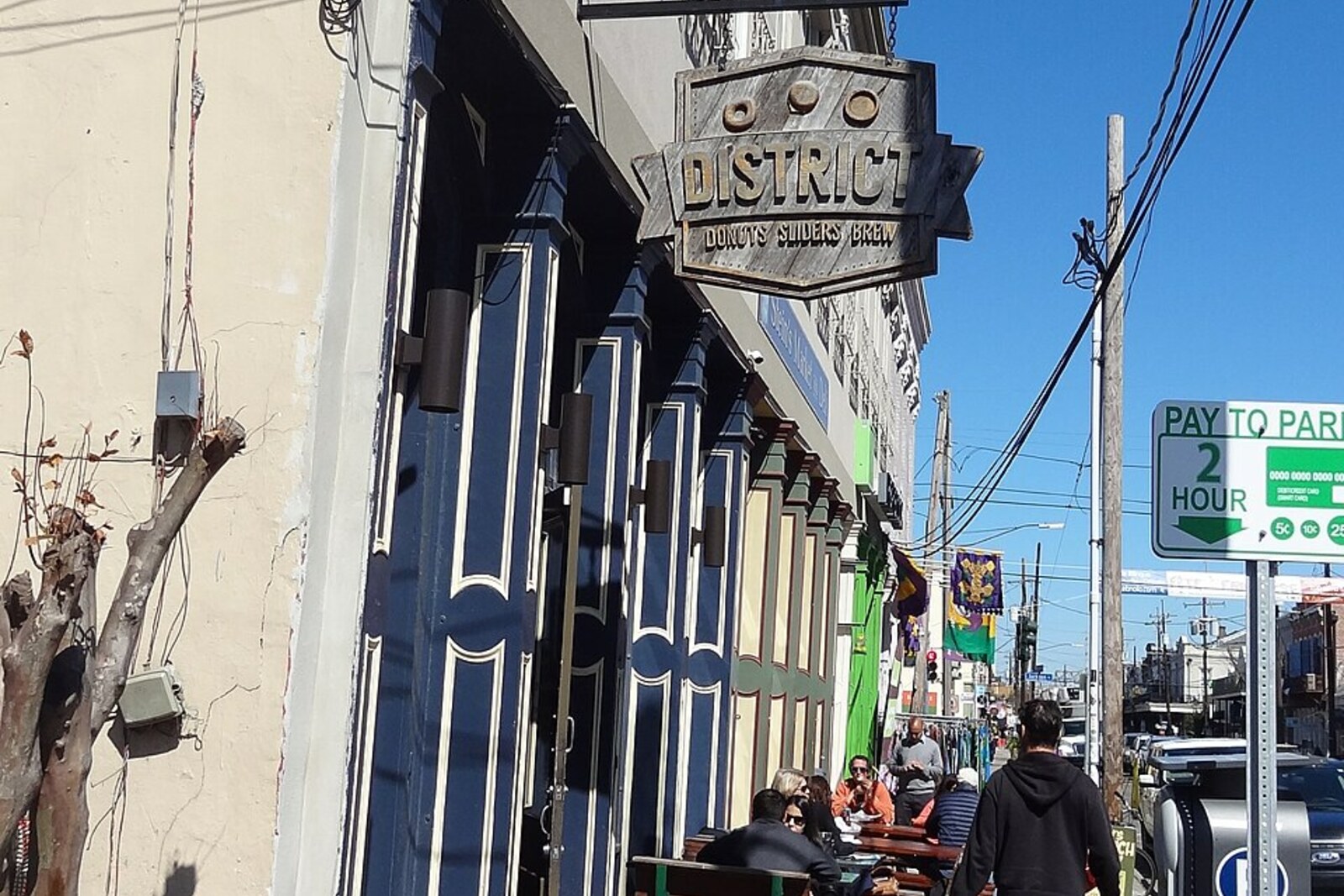
Look around first
What to notice
- Former market building
- Divided retail spaces
- Former bank building
The story of the place
On April twenty-fourth, seventeen eighty-eight, city surveyor Carlos Trudeau marked the first five blocks of what would become Magazine Street on a plan. New Orleans was still recovering from the fire that had destroyed most of the old city, and the Gravier family decided to divide the neighboring plantation into lots for a new suburb. Trudeau named one of the streets Calle de Almacén—the street of the storehouse. It began at a fortification beside which stood a tobacco warehouse and a gunpowder storehouse. Which of the two storehouses gave it its name has not been established with certainty.
Most city residents spoke French and pronounced the name their own way—Rue du Magasin. Later, English-speaking residents turned it into Magazine Street. The English word “magazine” here retained its old meaning of a storehouse; the name has nothing to do with periodicals. The first five blocks lay far from here, near today’s customs house. The street was extended to this place in stages, as plantation owners sold land for new blocks.
The Ninth Street Market brought commerce to the present-day intersection. In the second half of the nineteenth century, city officials established public markets where they could control the sale of fresh meat and vegetables, rent out stalls, and collect license fees. For a seller, a rented stall cost far less than a separate shop. A person with little capital could begin trading: suppliers, daily work, and money for a space were required.
Officials did not rely solely on the market’s appeal. When entrepreneurs began opening private grocery stores, the city council in nineteen oh one prohibited them from operating within nine blocks of a public market. Buyers from the surrounding homes were left with little choice, and the flow of people came here. Shoemakers’ and repair shops, coffee stands, clothing stores, and restaurants opened nearby. Bankers followed the cash: across from the market, a branch appeared whose name explicitly mentioned the Ninth Street Market.
Entrepreneurs in this district understood the value of such a neighbor. In the fall of nineteen oh three, they demanded from The Daily States the same advertising section that merchants at another city market had already received. In November, a large issue appeared about the Ninth Street Market and the nearest businesses. Owners described what they sold, how they had started their businesses, where they lived, and who could vouch for them. For a small merchant, this was a test of reputation: the customer was invited to trust not the sign, but the person behind the counter.
Entrepreneurs who opened corner grocery stores gradually learned to manage without public markets: refrigeration equipment made it possible to store products in separate shops, and automobiles changed shoppers’ usual routes. The city’s protection only delayed the outcome. By the nineteen fifties, all four public markets on Magazine Street had closed.
Between Ninth Street and Harmony Street, the former market building still stands, now divided among other businesses. Across Harmony, the bank that came to the market’s cash office survives. The market is gone, but the shops around it remain on precisely the blocks to which meat and vegetable sellers once brought customers.
Useful on site
The street is always open; the hours of shops, cafés, and galleries depend on the individual business.
Checked: June 28, 2026. Check the official source before visiting.This is an active commercial street: look at the façades without blocking entrances, and ask each establishment on site about access.