 Guide On Map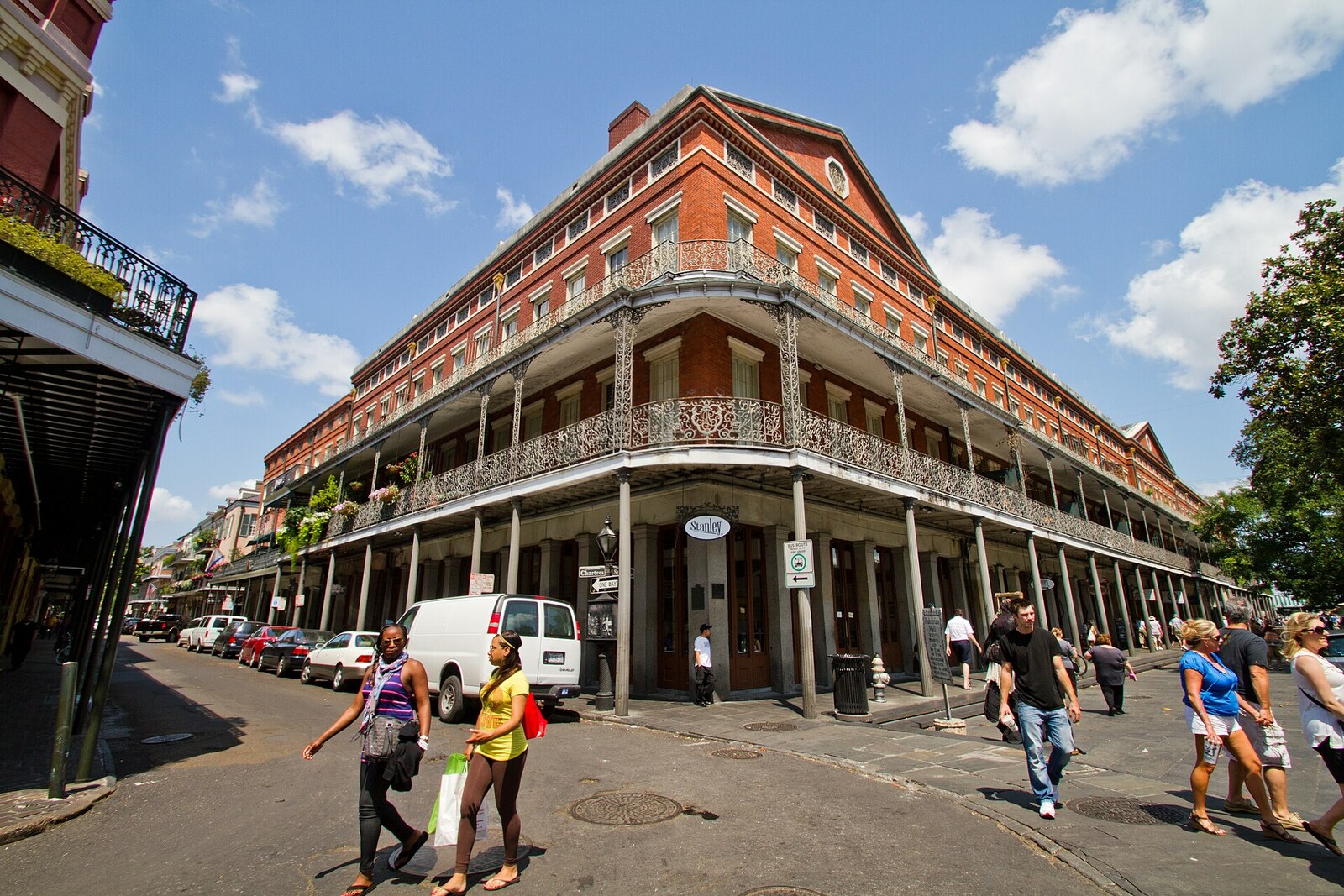
Look around first
What to notice
- Cast-iron galleries
- Repeating monogram
- Shops on the lower floors
- Apartment windows above the galleries
The story of the place
Two identical buildings with cast-iron galleries stretch along the sides of the square. The lower level is occupied by shops, and people live in the windows above them. Each building is made up of sixteen adjoining houses, designed from the outset for both commerce and rental apartments. They replaced the earlier income-producing development on the plot near what is now Jackson Square and have retained this arrangement to the present day.
A monogram combining the initials of two surnames repeats in the cast-iron grilles of the long galleries: Almonester and Pontalba. The first belonged to Micaela, a wealthy New Orleans heiress. She acquired the second upon marriage—from a family that spent many years trying to take control of her fortune and these plots.
Micaela was three years old when her father, the landowner Don Andrés Almonester, died. He left his only daughter income-producing houses and land on both sides of Place d'Armes—the name then used for what is now Jackson Square. It was rental real estate that provided the family with money.
At fifteen, Micaela was married off to her twenty-year-old relative, Célestin de Pontalba. His father, Baron Xavier de Pontalba, expected to transfer his daughter-in-law's property under the control of his son, whom he himself controlled. One day Xavier forbade Micaela from seeing her mother until she surrendered half of the property on Place d'Armes. Micaela had just buried her first child and was pregnant again.
A judge in Louisiana ruled against the Pontalba family: local law recognized Micaela's New Orleans inheritance as her separate property. But the spouses lived in France, where a woman could not divorce, and by leaving her husband she risked losing her property and access to her children. Micaela went to court and tried to separate her money from the family funds. In eighteen thirty-four, Xavier locked her in a bedroom and fired point-blank four times. She grabbed the barrel and lost two fingers, but survived. Xavier went into the next room and shot himself. After two legal proceedings, Micaela gained the right to manage her fortune independently.
Construction began on the preserved plots in eighteen forty-nine. Micaela ordered the old rental houses demolished and, with her own money, built two buildings, each containing sixteen connected houses. The lower floors were intended for shops, the upper floors for rental housing. She chose the details, checked the expenses, and personally supervised the work. When the first building was completed, Micaela lived here briefly with her two sons. The second building was completed in eighteen fifty-one, after which she left for France and never saw New Orleans again.
Shops and restaurants still operate below, with apartments above them. And along both facades, cast iron repeats the combined initials of Almonester and Pontalba—the heiress's surname and the surname of the family that never did get her land.
Useful on site
View the buildings from the square or the public sidewalk. The upper floors are used as residences, so the stairs, doors, and galleries should not be considered visitor areas.