 Guide On Map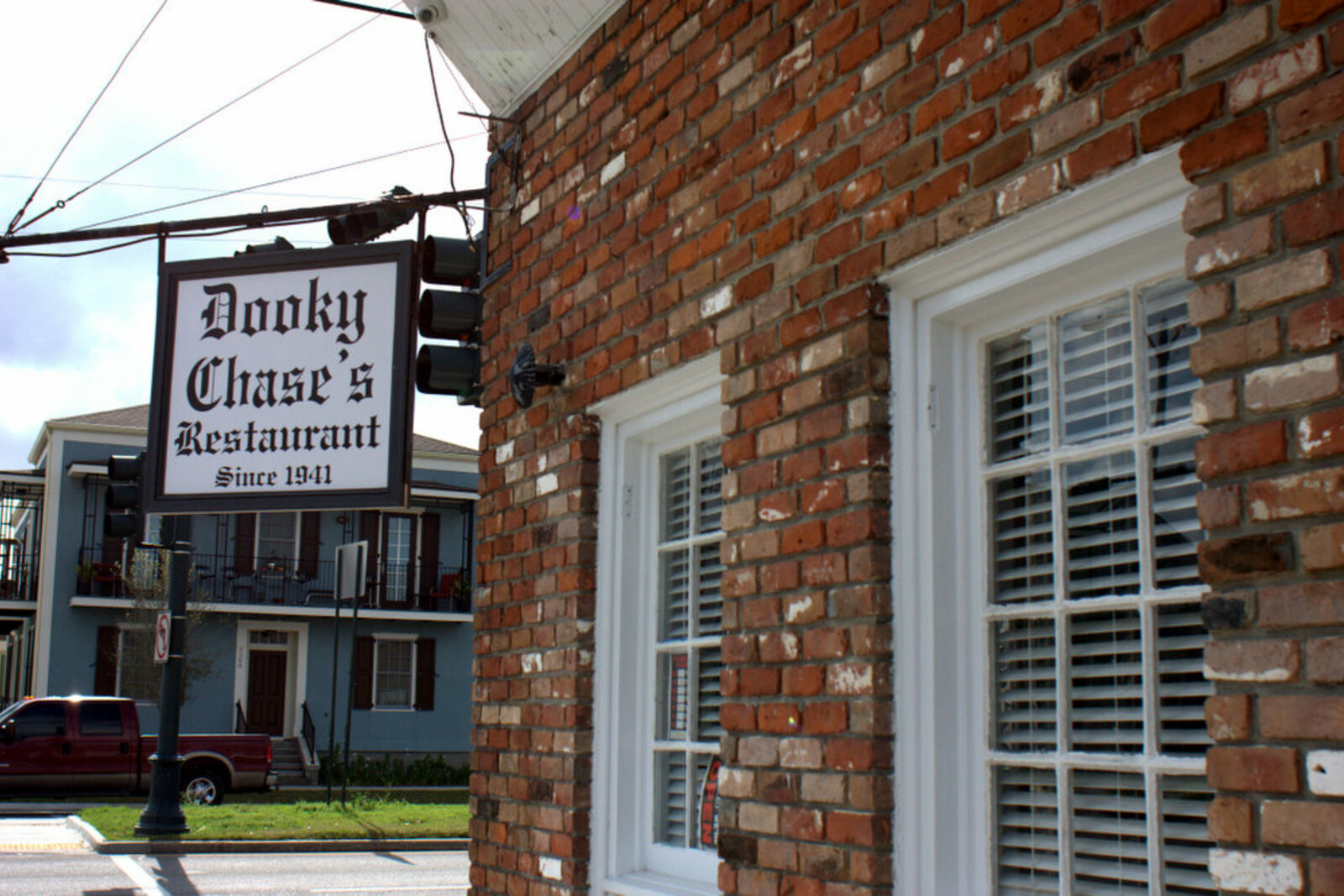
Look around first
What to notice
- The Dooky Chase’s sign
- White tablecloths
- Works by Black artists
- Inscriptions on the steps
The story of the place
The Dooky Chase’s sign preserves a family nickname. Dooky was Edgar "Dooky" Chase Sr., who in nineteen thirty-nine opened a small shop selling sandwiches and lottery tickets with his wife Emily Chase. Two years later, the couple moved the business to Orleans Avenue. Their son, also named Edgar and nicknamed Dooky, played in a jazz band and helped the family.
In nineteen forty-six, Edgar "Dooky" Chase Jr. married Leah Lange. Before marrying, she earned a living as a waitress in the French Quarter and knew how customers were served in expensive restaurants. Black residents of New Orleans almost never got in: the city’s establishments separated customers by skin color. Leah brought the service standards she knew to the family diner—setting tables with white tablecloths, introducing full Creole dishes, and later hanging works by Black artists. This became one of the city’s first upscale restaurants where a Black customer could hold a family meal, a business meeting, or a celebration.
The riskiest meetings took place upstairs. In the era of racial segregation, a gathering of Black and white activists together could end in arrests, the closure of the establishment, or an attack. Leah and Dooky gave them a small room on the second floor. The family received threatening letters, and once a bomb was thrown into the restaurant. Yet, according to Leah’s recollections, police officers never once entered during the meetings.
In the fall of nineteen sixty, Oretha Castle, a young organizer in the equal-rights movement, and Rudy Lombard, a student at Xavier University of Louisiana, came here. They led the local chapter of the Congress of Racial Equality—an interracial organization that sought to end segregation through nonviolent action. Their immediate target was the lunch counters in stores on Canal Street: Black people were allowed to shop, but were refused food at the same counters where white people sat.
Leah later recalled that actions at Woolworth’s and McCrory’s were planned in the restaurant’s upstairs room. On September seventeenth, Oretha and Rudy entered McCrory’s with two companions, took seats at the counter, and asked to be served. The manager refused. When the four did not leave, he closed the counter and called the police. In court, the manager admitted that the visitors had behaved calmly and that he had demanded they leave because of the skin color of three participants and because the fourth, a white student, was sitting with them.
All four were arrested and convicted of refusing to leave the store. The activists continued the boycott, and by nineteen sixty-two both retail chains had begun serving Black customers at their counters. A year later, the Supreme Court of the United States overturned the convictions of the participants in the action. The justices found that the mayor and police chief had banned such demonstrations in advance, meaning the store manager had acted under direct pressure from city officials.
Before going out onto the street, participants ate at Leah’s, then headed to the actions; after an arrest, those who could returned here. Staff carried dishes upstairs along a narrow staircase while, behind closed doors, the next outing was discussed.
In January two thousand twenty-five, the Chase family reopened the restored upstairs room. Its former dimensions were preserved, an elevator was added, key events in the struggle against segregation were written on the steps, and the meetings held here were depicted on the wall. It is now a dining room again: guests of the restaurant named for Edgar "Dooky" Chase Sr. sit at its tables.
Useful on site
Lunch Tuesday through Friday, 11:00—15:00; dinner Friday and Saturday, 17:30—21:00. Reservations are strongly recommended. Checked 2026-06-30.
Checked: June 30, 2026. Check the official source before visiting.Reserve a table regardless of the walk and come as a restaurant guest, not for an unreserved museum visit. If you have not planned a visit, finish the audio outside, without disturbing guests or staff.