Amphitheatre of the Three Gauls History Amphitheatre of the Three Gauls: story on the “Croix-Rousse: canuts, traboules, and the descent to Place des Terreaux” route The arena takes the route from the working-class nineteenth century to the public authority of Roman Lugdunum.
Ancient Theatre of Fourvière and the Odeon of Lyon History Ancient Theatre of Fourvière and the Odeon of Lyon: story on the “Fourvière and Vieux Lyon: The Cost of Grand Plans” route The excavations will show how an incorrect guess changed the fate of the site that was found.
Basilica of Notre-Dame de Fourvière and the Chapel of the Virgin of Fourvière History Basilica of Notre-Dame de Fourvière and the Chapel of the Virgin of Fourvière: story on the “Fourvière and Vieux Lyon: The Cost of Grand Plans” route Two neighboring churches connect a wartime vow with the hill’s present-day silhouette.
Church of Saint-Nizier History Church of Saint-Nizier: story on the “Presqu'île: Who Ran Central Lyon” route Here, the dispute over power will move from the revolutionary city hall to the origins of the city council.
Cour des Voraces History Cour des Voraces: story on the “Croix-Rousse: canuts, traboules, and the descent to Place des Terreaux” route Here, the renovation of a residential building becomes a dispute over whether residents should make way for renewal.
From Saint-Jean Cathedral to Place du Change History From Saint-Jean Cathedral to Place du Change: story on the “Fourvière and Vieux Lyon: The Cost of Grand Plans” route The final stretch will show how the square’s commercial settlements became linked to a royal loan.
Gros Caillou History Gros Caillou: story on the “Croix-Rousse: canuts, traboules, and the descent to Place des Terreaux” route This stop links new urban transport with a discovery the builders decided to preserve.
Jardin du Rosaire History Jardin du Rosaire: story on the “Fourvière and Vieux Lyon: The Cost of Grand Plans” route The descent will link a pilgrimage route to an attempt to repay creditors.
Montée de la Grande-Côte History Montée de la Grande-Côte: story on the “Croix-Rousse: canuts, traboules, and the descent to Place des Terreaux” route A plaque marks the place where the Canuts tried to manage everyday trade themselves.
Mur des Canuts History Mur des Canuts: story on the “Croix-Rousse: canuts, traboules, and the descent to Place des Terreaux” route Here the district first appears through people whom the artists returned to the façade at different ages.
Museum of Fine Arts of Lyon History Museum of Fine Arts of Lyon: story on the “Presqu'île: Who Ran Central Lyon” route Here it will become clear why the city museum began alongside looms.
Opéra de Lyon History Opéra de Lyon: story on the “Presqu'île: Who Ran Central Lyon” route A contemporary episode will test whom the city is prepared to consider a real artist.
Passage Thiaffait History Passage Thiaffait: story on the “Croix-Rousse: canuts, traboules, and the descent to Place des Terreaux” route The passage will let you compare the first silk workers with today’s fabric artisans.
Place Bellecour History Place Bellecour: story on the “Presqu'île: Who Ran Central Lyon” route The finale will show why the restored facades matter more than their unified ceremonial appearance.
Place de la Croix-Rousse History Place de la Croix-Rousse: story on the “Croix-Rousse: canuts, traboules, and the descent to Place des Terreaux” route Here you will see why the workings of the silk trade once drove workshop owners out of their apartments and into the streets.
Place des Jacobins History Place des Jacobins: story on the “Presqu'île: Who Ran Central Lyon” route This stop will show how a church election turned into a problem of locked doors.
Place des Terreaux History Place des Terreaux: story on the “Croix-Rousse: canuts, traboules, and the descent to Place des Terreaux” route The finale will show how the space in front of Lyon City Hall became a site of direct dispute with the city authorities.
Place des Terreaux History Place des Terreaux: story on the “Presqu'île: Who Ran Central Lyon” route Here, the route begins a conversation about who had the right to act on the city’s behalf.
Théâtre des Célestins History Théâtre des Célestins: story on the “Presqu'île: Who Ran Central Lyon” route Here, monastic land will become a test for a commercial project that needed a theater.
abbaye de l'Île Barbe Sacred sites African Museum of Lyon Museums Aire de la Compas-Raison Streets and squares Basilica of Notre-Dame de Fourvière Sacred sites Nearest audio-route stop: Basilica of Notre-Dame de Fourvière and the Chapel of the Virgin of Fourvière — 20 m in a straight line, route Fourvière and Vieux Lyon: The Cost of Grand Plans
Basilica of Saint-Martin d'Ainay Sacred sites Basilique Saint-Just de Lyon Sacred sites Basilique Saint-Laurent de Choulans Sacred sites Centre d'Histoire de la Résistance et de la Déportation Museums Chapelle de la Trinité Sacred sites Church of Saint-Bruno des Chartreux Sacred sites Church of Saint-Just, Lyon Sacred sites Clos Jouve Parks Contemporary Arts Museum of Lyon Museums Église de l'Immaculée-Conception de Lyon Sacred sites église de la Rédemption (Lyon) Sacred sites Église du Bon-Pasteur Sacred sites Église du Sacré-Cœur de Lyon Sacred sites Église Notre Dame Saint-Vincent Sacred sites Église Notre-Dame Saint-Louis de la Guillotière Sacred sites Église Notre-Dame-de-Confort Sacred sites Nearest audio-route stop: Place des Jacobins — 50 m in a straight line, route Presqu'île: Who Ran Central Lyon
Église Saint-André (Lyon) Sacred sites Église Saint-Bernard Sacred sites Nearest audio-route stop: Gros Caillou — 110 m in a straight line, route Croix-Rousse: canuts, traboules, and the descent to Place des Terreaux
Église Saint-Denis-de-la-Croix-Rousse de Lyon Sacred sites église Saint-Eucher de Lyon Sacred sites Église Saint-François-de-Sales de Lyon Sacred sites Église Saint-Georges Sacred sites Église Saint-Joseph des Brotteaux Sacred sites Église Saint-Nizier Sacred sites Nearest audio-route stop: Church of Saint-Nizier — 40 m in a straight line, route Presqu'île: Who Ran Central Lyon
Église Saint-Paul Sacred sites Église Saint-Polycarpe Sacred sites Nearest audio-route stop: Passage Thiaffait — 50 m in a straight line, route Croix-Rousse: canuts, traboules, and the descent to Place des Terreaux
Église Saint-Pothin Sacred sites église Saint-Sacrement de Lyon Sacred sites Fontaine Bartholdi History Nearest audio-route stop: Place des Terreaux — 10 m in a straight line, route Presqu'île: Who Ran Central Lyon
Fontaine, place du Maréchal-Lyautey History Fort de la Duchere History Fort de Loyasse History Fort Saint-Irénée History Fort Saint-Jean History Gadagne (museums) Museums Grand Temple de Lyon Sacred sites Grande synagogue de Lyon Sacred sites Jardin botanique de Lyon Parks Jardin de la Grande Côte Parks Jardin des Chartreux Parks Jardin des Curiosités Parks Jardin des plantes de Lyon Parks jardin du palais Saint-Pierre Parks Nearest audio-route stop: Museum of Fine Arts of Lyon — 60 m in a straight line, route Presqu'île: Who Ran Central Lyon
Jardin zoologique de la ville de Lyon History La Sucrière Museums Lugdunum Musée et Théâtres Museums Nearest audio-route stop: Ancient Theatre of Fourvière and the Odeon of Lyon — 80 m in a straight line, route Fourvière and Vieux Lyon: The Cost of Grand Plans
Lyon Armenian Genocide Memorial History Lyon Cathedral Sacred sites Nearest audio-route stop: From Saint-Jean Cathedral to Place du Change — 40 m in a straight line, route Fourvière and Vieux Lyon: The Cost of Grand Plans
Lyon Italian war memorial History Manécanterie Museums Nearest audio-route stop: From Saint-Jean Cathedral to Place du Change — 50 m in a straight line, route Fourvière and Vieux Lyon: The Cost of Grand Plans
Montluc Fort History Montluc prison History Monument aux morts d'Oran History Monument aux morts de l'île du Souvenir History Monument aux Morts de la guerre franco-allemande de 1870 History monument fontaine à Jean-Pierre Pléney History Musée d'histoire naturelle - Guimet Museums Musée de l'Imprimerie et de la Communication Graphique Museums Nearest audio-route stop: Church of Saint-Nizier — 70 m in a straight line, route Presqu'île: Who Ran Central Lyon
Musée des Confluences Museums Musée des moulages de Lyon Museums Musée urbain Tony Garnier Museums Museum of Fine Arts of Lyon Museums Nearest audio-route stop: Museum of Fine Arts of Lyon — 50 m in a straight line, route Presqu'île: Who Ran Central Lyon
Palais archiépiscopal de Lyon History Nearest audio-route stop: From Saint-Jean Cathedral to Place du Change — 30 m in a straight line, route Fourvière and Vieux Lyon: The Cost of Grand Plans
Parc de la Cerisaie Parks parc de la Tête d'Or Parks Parc de Montpellas Parks Parc des Hauteurs Parks Parc du Vallon Parks Parc Francis-Popy Parks parc Jacob-Kaplan Parks Parc Jeanne-Jugan Parks Parc Sergent Blandan Parks Parc Sisley Parks Parc Sutter Parks place Ampère Streets and squares place Antoine-Rivoire Streets and squares Nearest audio-route stop: Church of Saint-Nizier — 30 m in a straight line, route Presqu'île: Who Ran Central Lyon
Place Antonin-Gourju Streets and squares place Antonin-Poncet Streets and squares Place Aristide Briand Streets and squares Place Bellecour Streets and squares Nearest audio-route stop: Place Bellecour — 90 m in a straight line, route Presqu'île: Who Ran Central Lyon
place Benoît-Crépu Streets and squares place Bir-Hakeim Streets and squares Place Carnot Streets and squares Place Charles-Béraudier Streets and squares Place Charles-Marie-Widor Streets and squares Place Croix-Paquet Streets and squares Place d'Ainay Streets and squares place de Francfort Streets and squares place de la République Streets and squares place de la Trinité Streets and squares place des Célestins Streets and squares Nearest audio-route stop: Théâtre des Célestins — 30 m in a straight line, route Presqu'île: Who Ran Central Lyon
Place du 11-Novembre-1918 Streets and squares Place Francisque-Regaud Streets and squares place Gabriel-Péri Streets and squares Place Gensoul Streets and squares place Gisèle Halimi Streets and squares place Guichard Streets and squares place Jean-Macé Streets and squares place Le Viste Streets and squares Nearest audio-route stop: Place Bellecour — 110 m in a straight line, route Presqu'île: Who Ran Central Lyon
place Saint-Jean Streets and squares Nearest audio-route stop: From Saint-Jean Cathedral to Place du Change — 110 m in a straight line, route Fourvière and Vieux Lyon: The Cost of Grand Plans
place Sathonay Streets and squares Nearest audio-route stop: Montée de la Grande-Côte — 140 m in a straight line, route Croix-Rousse: canuts, traboules, and the descent to Place des Terreaux
place Voltaire Streets and squares Saint Irenaeus Church, Lyon Sacred sites Saint Nicholas Russian Orthodox Church Sacred sites Saint-Bonaventure Basilica Sacred sites Sainte-Blandine de Lyon Sacred sites Sanctuary of the Three Gauls Sacred sites Nearest audio-route stop: Montée de la Grande-Côte — 110 m in a straight line, route Croix-Rousse: canuts, traboules, and the descent to Place des Terreaux
Square Janmot Streets and squares Temple du Change Sacred sites Textile Arts Museum Museums The Burning Bush History Tomaselli Collection Museums Tombeau de Turpio History Tour Pitrat History Water tower of La Duchère History  Guide On Map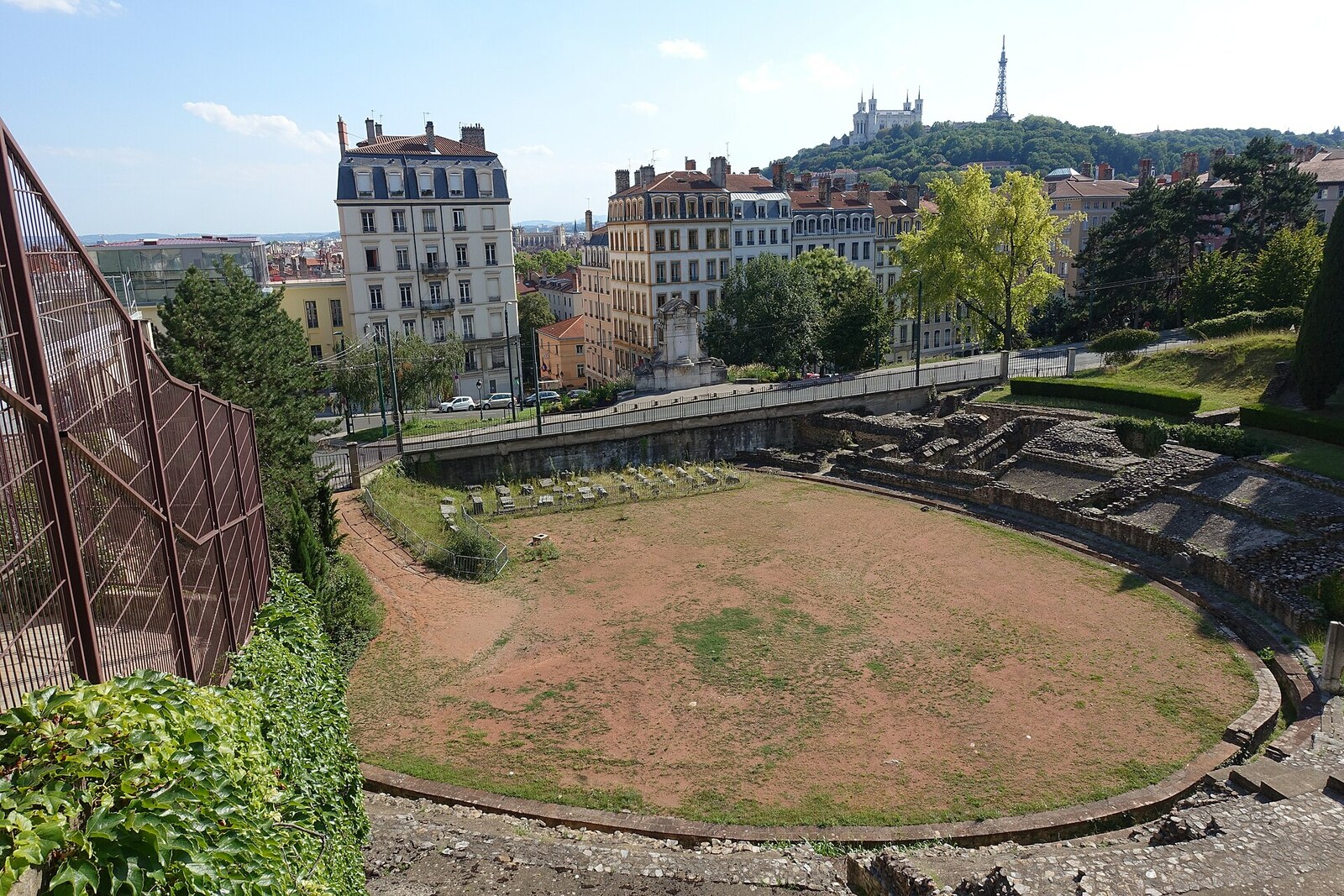
.jpg)