 Guide On Map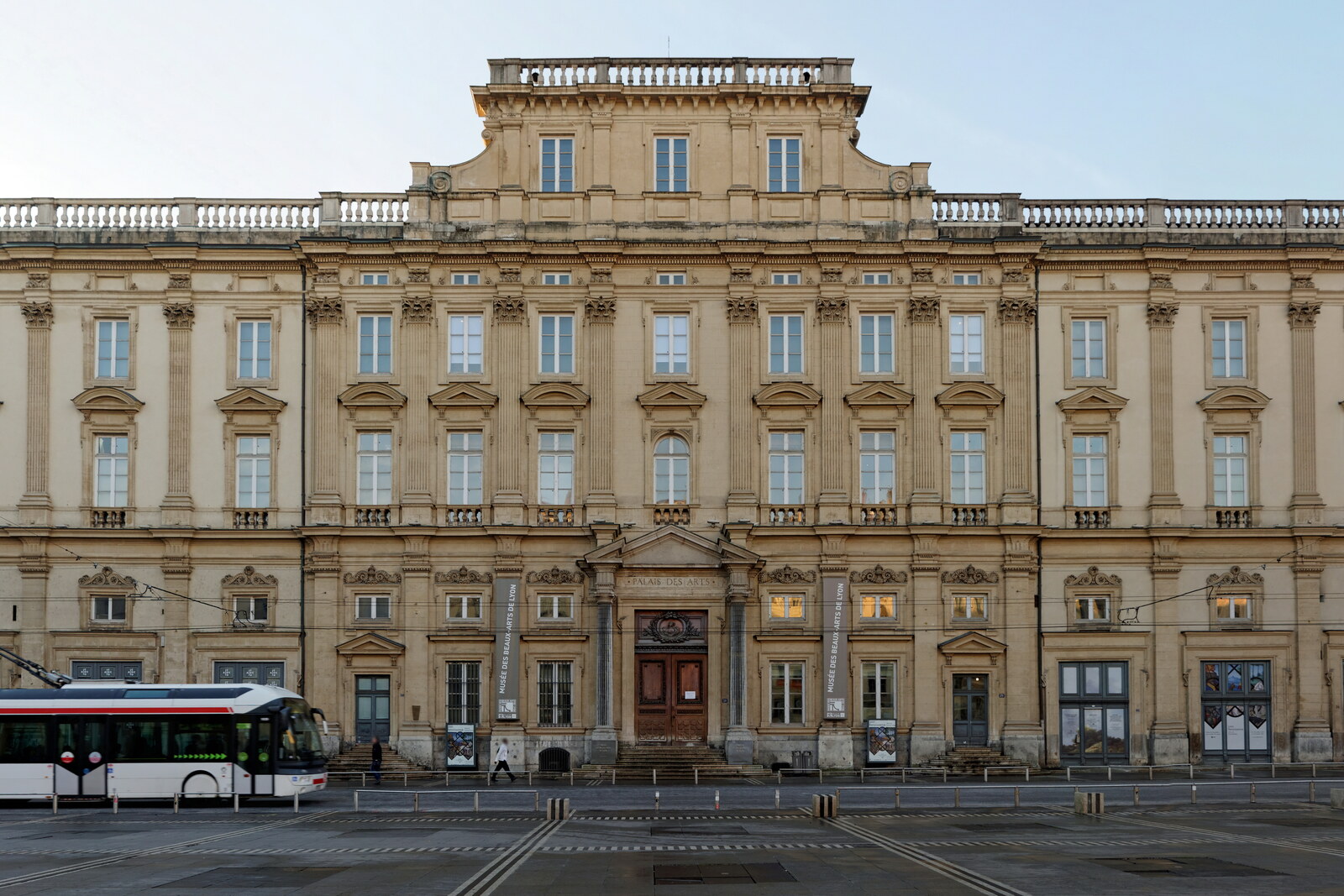
Look around first
What to notice
- Facade of Saint-Pierre Palace
- Main gallery
- Marble kore with a bird
The story of the place
Behind the austere facade of Saint-Pierre Palace stand the buildings of the former royal residence of Benedictine nuns. After the monastery was closed, paintings, medals, and bronze from church and noble collections were brought here, and proximity to Lyon City Hall saved the building from sale and dismantling. In the lobby of the antiquities department, where images of kings who had been benefactors once stood, there is now a marble statue of a girl with a bird at her breast.
In eighteen oh six, François Artaud, the first curator of the collections at Saint-Pierre Palace, moved aside the looms and gave the main gallery over to paintings. The decision was inconvenient: Lyon’s silk manufacturers considered the looms almost the institution’s main purpose.
Artaud understood their calculation well. He came to Lyon to study drawing for textiles, earned a living at a silk house, and traveled to Italy on business, where he visited Rome, Florence, Pompeii, and Herculaneum. Silk provided his livelihood, but once appointed to the museum post, Artaud wanted to assemble paintings and antiquities here.
The buildings came to the city after the royal Benedictine abbey was closed. It bore the name of the apostle Peter—hence the name Saint-Pierre Palace. In seventeen ninety-two, thirty-two nuns were evicted, and the city council ordered paintings, medals, and bronze seized from the church and the nobility to be stored in the former monastery. Its proximity to Lyon City Hall saved the building from sale and demolition.
After the siege of seventeen ninety-three, Lyon’s silk industry was in crisis. City representatives pressed the government for a school for draftsmen and a museum where students could copy good examples. They particularly requested Dutch still lifes: an image of a flower was then intended for a fabric pattern and provided income for the draftsman, the silk maker, and the weavers. In eighteen oh one, Minister Jean-Antoine Chaptal included Lyon among the fifteen cities entitled to state collections of paintings. Beginning in eighteen oh three, the Louvre sent one hundred ten canvases here; at first, the public was admitted to see them only on Wednesdays, for three hours.
Artaud retained his connection to the craft: he set up a separate Salon des Fleurs for floral still lifes. He assigned the other rooms to old masters, archaeological finds, and objects from different eras. When the city treasury refused to pay for discovered antiquities, the curator bought some of them with his own money. After the July Revolution of eighteen thirty, he refused to swear allegiance to the new king, Louis-Philippe, and lost the post to which he had given a quarter of a century. Five years later, Artaud gave his personal collection to the city.
The looms have long since gone from the main gallery. In the lobby of the antiquities department, where images of kings who had been benefactors of the monastery stood in the days of the abbey, there is a marble kore purchased under Artaud, an ancient Greek statue of a girl with a bird at her breast. Lyon holds its upper part; the lower part of the statue, found later, remained in Athens.
Useful on site
Wednesday—Monday 10:00—18:00, Friday from 10:30; closed Tuesday and official holidays. Ticket office until 17:30, galleries cleared from 17:50.
Checked: June 29, 2026. Check the official source before visiting.A full visit to the museum requires separate time. If you are only going in briefly, choose rooms where the life of the abbey can still be discerned.