 Guide On Map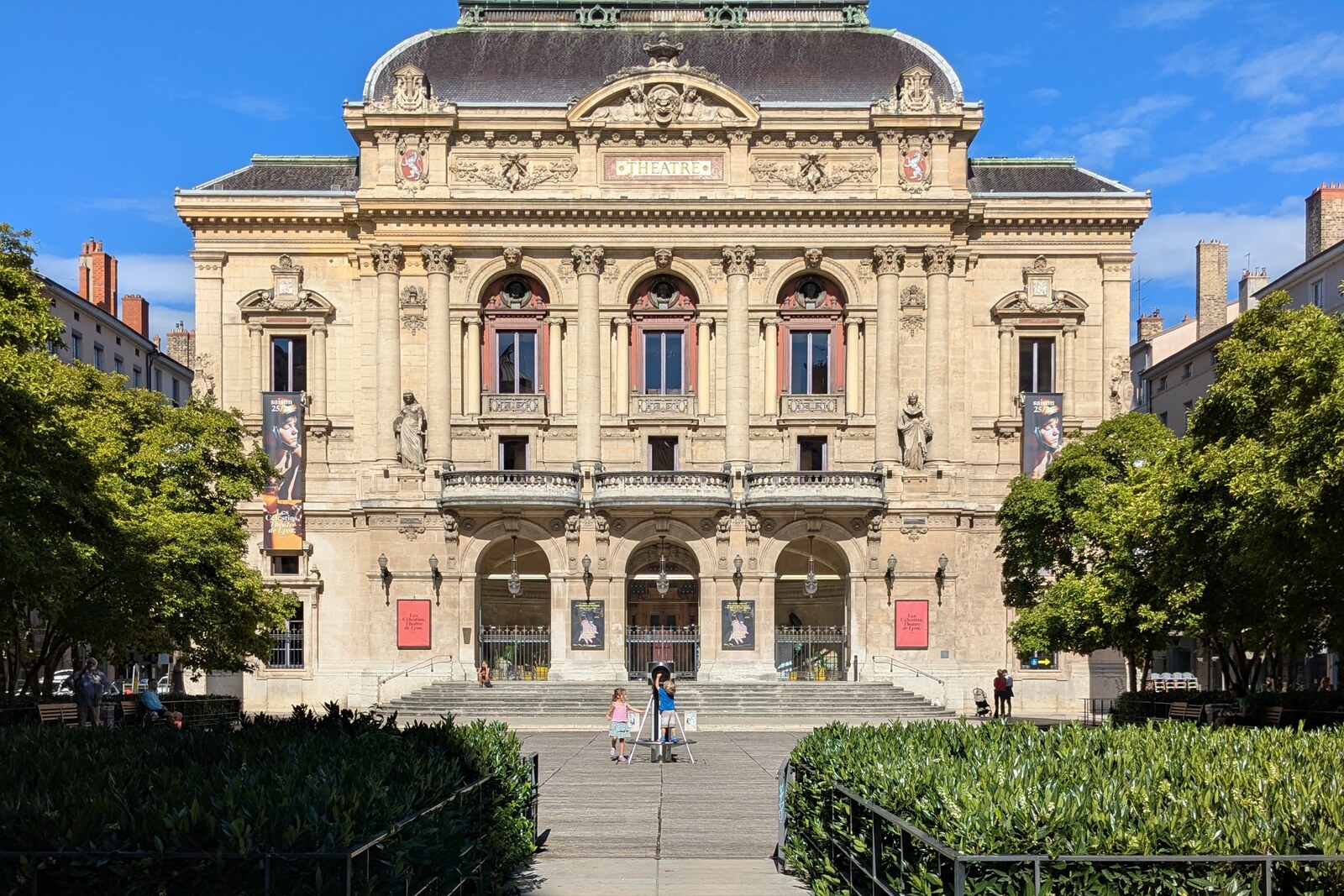
Look around first
What to notice
- The theater facade
- The theater’s name above the entrance
- The tiers of boxes in the large auditorium
- The smaller stage, La Célestine
The story of the place
The theater was named after the Celestine monks. Their community was founded in Italy by the hermit Pietro da Morrone, who gathered disciples to live by a strict monastic rule. When he was elected pope and took the name Pope Celestine V, his followers came to be called Celestines. In fourteen oh seven, Amadeus VIII, Count of Savoy, granted them the former lands of the Knights Templar in Lyon. A monastery, a church, and a large garden appeared here.
Three and a half centuries later, France began closing small monastic communities. Sixteen Lyon Celestines agreed to leave the order in exchange for lifelong support. In seventeen seventy-eight, Pope Pius VI dissolved the monastery. After lengthy proceedings, the King of Sardinia received the estate as the heir of the medieval donor, then sold it to the developer André Devouge.
Devouge bought the monastery to resell it. Some of the premises were already bringing in rent: a dye works and workshops operated here. The main calculation was to divide the vast estate into plots and sell them at a higher price. Devouge and his partners were in a hurry, but they ran into a simple trap. Without new streets, the plots could not be reached, so there were few buyers; without buyers, there was not enough money to lay out the streets. One of the purchasers sued them.
In May seventeen eighty-nine, the partners changed the entire project. The architect Jean-Antoine Morand was to turn the closed monastery into a residential quarter: lay out access roads, leave a garden in the middle, build seventeen houses around it with apartments and shops, and divide the monastery buildings into seven further private properties. A performance hall was included in this commercial calculation as well. The former church was assigned to it; the architect Jean-François Colson arranged a stage and seating for the audience inside.
In April seventeen ninety-two, the Théâtre des Variétés opened here. It faced the former monastic garden, already turned into a square. Devouge and his partners continued selling off the plots, but they could not retain the entire project. In eighteen sixteen, a court seized the company’s remaining property, and a year later the theater was sold at auction. The private owners also had financial difficulties and in eighteen thirty-eight ceded the hall to the city.
The first building was destroyed by fire. The present theater was built later, and the public was admitted to it in eighteen eighty-one. It now stages its own productions and hosts visiting troupes; drama, dance, and circus productions appear on its stages. The large auditorium is arranged in the Italian style, with tiers of boxes, and beneath it is the smaller stage, La Célestine.
The monastic facade facing the square has long been gone. The square itself occupies the site of the garden, and the theater stage stands where the church choir once stood—the space near the altar where the Celestines sang the office. The monks left here in the eighteenth century; their papal name remains above the entrance.
Useful on site
Box office open Tuesday—Friday 13:00—18:30, Saturday 12:00—18:30. Do not plan Sunday and Monday as box-office days.
Checked: June 29, 2026. Check the official source before visiting.The facade is accessible as a complete outdoor stop. View the auditorium only during a separate visit, tour, or performance.