 Guide On Map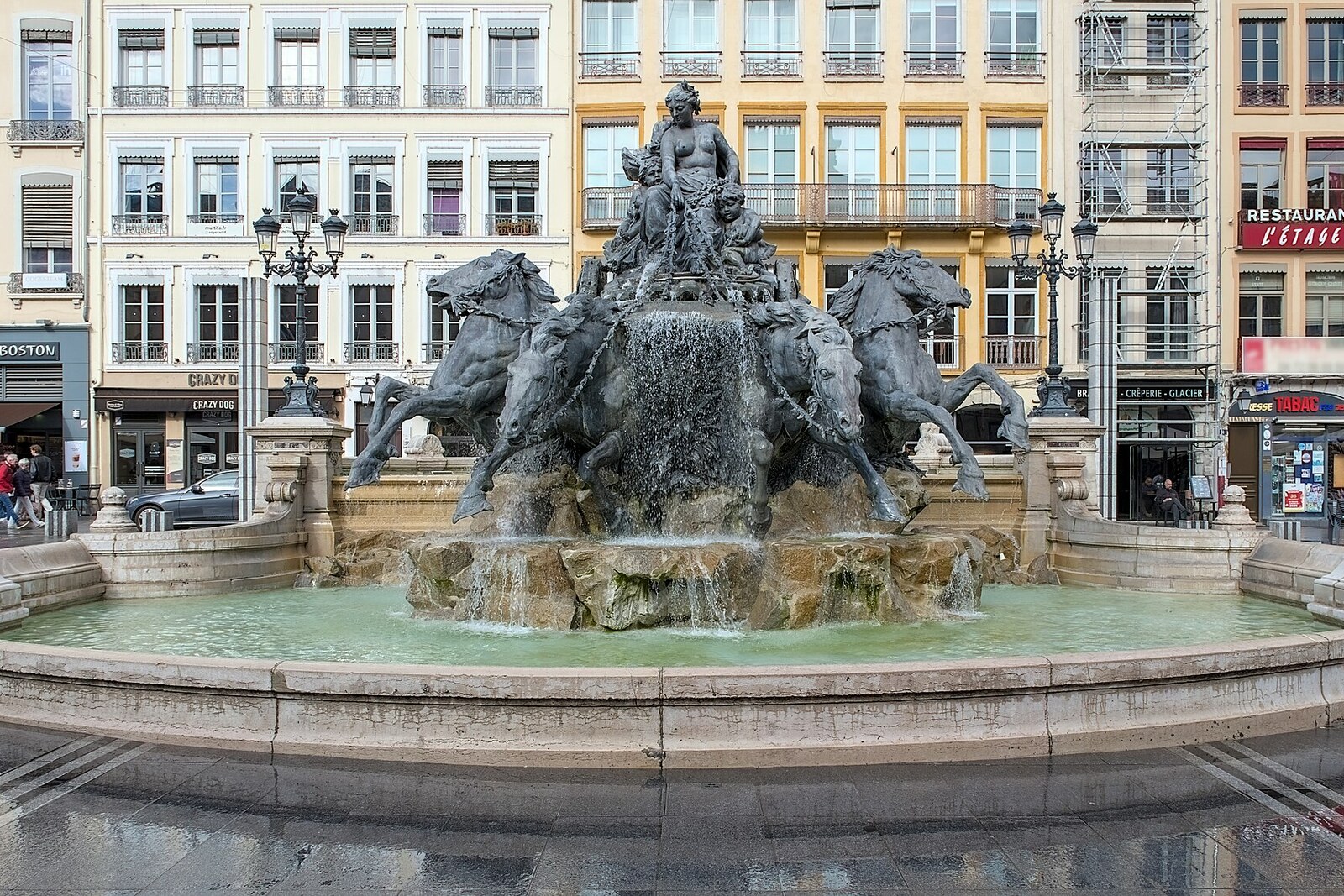
Look around first
What to notice
- Eastern façade of Lyon City Hall
- Main portal of Lyon City Hall
- Rows of Lyon City Hall windows
- Café tables
The story of the place
Today, Place des Terreaux is the square in front of Lyon City Hall: people arrange to meet here, take café tables, and gather for city celebrations. Its name is much older than the city hall. “Terreaux” derives from the Latin “terralia,” the name for an earthen rampart beside the moat that ran along the southern side of today’s square. When the city fortifications were moved higher up, to the slopes of Croix-Rousse, the councilors bought this land from the nuns of the neighboring Abbey of Saint-Pierre, filled in the moat, and set up a market. In the middle of the seventeenth century, Lyon City Hall was built on the eastern side, and the former edge of the city became a place where the people of Lyon met the city administration—sometimes with weapons.
During the French Revolution, the square was renamed Place de la Liberté, and a Liberty Tree was planted here. Lyon’s first guillotine appeared nearby. Joseph Chalier—a silk merchant and leader of radical revolutionaries who sought trials for wealthy townspeople and everyone he suspected of opposing the revolution—ordered it. The machine was first displayed on Place Bellecour, then moved to Lyon City Hall on Place des Terreaux: Chalier wanted to frighten his opponents even before the executions began.
In the spring of seventeen ninety-three, his supporters got their candidate elected mayor. For eighty days, they governed the city from Lyon City Hall, demanded an emergency court and searches, while Chalier continued to threaten well-to-do people of Lyon. On May twenty-ninth, armed detachments from most city districts came to the square, seized Lyon City Hall, and arrested Chalier. More than one hundred people died in the fighting. The victors declared that they opposed the radicals but remained supporters of the republic.
Chalier’s trial lasted twenty-two hours. On July sixteenth, he was brought to Place des Terreaux and placed beneath the blade of the very machine with which he had intended to frighten his opponents. He became the first person executed by guillotine in Lyon. Witnesses counted the falls of the blade differently, but agreed on the main point: the machine had been badly assembled, the blade jammed, and the executioner had to finish the execution by hand.
By then, the radicals in Paris had already overcome their moderate rivals. The National Convention, France’s parliament at the time, saw Chalier’s execution and the new Lyon leadership’s refusal to submit as open rebellion. In August, an army approached the city. After a two-month siege, Lyon capitulated. Chalier was declared a martyr of the revolution, and the victors began reprisals against his opponents: nearly two thousand people were shot or sent to the guillotine. Some of those condemned were executed right here, in front of Lyon City Hall.
Today, the square again bears its old name, Place des Terreaux. The Liberty Tree and the scaffold are gone, while Lyon City Hall still occupies the eastern side. In seventeen ninety-three, its underground rooms ran in two directions: the cellar beneath today’s Rue Joseph-Serlin was intended for those who had been released, while the cellar extending beneath this square was for those who were then led out to the guillotine.
Useful on site
Open square; the fountain and passages around it may be closed off for events, Fête des Lumières setup, safety, or city works.
Checked: June 28, 2026. Check the official source before visiting.Walk around the Bartholdi Fountain to see the movement of the whole composition, and watch for wet pavement near the water. The interiors of the surrounding buildings are not part of the route and require a separate visit.