 Guide On Map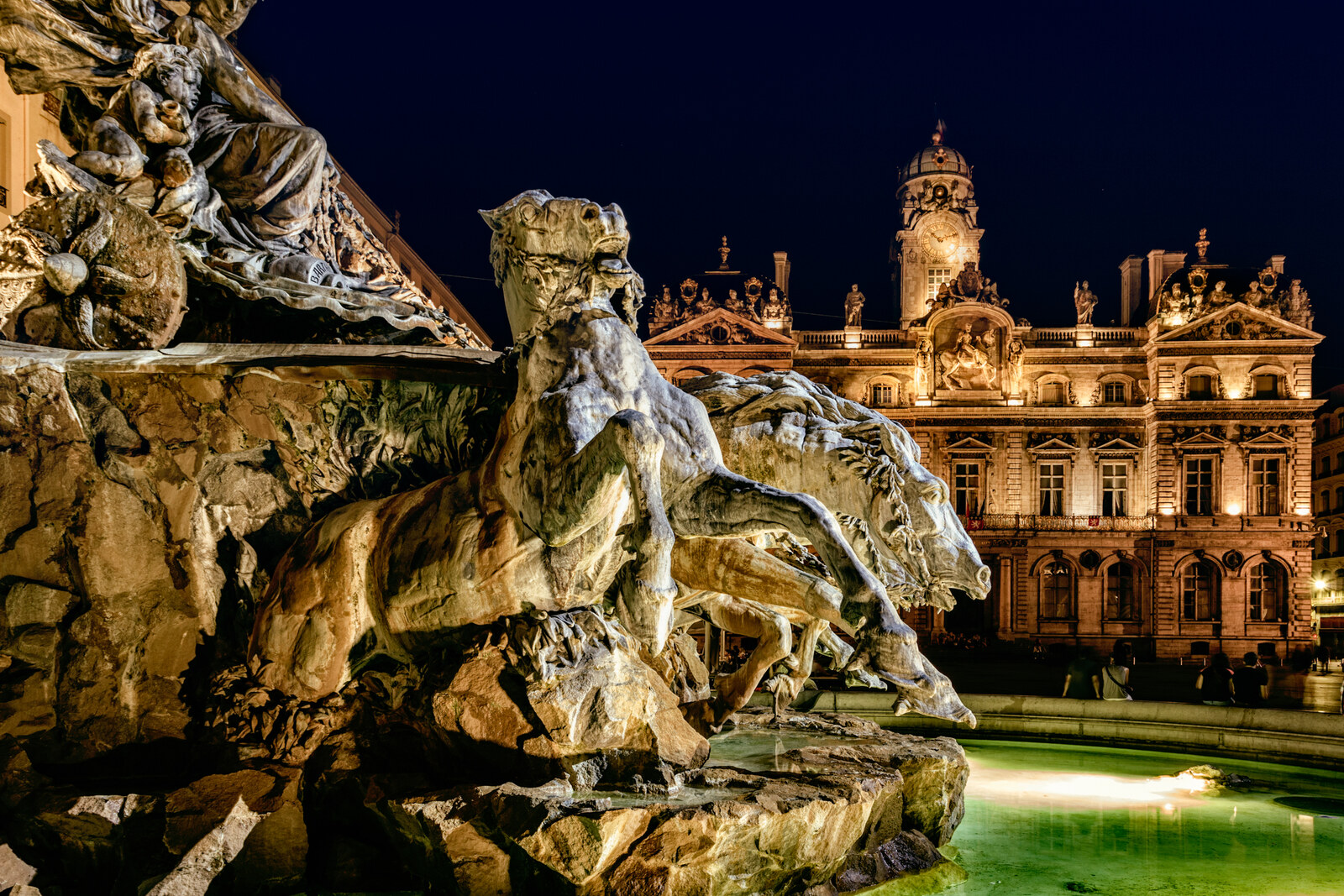
Look around first
What to notice
- Façade of Lyon City Hall
- Façade of Palais Saint-Pierre
- Stone slabs of the square
The story of the place
In the sixteenth century, the defensive moat was filled in, and a city square appeared in its place. The name Place des Terreaux derives from “terralia,” an earthen embankment by the moat. The moat has long been hidden beneath the stone slabs by Lyon City Hall.
On May twenty-ninth, seventeen ninety-three, armed detachments from the city’s sections converged on Lyon City Hall on the eastern side of the square. The sections were neighborhood assemblies of city residents; each could bring its own part of the National Guard into the streets. Their aim was to seize Lyon City Hall and arrest Joseph-Marie Chalier.
Chalier led Lyon’s radical Jacobins and pressed for exceptional measures against those he considered enemies of the revolution. He had come to Lyon for the silk trade and had previously lived on a merchant’s income—an occupation entirely local to a city dependent on the production and sale of textiles. Now, as a judge and municipal official, he relied on artisans and the urban poor. His supporters demanded that the price of bread be set, that a Revolutionary Tribunal be created, and that the sans-culottes—residents from the lower urban estates—be armed. In February, the municipal council, where they held the majority, authorized nighttime searches and arrests; about three hundred people were brought before the exceptional court.
Chalier’s opponents also called themselves republicans. The Rolandists, as this moderate group was known, insisted on legal procedure and free trade. After the nighttime arrests, they risked ending up in prison by decision of their political rivals. On May twenty-ninth, their detachments took Lyon City Hall. More than a hundred people were killed in the fighting, and Chalier and his closest supporters were arrested.
Almost simultaneously, on June second, the Montagnards in Paris expelled moderate deputies from the National Convention. The people of Lyon had removed the local allies of precisely the group that now controlled the capital. The National Convention demanded submission, and on July twelfth it declared Lyon a rebellious city.
Chalier was nevertheless put on trial. At the time, today’s Place des Terreaux was officially called Place de la Liberté. After a twenty-two-hour hearing on July sixteenth, the judges passed a death sentence, and that same evening the condemned man was brought here, to the guillotine. A few months earlier, Chalier himself had ordered this first Lyon machine for executions installed—to intimidate his opponents. Before him, it had beheaded no one. At the first execution, the mechanism failed: the blade kept sticking, and the executioner had to finish the job with a knife.
For the Jacobins in Paris, Chalier became a martyr of the revolution. Republican troops surrounded Lyon and began shelling it, and on October ninth the city capitulated. Commissions sent by the National Convention executed more than one thousand six hundred people by firing squad and guillotine. Lyon was stripped of its name and renamed Commune-Affranchie.
The scaffold is no longer on the square. Lyon City Hall still closes off its eastern side—the very building that the section detachments seized. The revolutionary name did not endure either. The name Place des Terreaux returned from a more distant past: it comes from “terralia,” an earthen embankment by a defensive moat. In the sixteenth century, city councilors filled in this moat and laid out a square in its place. Its line is now hidden beneath the stone slabs in front of Lyon City Hall.
Useful on site
The square is open around the clock.
Checked: June 29, 2026. Check the official source before visiting.First, step back to the edge of the square: it is easier to take in the fountain and Lyon City Hall together there, and you do not have to stand close to the water spray.