 Guide On Map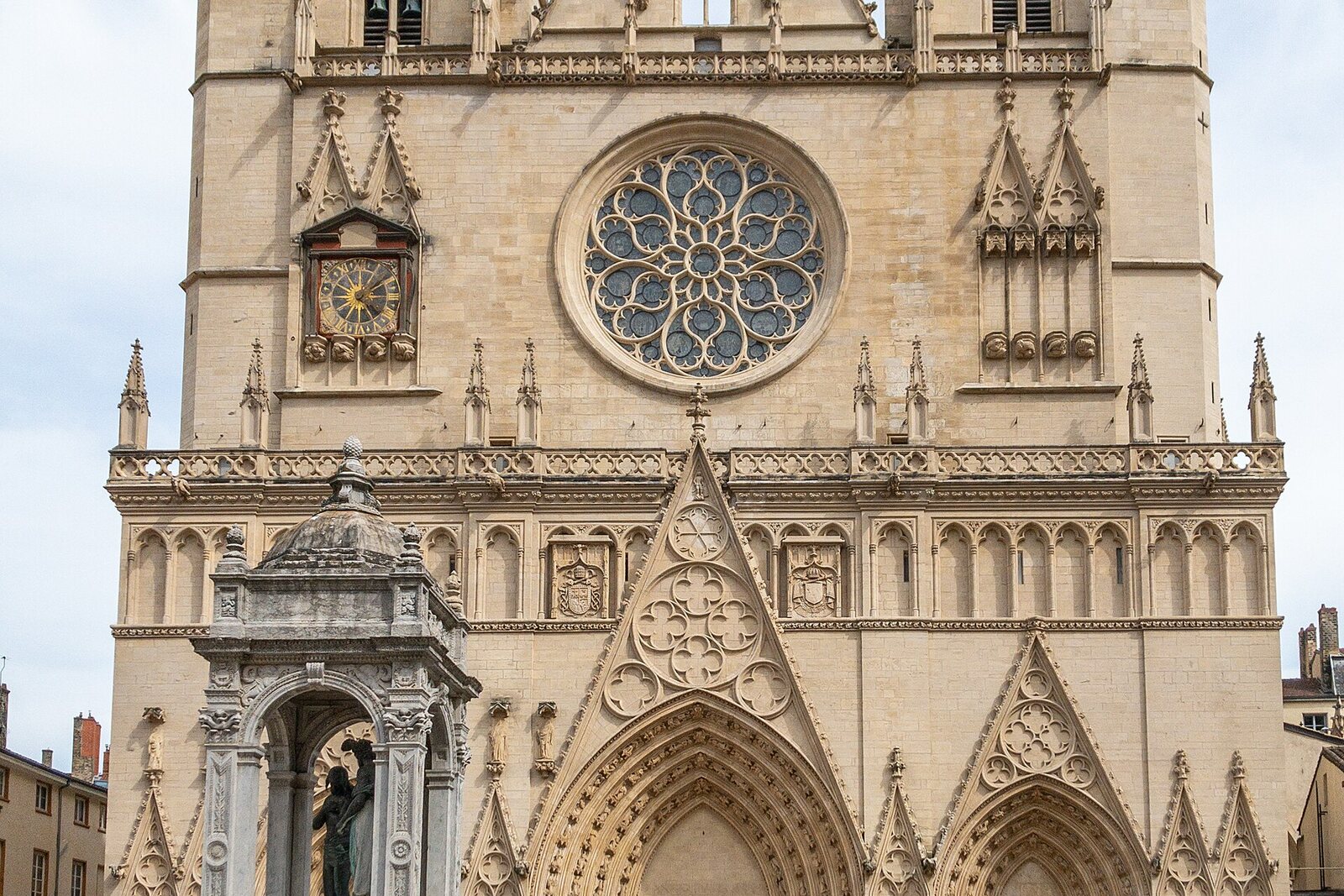
Look around first
What to notice
- Saint-Jean Cathedral
- Rue Saint-Jean
- Façade with a clock
- Former exchange loggia
The story of the place
Rue Saint-Jean, from the cathedral, ends in front of a stern stone façade with a clock. It is now the Protestant Church of Change. The word “change” means “exchange”: the name was given by the people who needed this square to settle accounts.
In the sixteenth century, merchants dealing in cloth, silk, metal, leather, and spices gathered here four times a year for duty-free fairs. The old stone bridge over the Saône and the customs house stood nearby, so goods and foreign merchants passed through this quarter. Sales lasted fifteen days, and settlements could take another month.
A merchant-banker made money in several ways at once. He bought goods wholesale, advanced money to manufacturers and received the debt in finished products, carried out other merchants’ instructions, took a commission, and profited from differences in exchange rates. Instead of a bag of coins, people often used a bill of exchange—a written order to pay a specified sum by a set deadline.
At the start of settlements, the leading French and foreign merchants gathered in the presence of the merchant provost, the head of the city’s commercial administration. They confirmed bills of exchange and then jointly set the exchange rate for foreign money. After that, they began offsetting debts. One creditor accepted a claim against a third person; that person passed another obligation further on, and the closed chain disappeared from the books in several entries. Refusing to accept a bill of exchange allowed its holder to formally protest it and demand the sum back together with expenses. It was these operations that turned the square into the Change.
The reliability of Lyon’s settlements attracted the French king Henry II, who needed money for a new war against Emperor Charles V. In fifteen fifty-five, royal advisers combined the treasury’s debts into a single loan called the Grand Parti. About three quarters of the sum consisted of earlier royal debts to merchant-bankers: they were transferred into the new agreement without any possibility of refusal. The bankers had to contribute the rest in fresh money.
The king promised sixteen percent a year and forty-one payments tied to the four Lyon fairs. The payments were secured by tax revenues from Lyon, Toulouse, and Montpellier. The bankers risked their own working capital and the funds of clients who had entrusted them with deposits. The high interest was meant to pay for that risk.
Already for the second payment, the treasurers had to take money from new subscriptions to the loan. The war resumed, expenses grew, and a monetary crisis began. In November fifteen fifty-seven, the next unpaid sum was recorded as a new debt. In December, the Crown canceled the promised security from tax revenues. The next partial payment, thirty thousand écus, proved to be the last. Under the original schedule, creditors received back about nine percent of the amount lent.
Twenty years later, Henry III, seeking a new loan, sent a special commission to Lyon. Of forty German banking houses, five or six remained. The three largest Florentine houses went bankrupt, and the survivors no longer accepted deposits and only carried out clients’ instructions.
During the Grand Parti, the present church did not yet exist: merchants settled accounts under the open sky. In sixteen thirty-one, several merchants proposed paying for the construction of a covered loggia, which was completed in sixteen fifty-three. The old bridge was dismantled in eighteen forty-two. What remains of the settlement quarter is the square’s name and the former exchange loggia; since eighteen oh three, its hall has been occupied by a Protestant congregation.
Useful on site
Open urban space; choose a viewing point that does not obstruct pedestrian flow.
Checked: date not specified. Check the official source before visiting.Do not count on the mechanical figures being activated without checking on site. Enter the courtyard only when access is open and permitted; respect a closed door and private space.