 Guide On Map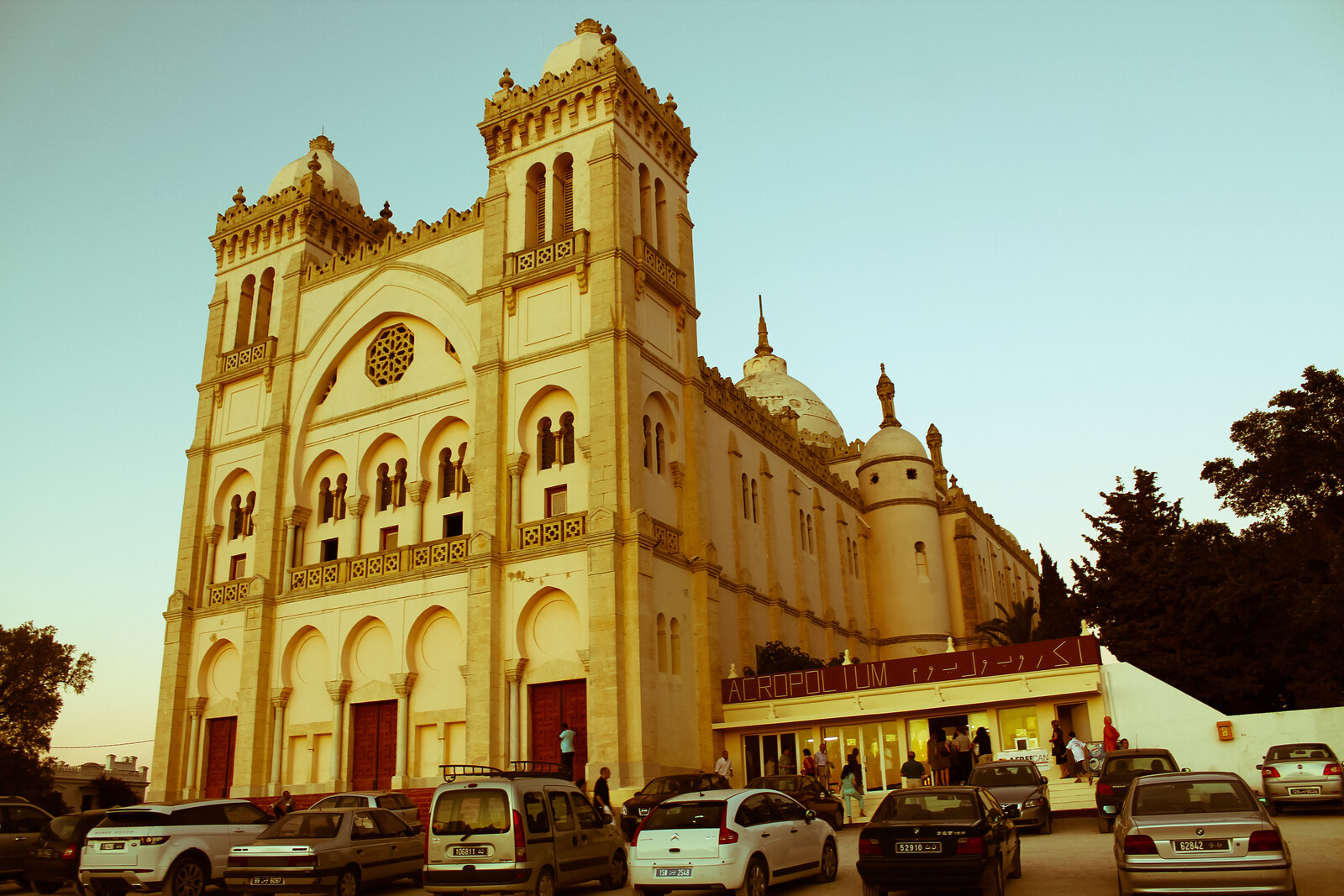

This place does not have an audited photo yet.
Selected place
Acropolium (St. Louis Cathedral)
Local name: Acropolium de Carthage / Cathédrale Saint-Louis
This stop will link a failed campaign with a later tradition that needed a specific address.
Start with 22 highlights or open the complete catalog of 157 curated places.
Highlights include Acropolium (St. Louis Cathedral), Antonine Baths, Bab el Bhar, Byrsa Hill, Café des Nattes, Dar El Annabi.
We have connected important places into ready-made walks with a clear order, stories and practical details.
Start with 22 highlights, or reveal all 157 curated places.
Local name: Acropolium de Carthage / Cathédrale Saint-Louis
This stop will link a failed campaign with a later tradition that needed a specific address.
This stop will link a failed campaign with a later tradition that needed a specific address.
The underground service level will explain the scale of urban construction better than the vanished marble halls.
Here you will see why a single open passage could become a carefully chosen political symbol.
Here you will understand why the summit became the city's last refuge and the site of its commander’s personal surrender.
This stop connects the staircase to the sanctuary with a painting made after the artist’s short trip.
This private museum shows a family home where the public display has not displaced everyday life.
Here, a palace without a permanent court became the place where people tried to turn promised guarantees into rules of state.
The history of the first municipal council will show how city work came to a halt with revenues that existed only on paper.
Here the route will reveal how a private residence became a workplace for preserving malouf.
Here you will see how a legal ban fixed the layout of the main ascent and its façades.
The open esplanade will help reconstruct the vanished citadel and understand why its defenders lacked the most essential thing.
The shape of the two basins will help make sense of the besieged city's final naval maneuver.
This stop restores the voice of a man who came to explain himself before a full city audience.
A former wealthy home will show how a residential quarter became a place of veneration for a Christian community.
The finale will compare the present-day berths with the completely vanished coastal buildings.
Here you will understand how a railway entrance came to be at the foot of the hill.
Here, the distance to the main mosque explains the craft's place in the old urban hierarchy.
This stop links the gradual abolition of slavery to the neighboring production chain of chechia makers.
The final stop will separate what archaeologists found from the answer the finds never provided.
The finale will show how the dispute over succession continued in burial arrangements and the placement of family graves.
This stop explains why a sea marker on a high headland needed a short tower.
This stop will take you to a student strike, after which the students returned to the same columns and an almost unchanged curriculum.
Nearest audio-route stop: Souk el Berka and the Trace of the Chaouachine — 60 m in a straight line, route Medina of Tunis: Markets, Palaces, and Power
Nearest audio-route stop: Bab el Bhar — 140 m in a straight line, route Medina of Tunis: Markets, Palaces, and Power
Nearest audio-route stop: Bab el Bhar — 90 m in a straight line, route Medina of Tunis: Markets, Palaces, and Power
Nearest audio-route stop: Tourbet el Bey — 80 m in a straight line, route Medina of Tunis: Markets, Palaces, and Power
Nearest audio-route stop: Zitouna Mosque — 150 m in a straight line, route Medina of Tunis: Markets, Palaces, and Power
Nearest audio-route stop: Tourbet el Bey — 60 m in a straight line, route Medina of Tunis: Markets, Palaces, and Power
Nearest audio-route stop: Kasbah Square — 60 m in a straight line, route Medina of Tunis: Markets, Palaces, and Power
Nearest audio-route stop: Kasbah Square — 40 m in a straight line, route Medina of Tunis: Markets, Palaces, and Power
Nearest audio-route stop: Dar el Bey — 30 m in a straight line, route Medina of Tunis: Markets, Palaces, and Power
Nearest audio-route stop: Dar Hussein — 20 m in a straight line, route Medina of Tunis: Markets, Palaces, and Power
Nearest audio-route stop: Dar Hussein — 80 m in a straight line, route Medina of Tunis: Markets, Palaces, and Power
Nearest audio-route stop: Tourbet el Bey — 140 m in a straight line, route Medina of Tunis: Markets, Palaces, and Power
Nearest audio-route stop: Kasbah Square — 120 m in a straight line, route Medina of Tunis: Markets, Palaces, and Power
Nearest audio-route stop: Tourbet el Bey — 110 m in a straight line, route Medina of Tunis: Markets, Palaces, and Power
Nearest audio-route stop: Dar el Bey — 30 m in a straight line, route Medina of Tunis: Markets, Palaces, and Power
Nearest audio-route stop: Souk el Attarine — 70 m in a straight line, route Medina of Tunis: Markets, Palaces, and Power
Nearest audio-route stop: Kasbah Square — 120 m in a straight line, route Medina of Tunis: Markets, Palaces, and Power
Nearest audio-route stop: Souk el Attarine — 130 m in a straight line, route Medina of Tunis: Markets, Palaces, and Power
Nearest audio-route stop: Dar Hussein — 20 m in a straight line, route Medina of Tunis: Markets, Palaces, and Power
Nearest audio-route stop: Bab el Bhar — 90 m in a straight line, route Medina of Tunis: Markets, Palaces, and Power
Nearest audio-route stop: Souk el Attarine — 120 m in a straight line, route Medina of Tunis: Markets, Palaces, and Power
Nearest audio-route stop: Souk el Attarine — 40 m in a straight line, route Medina of Tunis: Markets, Palaces, and Power
Nearest audio-route stop: Souk el Berka and the Trace of the Chaouachine — 100 m in a straight line, route Medina of Tunis: Markets, Palaces, and Power
Nearest audio-route stop: Bab el Bhar — 60 m in a straight line, route Medina of Tunis: Markets, Palaces, and Power
Nearest audio-route stop: Kasbah Square — 120 m in a straight line, route Medina of Tunis: Markets, Palaces, and Power
Nearest audio-route stop: Kasbah Square — 120 m in a straight line, route Medina of Tunis: Markets, Palaces, and Power
Nearest audio-route stop: Dar el Bey — 30 m in a straight line, route Medina of Tunis: Markets, Palaces, and Power
Nearest audio-route stop: Zitouna Mosque — 140 m in a straight line, route Medina of Tunis: Markets, Palaces, and Power
Nearest audio-route stop: Bab el Bhar — 10 m in a straight line, route Medina of Tunis: Markets, Palaces, and Power
Nearest audio-route stop: Kasbah Square — 150 m in a straight line, route Medina of Tunis: Markets, Palaces, and Power
Nearest audio-route stop: Kasbah Square — 120 m in a straight line, route Medina of Tunis: Markets, Palaces, and Power
Nearest audio-route stop: Dar Hussein — 60 m in a straight line, route Medina of Tunis: Markets, Palaces, and Power
Nearest audio-route stop: Dar el Bey — 70 m in a straight line, route Medina of Tunis: Markets, Palaces, and Power
Nearest audio-route stop: Souk el Attarine — 60 m in a straight line, route Medina of Tunis: Markets, Palaces, and Power
Nearest audio-route stop: Tourbet el Bey — 90 m in a straight line, route Medina of Tunis: Markets, Palaces, and Power
Nearest audio-route stop: Souk el Berka and the Trace of the Chaouachine — 90 m in a straight line, route Medina of Tunis: Markets, Palaces, and Power
Access and construction years come from OpenStreetMap and Wikidata, snapshot of August 25, 2026: database data, not a check on the ground.