 Guide On Map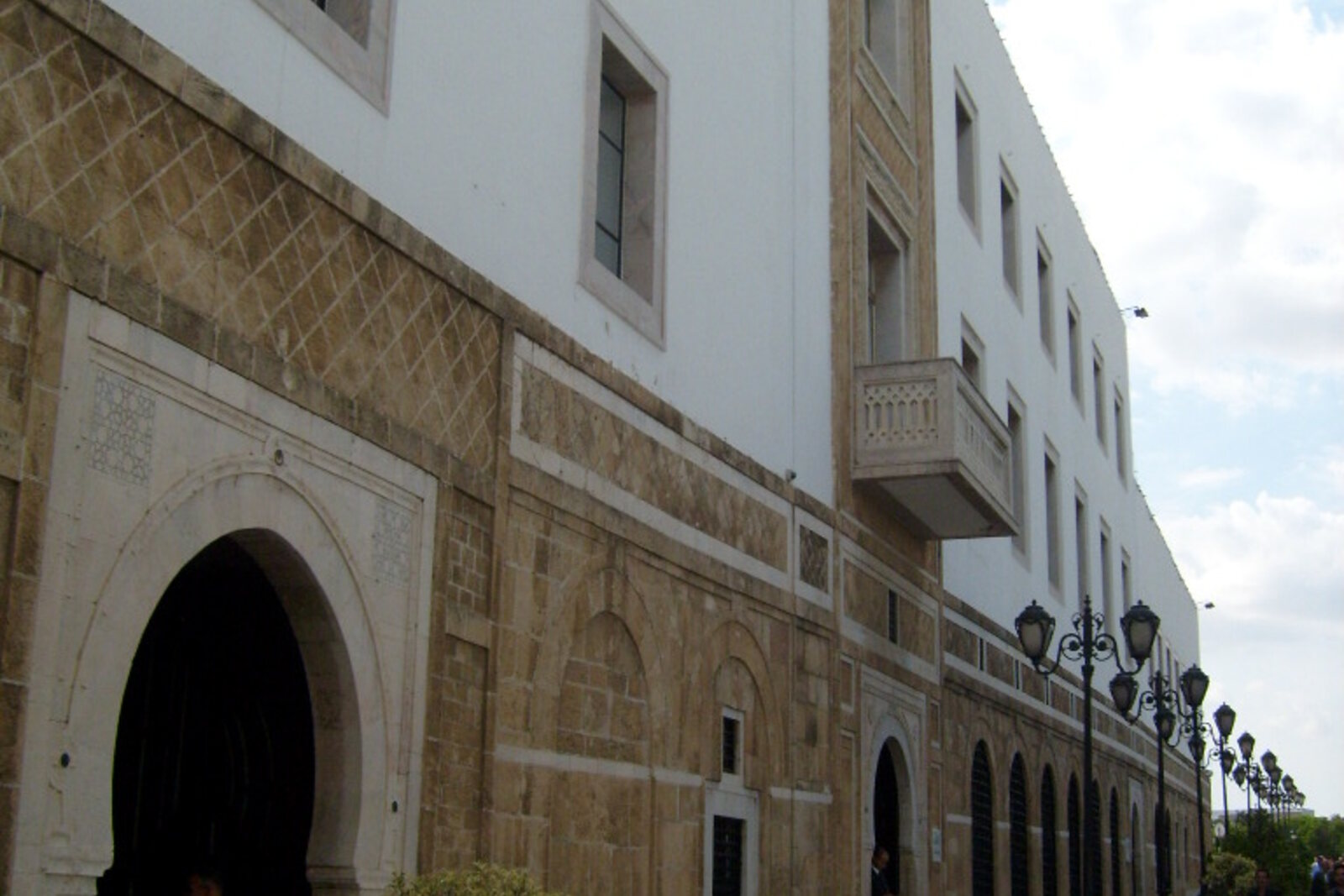
Look around first
What to notice
- Government Palace facade
- Palace entrance
- Large reception hall
- Government buildings
The story of the place
Dar el Bey translates literally as “the bey’s house.” A bey was the hereditary ruler of Tunis. In the seventeenth century, Hammuda Pasha of the Muradid dynasty expanded the Great House that stood here and made it his residence. But from seventeen oh five, Hussein bin Ali, the founder of a new dynasty, preferred Bardo Palace beyond the city walls. His successors did the same. Dar el Bey received envoys, state guests, and occasional ceremonies; for most of the year, the ruler whose title the palace bore lived elsewhere.
The permanent work of officials began here after the death of a man who never entered these halls. In the summer of eighteen fifty-seven, Samuel Sfez, known as Batto, earned his living as a coachman for Nassim Shamama, the head of the Jewish community. After a street quarrel, Sfez was accused of insulting Islam. A court sentenced him to death, and Muhammad Bey ordered the sentence carried out.
The execution frightened the Jewish and Christian communities. The French and British consuls demanded legal guarantees for all residents from Muhammad Bey, and a French squadron appeared off La Goulette. The bey found himself between the threat of foreign intervention and the fear that rapid change would provoke a revolt within the country. He had promised reforms earlier, but after the Sfez case, it became impossible to postpone them.
On September tenth, Muhammad Bey proclaimed Ahd al-Aman—the Pact of Security—at Bardo Palace. He promised the inviolability of person and property, equality before the law and in taxation, and freedom of religion and trade. The eleven declarative articles then had to be turned into rules recognized by local judges and religious jurists. For this work, the bey set aside his city palace, Dar el Bey, which had large reception halls but no permanent court.
On November fourth, the ministers and ulama, or Muslim jurists, heard here an explanation of the first article—on security for people of any religion, language, and origin. The Sheikh al-Islam, the senior religious jurist, replied that such a principle could even be explained in a Friday sermon. Khayr al-Din, the minister of the navy and a supporter of reform, asked each person present to examine all eleven articles in writing and show which norms of Islamic law they corresponded to. The jurists prepared separate opinions; the commissions’ subsequent work led to the constitution of eighteen sixty-one.
Muhammad Bey’s successor, Sadok Bey, housed the Grand Ministry and a council of sixty state advisers in Dar el Bey. The constitutional experiment, however, did not last long. When an increase in the poll tax sparked Ali Ben Ghedhahem’s uprising in eighteen sixty-four, Sadok Bey suspended the constitution. Samuel Sfez did not live to see the promised guarantees, and the council that arose from the consideration of his case lost its constitutional role.
The officials never left the palace again. In eighteen eighty-two, the ministries and chancellery were transferred here from Bardo Palace, and the following spring Ali Bey opened new offices. Dar el Bey is now officially called the Government Palace. It houses the offices of the head of government and hosts cabinet meetings; part of the large reception hall added by Sadok Bey still serves as a meeting room today.
Useful on site
Exterior viewing from the square and the adjoining street; interior access is not for tourists.
Checked: June 17, 2026. Check the official source before visiting.The building is connected with active institutions: view it from the public street, do not linger at service entrances, and comply with requests from security personnel.