 Guide On Map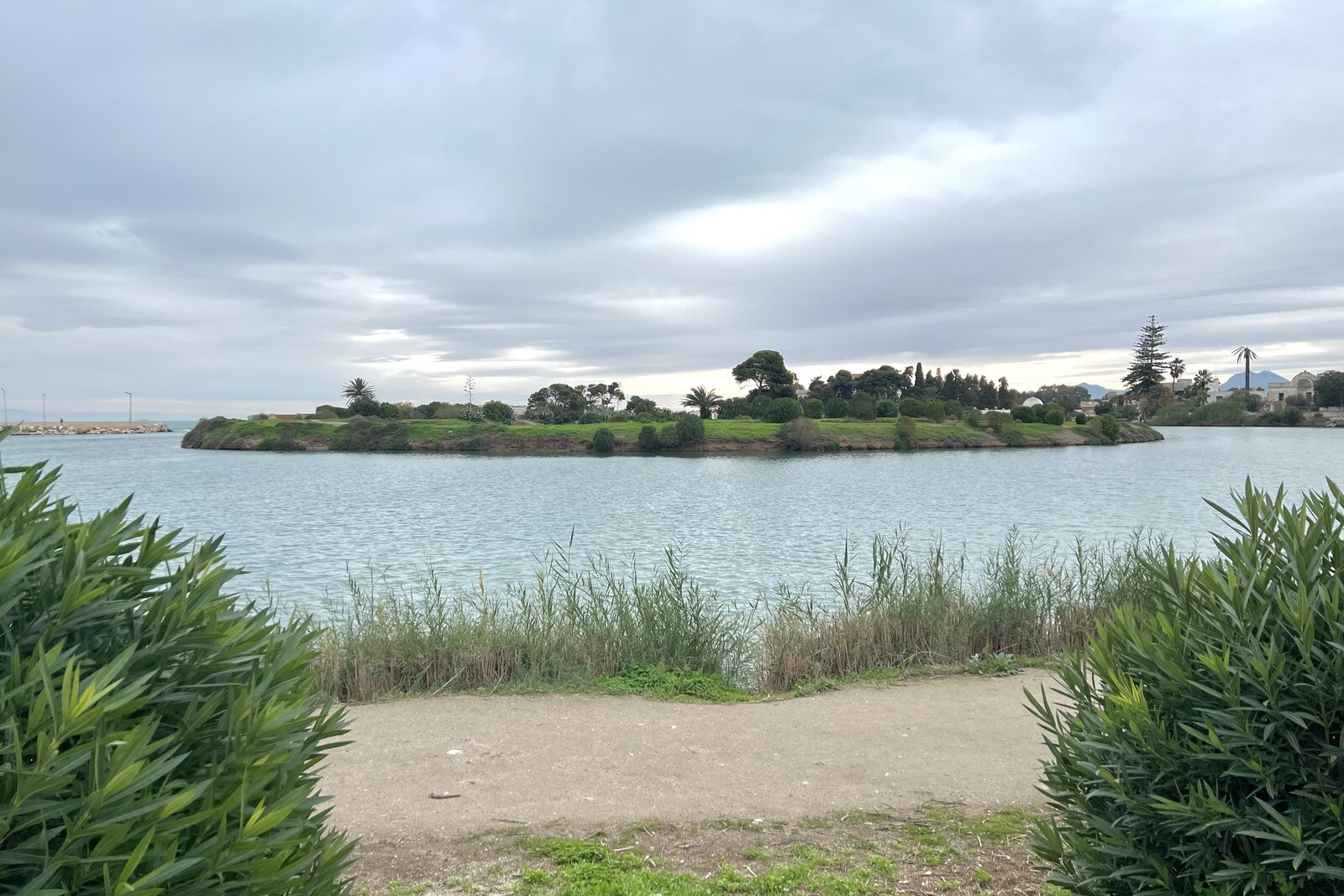
Look around first
What to notice
- The circular basin of the military harbor
- The central island
- Radial foundations of ship sheds
- The later cut to the sea
The story of the place
The circular basin with an island in the middle preserves the plan of the military harbor built by Carthaginians of Phoenician culture. Ship sheds radiated out from the island: vessels were hauled onto inclined slipways, and walls concealed the shipyards from merchants unloading in the outer harbor. About thirty ships fit on the island, and up to one hundred forty more stood along the outer shore. The channel that now leads to the sea appeared later, while the harbor's ancient outlet disappeared.
In the summer of one hundred forty-seven BCE, Scipio Aemilianus, the Roman commander seeking to blockade Carthage completely, ordered the entrance to the harbor to be blocked with stone. The city was already starving, but individual ships carrying food still broke through from the sea. Roman soldiers worked day and night: the embankment reached eight meters across at the top and about thirty-two at its base.
The besieged Carthaginians, for whom this passage remained the last route to supplies, began digging a new outlet to the open sea from inside the city. Men, women, and children worked on it. At the same time, shipwrights assembled warships from old materials. Everything was kept hidden: the two artificial basins were connected in sequence, and the circular military harbor with its island lay beyond the outer basin. Walls concealed the shipyards even from merchants unloading nearby. Prisoners could tell the Romans only about the uninterrupted work in the harbor.
At dawn, the Carthaginians broke through the last barrier. Fifty triremes—large oared warships—and many small vessels emerged from the new passage. The Roman fleet was caught by surprise: some sailors and rowers were ashore. The Carthaginian commanders limited themselves to a demonstration and brought the ships back into the harbor. Three days later, when they sailed out again, the Romans had already assembled their crews and formed the fleet for battle.
The battle lasted until evening and brought victory to neither side. The small Carthaginian vessels slipped beneath the sides of the taller Roman ships, broke their oars and rudders, and pierced their sterns. Then the Carthaginians decided to withdraw so they could continue the battle the next day. The small vessels entered the new narrow passage first, became entangled, and blocked it. The large ships remained outside and were pressed against the broad unloading quay by the city wall.
The sailors of five ships from Side, a city allied with Rome, found a way to attack them without turning around. They left their anchors at sea, ran long ropes to them, gathered speed, struck, and then pulled their ships back along the ropes. The rest of the Roman fleet repeated this maneuver. At night, the surviving Carthaginians returned to the city, but they could no longer bring the fleet out for the next battle.
Scipio immediately attacked the quay on which control of the harbor now depended. At night, the Carthaginian defenders reached the siege engines by swimming and wading, carrying unlit torches; they set the engines on fire and forced the Romans to retreat. This gave them only a reprieve. The Romans built new engines, captured the quay, and raised on it a wall as high as the city. Four thousand warriors climbed onto it, gaining the ability to fire on the Carthaginian fortifications from close range.
The circular basin and central island preserve the outline of that military harbor. Archaeologists found here the foundations of radial ship sheds and inclined slipways on which shells and probable ship nails lay. About thirty ships could be hauled onto the island, and up to one hundred forty more could be kept along the outer shore. These ports are called Punic because they were built by Carthaginians of Phoenician culture. The original outlet to the sea is gone. The secret passage in which the last Carthaginian fleet became stuck during its withdrawal has not survived either; the present cut from the circular basin to the sea was made later.
Useful on site
The open waterfront area can be viewed from outside; museum/enclosed sections depend on the archaeological park's hours.
Checked: June 28, 2026. Check the official source before visiting.It is best to take in both harbors as a whole first, then look for their structure in the terrain; the visible shores do not everywhere follow the ancient line.