 Guide On Map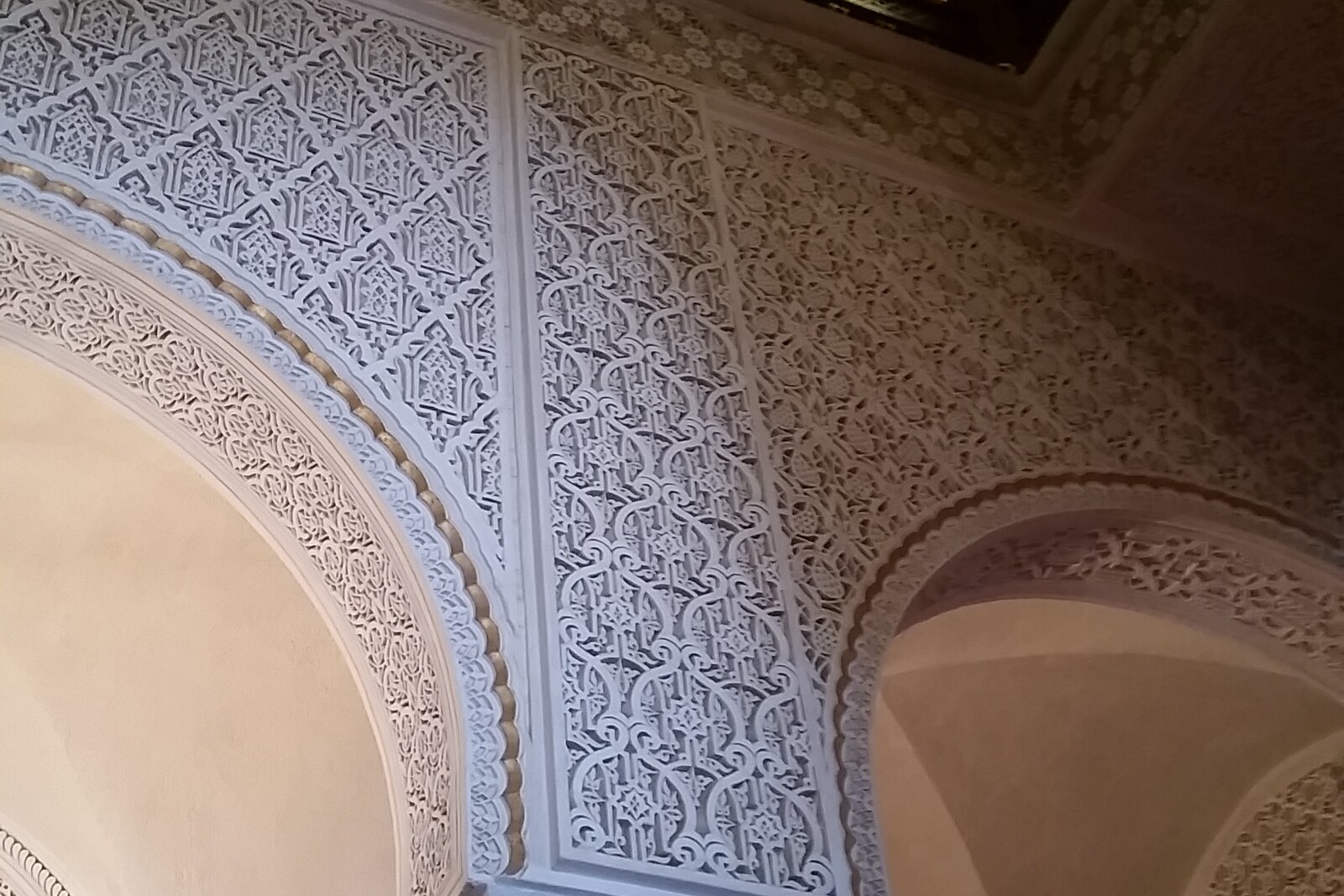
Look around first
What to notice
- Musical instruments
- Manuscripts of the six-volume work
- Letters from the working group
- Materials from the Congress of Arab Music
The story of the place
The Centre for Arab and Mediterranean Music now operates in the palace. The rooms hold drafts of the six-volume study alongside musical instruments, correspondence among its participants, and papers from the Congress of Arab Music. The center has a national sound archive, and concerts are held in these same halls.
Rodolphe d'Erlanger came to this slope because of his bronchial illness. In nineteen oh nine, he came to Tunis for treatment and bought land here. D'Erlanger was an artist and the younger son of a wealthy banking family; he lived on the family fortune. That money allowed him to spend more than ten years building a house, bringing in craftsmen from Tunisia and Morocco. He named his residence Ennejma Ezzahra—"the Star of Venus."
From nineteen fourteen onward, Ahmed El-Wafi came here. He was a Tunisian composer and an expert in malouf, an urban musical tradition that performers passed down orally to their students. El-Wafi introduced the owner to musicians and helped arrange private concerts at the palace. D'Erlanger heard different sheikhs perform the same melody differently, and he believed that some variants would disappear as the old masters passed away. He decided to record the melodies, modes, and rhythms while they were still being performed by people who had received the repertoire directly from earlier masters.
After El-Wafi's death, d'Erlanger assembled a permanent working group here. The Tunisian musicologist Manoubi Snoussi became his secretary: he translated Arabic treatises, checked terminology, and prepared the manuscript for publication. At the end of nineteen thirty-one, Ali al-Darwish, a Syrian flutist and theorist sent from Egypt to prepare the Congress of Arab Music, settled in the palace. Over six months, al-Darwish compiled reports here on modes and rhythms. Meanwhile, d'Erlanger selected five Tunisian performers and sought to have malouf played in its old lineup: on a four-string oud, a rabab, paired drums, and a tar.
In the spring of nineteen thirty-two, this group of five represented Tunisia at the Congress of Arab Music. D'Erlanger himself did not go: illness no longer allowed him to travel, and even the speech he had prepared was not delivered. Congress participants recorded hundreds of performances from different parts of the Arab world on discs. Khemaïs Tarnane, the oud player in the palace ensemble, became one of the founders and teachers of the Tunisian institute La Rachidia two years later, where malouf began to be systematically learned from musical notation.
D'Erlanger died a few months after the congress. Of his planned six-volume work La Musique Arabe, he saw only the first volume printed. Manoubi Snoussi continued the owner's work: the remaining five volumes were published under his supervision through nineteen fifty-nine.
Later, the Tunisian state bought the palace from the heirs and placed the Centre for Arab and Mediterranean Music here. The rooms now hold instruments from d'Erlanger's collection, manuscripts of his six-volume work, letters from the team, and materials from the Congress of Arab Music; the national sound archive operates here as well, and concerts are held here. In two thousand twenty-three, UNESCO added the baron's music collection to the Memory of the World Register.
Useful on site
Officially open Tuesday through Sunday, except public holidays. September–June: 9:00–13:00 and 14:00–17:00; July–August and Ramadan: 9:00–15:30. The ticket office closes earlier. Full ticket 10 dinars, reduced ticket 5 dinars; photography inside requires permission.
Checked: June 29, 2026. Check the official source before visiting.Plan your museum visit separately and check access in advance. If you cannot get inside, do not go beyond the fences and limit yourself to the accessible views of the estate.