 Guide On Map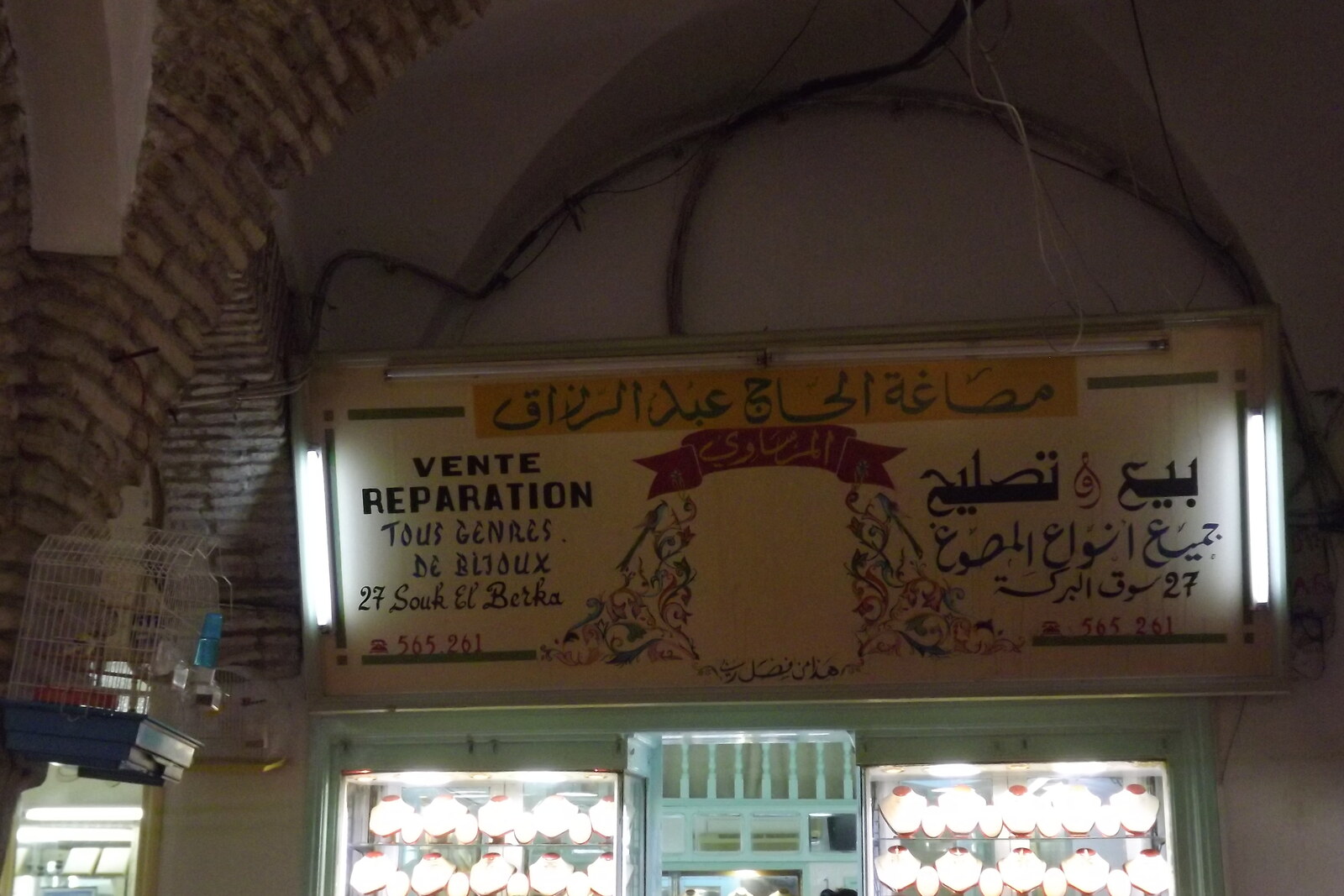
Look around first
What to notice
- Covered square
- Two rows of columns
- Three passageways beneath the vaults
- Jewelry shops
The story of the place
Souk el Berka occupies a small covered square at the intersection of four streets. Two rows of columns divide it into three passageways, with shops opening beneath the vaults. Yusuf Dey, the ruler of Tunis, ordered this market built in sixteen twelve for the sale of captured people and military booty. Its closeness to the ruler's residence allowed officials to supervise trade and the treasury to collect fees from it.
A wooden platform stood in the center. On Fridays, sellers and scribes who drew up transactions sat beside it. The market crier led enslaved people onto the platform and continued the bidding until he heard the highest price. Buyers examined teeth, tongues, hands, and feet. In eighteen forty-one, between twenty and thirty people, mainly women, were sold here in a single trading day. After the final bid, the seller received the money, the treasury received the duty, and the person sold went to the house of a new owner.
The origin of the name “Berka” is explained in different ways. It is linked both to the wooden platform and to camels that were made to kneel after delivering captives. The platform itself has disappeared, so neither interpretation can now be checked against an object on site.
Ahmad Bey, ruler of the Regency of Tunis, decided to end the trade in people gradually: abrupt abolition affected the property of wealthy families and rules that judges had used for many generations. On September sixth, eighteen forty-one, he banned the sale of enslaved people in markets and ordered the demolition in Berka of the shops where they waited for trading. The Friday auctions stopped, but people already in other people's homes had still not received their freedom.
In December eighteen forty-two, Ahmad Bey declared free the children born in the regency after his decree. He then sought the opinion of Muslim legal scholars: he needed to justify freeing those whom owners considered lawfully acquired property. On January twenty-third, eighteen forty-six, the bey ordered the freedom of all who remained enslaved. In several Tunisian zawiyas—religious lodges—officials issued emancipation documents to those seeking protection, and the ruler himself then confirmed them. Outside the capital, resistance to the order continued for a long time, but in Berka people could no longer be sold openly.
After the slave market closed, jewelers occupied the shops. The wooden platform and the rooms for people awaiting sale are gone. The square itself, with its columns and vaults, has survived; gold and silver jewelry, including at auction, is now sold around it.
The neighboring passageways lead to Souk Ech-Chaouachine. Chaouachines was the name for makers of chechia—the red felt cap. At the beginning of the seventeenth century, the craft received new momentum from the Moriscos, baptized descendants of Spanish Muslims expelled from Spain. They lost their homes and property, but rebuilt their workshops in Tunis. Production became one of the country's main trades, and in sixteen ninety-one to sixteen ninety-two Muhammad Bey ordered three separate markets built for the makers beside the palace. In the list of shop owners from seventeen forty-eight, more than nine-tenths were families of Morisco origin.
A chechia was not made in a single shop: it was knitted in Ariana, sewn near Bab Souika, washed and felted by the El Battan dam, and dyed in Zaghouan. In the workshops of Chaouachine, the blank was given its final shape and its surface was finished. Of this chain, the neighboring streets retain the name of the professional corporation. There is no longer a platform in Berka, while nearby a market named for the makers of red chechias—felt caps—still exists.
Useful on site
Passage through the market and neighboring streets is usually possible during the day; shop and workshop hours vary individually, and at some storefronts the historical function can now be read only from the fabric of the streets.
Checked: June 17, 2026. Check the official source before visiting.This is a working market and a place of painful history: look at the details without disrupting trade or turning the story of slavery into a dramatic backdrop.