 Guide On Map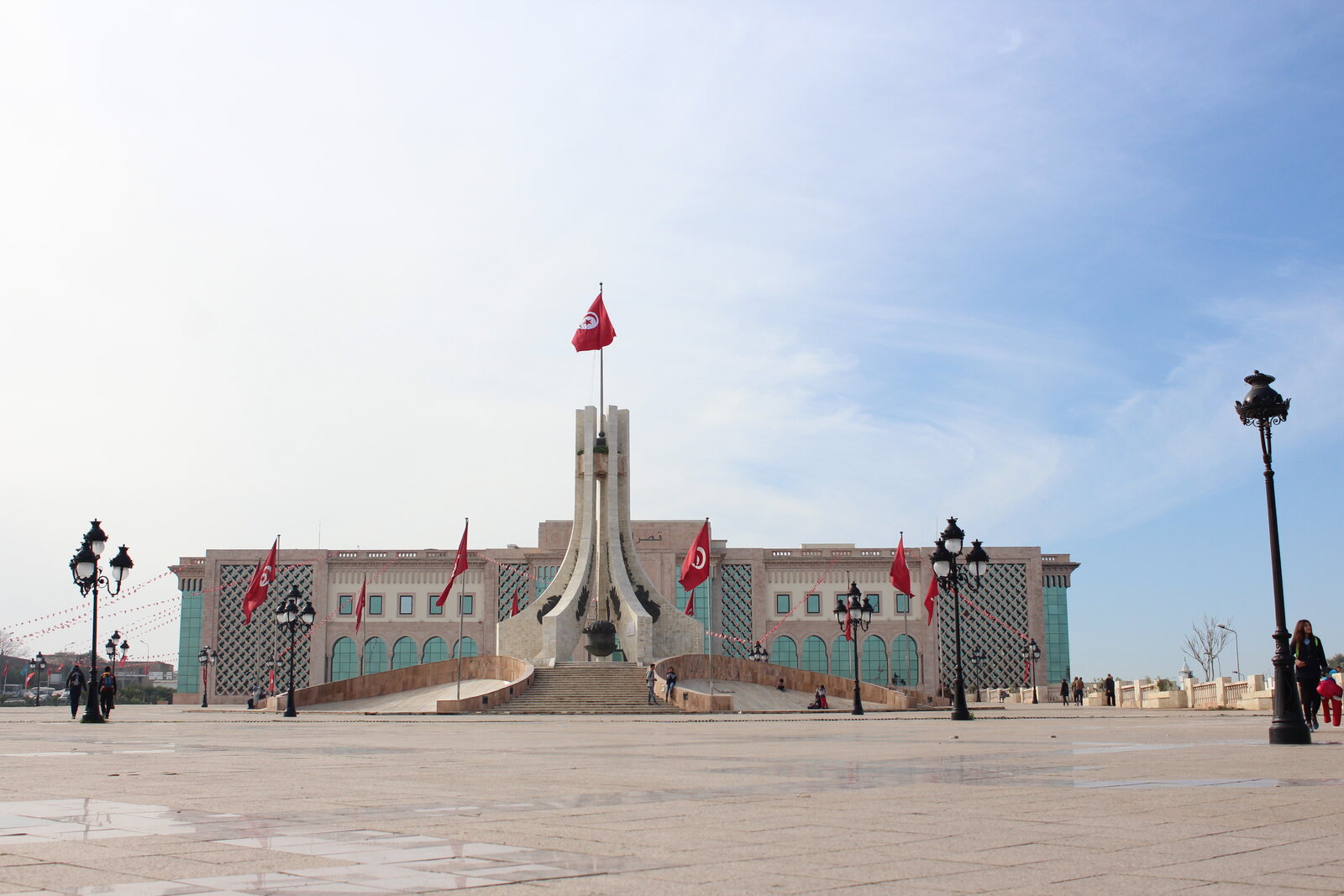
Look around first
What to notice
- Open esplanade
- City Hall
- Kasbah Mosque
- Ministry façades
The story of the place
Today, City Hall, ministries, and Dar el Bey face Kasbah Square. They are beside one another because state institutions have occupied this hill for many centuries. “Kasbah” means a fortified citadel in Arabic. Where the open square now lies stood its walls, palaces, barracks, and gunpowder stores.
In seventeen fifty-two, Yunus Bey, the elder son of Tunis’s ruler Ali Pasha I, seized the citadel. Yunus commanded the troops and enjoyed such support among the soldiers that his father began to fear for his throne. Ali Pasha I intended to send his son into exile or place him under arrest. For Yunus, that meant losing both his position and any chance of ever becoming ruler.
Yunus acted first. He secretly left Bardo Palace, stormed the Kasbah, and secured recognition from the city authorities as bey. He had the fortress walls and a loyal garrison. But Ali Pasha I had removed the most essential thing from the citadel in advance: for several days, people carried the gunpowder supply to Bardo on carts.
Yunus sent a vessel to Malta. It returned with an expensive cargo of gunpowder, which was still not enough. Foreign consuls refused to sell any more. An attempt to set up gunpowder production inside the fortress failed. A chronicler reports that when the soldiers demanded ammunition, Yunus told them to fight with yataghans—short sabers. The soldiers decided that their commander had betrayed them and began seeking salvation in flight.
The siege lasted twenty-five days. At night, Yunus left the Kasbah with several surviving supporters. His companions were pursued and killed, the troops of Ali Pasha I looted the city, and the ruler himself kept the throne. Yunus reached Constantine and died there in exile sixteen years later.
In nineteen sixty-nine, archaeologists examined the area of today’s esplanade. Beneath the remains of a later barracks, they found furnaces, recesses in the masonry, and traces of sulfur—equipment from old gunpowder workshops. Above ground, Kasbah Mosque has survived from the medieval citadel. The walls behind which Yunus waited for gunpowder are gone.
Useful on site
An open square, accessible for external viewing all day.
Checked: June 17, 2026. Check the official source before visiting.Choose a spot at the edge of the square that does not obstruct passage or the work of the institutions; if there are temporary restrictions, view it from the accessible side.