 Guide On Map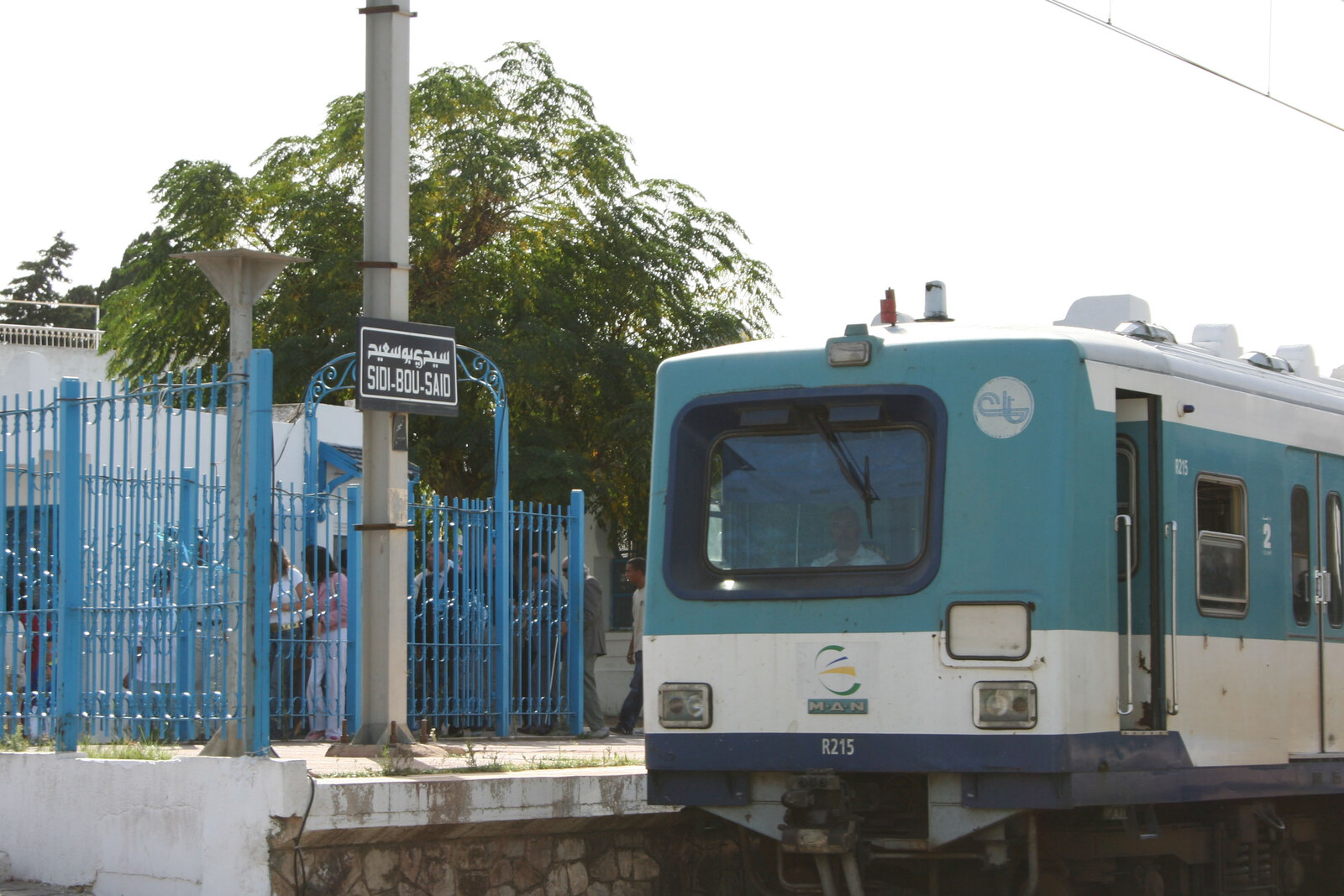
Look around first
What to notice
- Platform
- Railway tracks
- Station sign
- The climb up the hill
The story of the place
This platform stands at the foot of the hill, on the suburban line between Tunis, La Goulette, and La Marsa. It was built when the railway was converted to electric traction and brought closer to the coast. Previously, the rails ran west of Carthage and did not pass through this place. The station sign recalls not the railway, but the hill with the mausoleum of a Sufi scholar, around which the settlement grew.
This station did not exist in Edward Pickering's time. In eighteen seventy-one, the English entrepreneur received permission from the Tunisian ruler to build a railway from Tunis to the port of La Goulette. Pickering expected to recover the money he had invested through passenger fares and freight charges. To do that, service had to open as soon as possible.
Builders laid most of the route directly over an existing road. The light iron rails began to warp almost at once. But the work was finished in a few months. Pickering himself had already lost the enterprise by the ceremonial opening: in July eighteen seventy-two, a London court declared him bankrupt. When the first ceremonial train carried the Tunisian ruler in August, the man who had started the railway to make money had already lost the enterprise.
A new English company continued construction and, two years later, extended the rails from La Goulette to La Marsa. This early branch ran west of Carthage and bypassed the present station. There were few trains, and not enough passengers or freight; the owners made no profit. In eighteen eighty, they sold the loss-making railway to the Italian shipping company Raffaele Rubattino. The owners changed again afterward.
The present site entered this story in nineteen oh eight. The Tunisian Tramways Company converted the railway from steam to electric traction, moved the route closer to the coast, and added stops. Sidi Bou Said was included in the new arrangement. Thus Pickering's unsuccessful venture became the Tunis–La Goulette–La Marsa suburban line, known here by its French initials: TGM. The platform was placed at the foot of the hill, where the road climbs toward the old part of the settlement.
The station's name was still very new then. Until eighteen ninety-three, the hill was called Jebel El Manar—Lighthouse Mountain. In the thirteenth century, the Sufi scholar Abu Said ibn Khalaf ibn Yahya al-Tamimi al-Baji chose it for prayer and teaching. “Sidi” is a respectful form of address for a spiritual teacher. After Abu Said's death in twelve thirty-one, a mausoleum for him was established on the summit, and a settlement gradually grew around the pilgrimage site. When a municipality was created here, it was officially given the name Sidi Bou Said.
So the station sign does not refer to a railway worker. It leads from the tracks uphill, to the grave of the man whose name the settlement received only fifteen years before the line was rebuilt. The platform belongs to the nineteen oh eight route; the name on it belongs to the hill, the mausoleum, and the teacher buried above the rails.
Useful on site
An open-air station on an operating suburban line. Timetables change with the seasons; Transtu's official dataset and winter timetable were checked on 2026-06-29, but it is best to check services on the day of travel.
Checked: June 29, 2026. Check the official source before visiting.Do not step onto the tracks or linger in the flow of passengers; it is convenient to listen to the story away from the platform edge.