 Guide On Map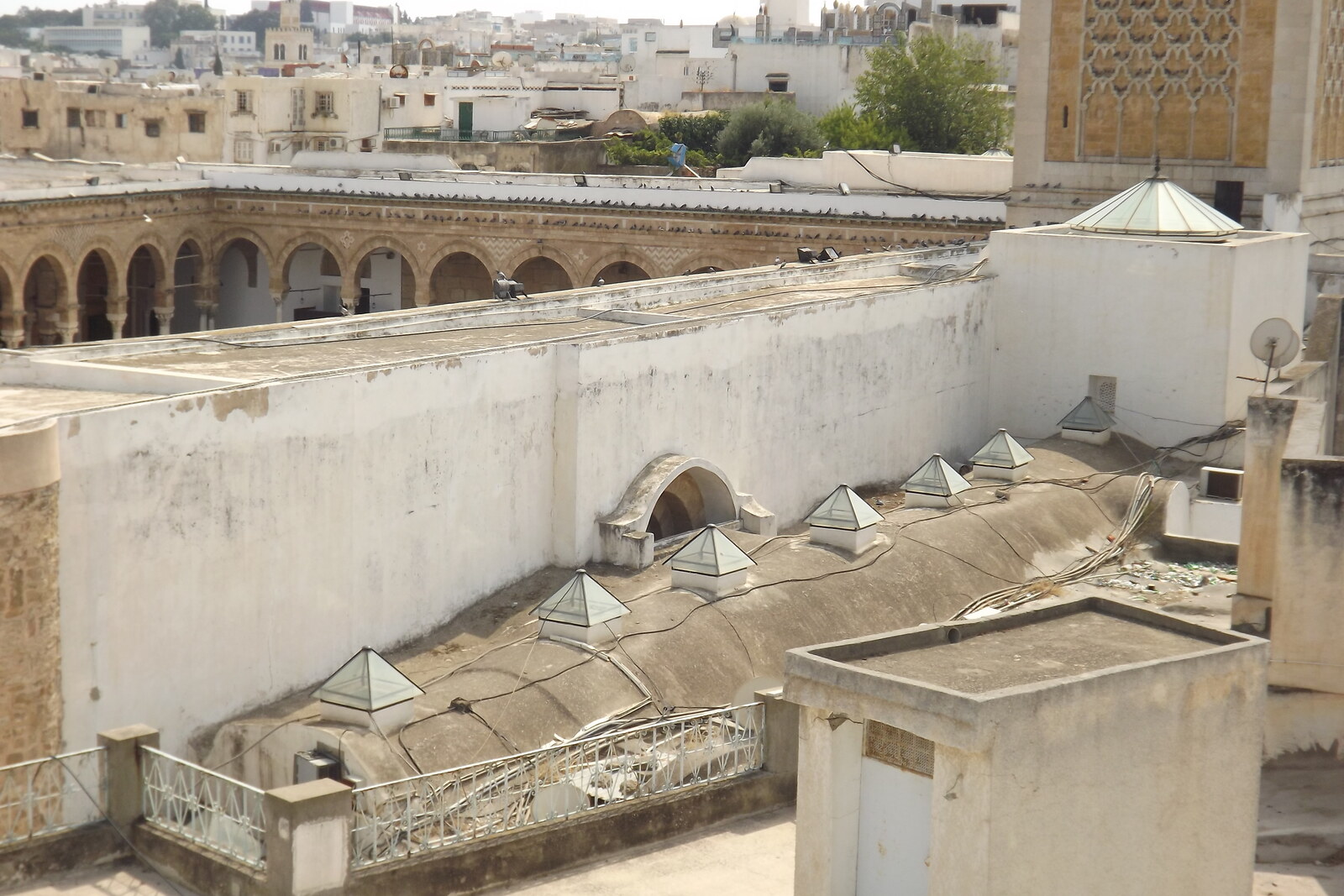
Look around first
What to notice
- The mosque's northern wall
- Narrow raised shops
- Bottles of flower essences
- Incense and henna
The story of the place
A row of shops raised above the pavement runs along the northern wall of Zitouna Mosque; individual units are barely wider than one and a half meters, and the seller works in them sitting down. Here, people bought flower water for the home, incense for funerals, and henna and candles for the wedding ceremony. Behind the tiny counter, what was valued was knowledge of the composition and purpose of every blend; now, factory-made perfumes and cosmetics stand alongside essences, ambergris, and plant additives.
Around twelve forty, Abu Zakariya Yahya, founder of the Hafsid dynasty, ordered a separate market for perfumers to be established along the northern wall of Zitouna Mosque. Twelve years earlier, he had been governor of the Almohad Caliphate; then he refused to obey the rulers of Marrakesh and declared himself an independent emir. He needed a capital capable of supporting a court, an army, and a growing population. For the sake of free maritime trade and supplies of Sicilian grain, he even paid annual tribute to Emperor Frederick II. Souk el Attarine was part of the same effort: Abu Zakariya assigned visiting merchants a place in the city's most expensive commercial center.
Artisans whose production did not require hammers, furnaces, large supplies of water, or dirty drains were allowed to work by the wall of the main mosque. Tanners, dyers, and blacksmiths were pushed out toward the edges of the Medina of Tunis. Perfumers were placed next to Zitouna Mosque: their goods took up little space, were expensive, and the craft itself was considered respectable. Thus, a merchant's place in the urban hierarchy could be determined by the distance from the shop to the mosque.
The first families of Tunisian perfumers came from Egypt, Syria, Yemen, and Arabia. For a long time, they retained the exclusive right to prepare the blends, and then formed a corporation. It was headed by an amin, an elder chosen by the masters, who oversaw transactions, product quality, and disputes between sellers. The amin of the perfumers was among the prominent townspeople, although the shops themselves were tiny. At the end of the nineteenth century, there were about eighty commercial units here; many were barely one and a half meters wide and raised above the pavement so that the owner could work sitting down, hardly leaving the spot.
A great deal depended on the amin's decision, especially in the trade in ambergris, a rare raw material for expensive blends. It was mixed into wax and whale fat, then coated with resin, and the buyer could not always recognize a fake. Medieval instructions for market inspectors prescribed testing ambergris with fire. At the end of the nineteenth century, Hajj Shadhili held the post of amin here. He said that ambergris formed the basis of almost all Arabic perfumes and, combined with musk, produced many different mixtures. His verdict determined whether a merchant would receive the right to sell such a mixture as sound quality.
Perfumers supplied townspeople with goods for every part of family life. They sold flower waters and products for daily care, incense for funerals, and henna and candles for weddings. Five-candle candelabra from here were carried to the tombs of revered righteous people and set out during the ceremony of applying henna to the bride. The market's value rested on knowledge of the composition and purpose of every small portion, not on the size of the shop.
The northern wall of Zitouna Mosque still borders this row. The shops still contain flower essences, incense, ambergris, henna, and plant and mineral additives; factory-made perfumes and cosmetics have been added to them. “El Attarine” means “the perfumers”—the name still points to the merchants for whom Abu Zakariya set aside a place here around eight centuries ago.
Useful on site
The street can be walked through during the day every day; individual shops keep their own schedules, and the rhythm changes on Fridays and during religious hours.
Checked: June 17, 2026. Check the official source before visiting.Do not stand in the middle of the passage, and ask permission before photographing a counter up close; making a purchase in order to look is not required.