 Guide On Map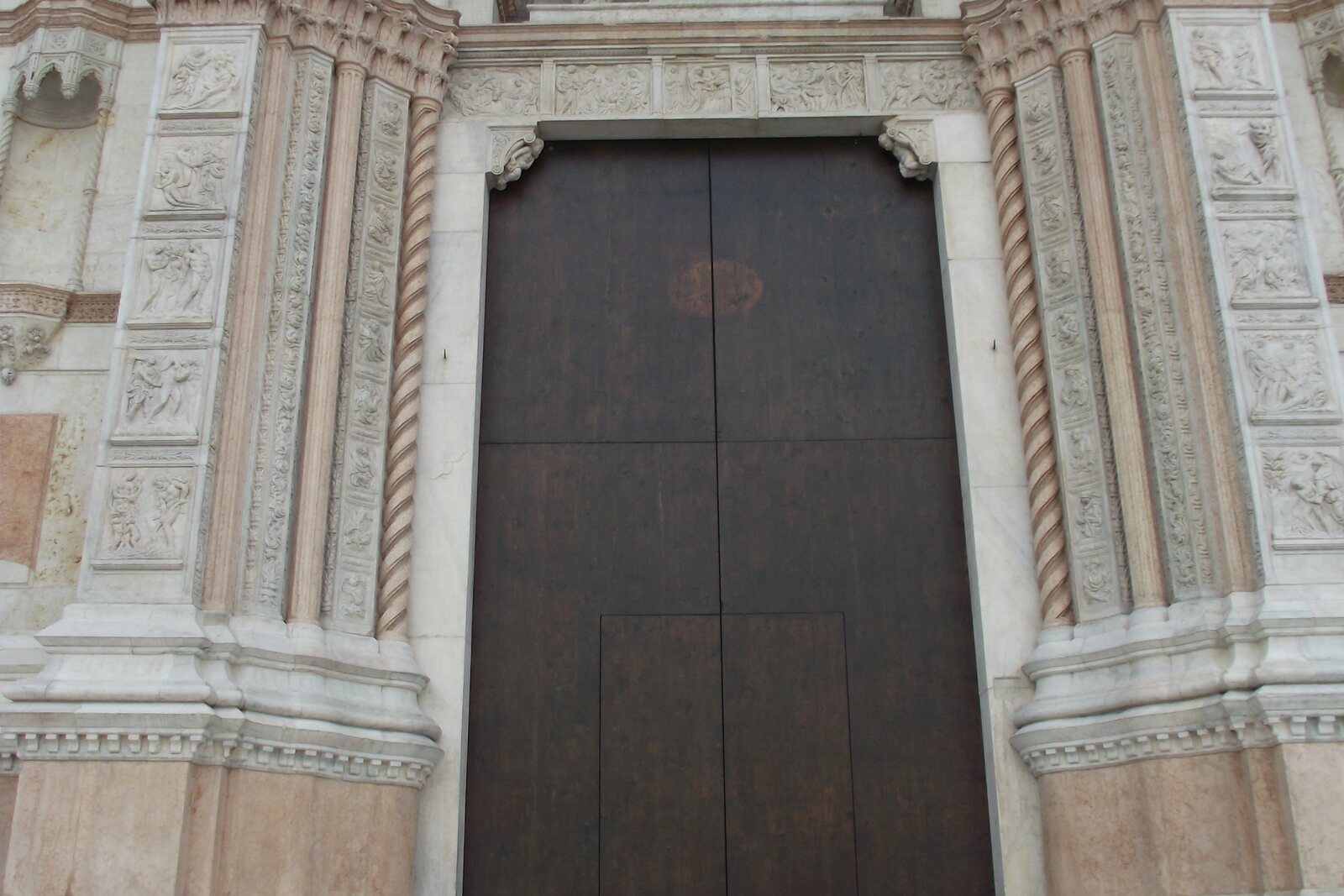

This place does not have an audited photo yet.
Selected place
Basilica of San Petronio
Local name: Basilica di San Petronio
The coronation ceremony will explain why the victor and the defeated man needed a shared walkway.
Start with 25 highlights or open the complete catalog of 142 curated places.
Highlights include Basilica of San Petronio, Palazzo d'Accursio and Salaborsa, Piazza Maggiore, Sanctuary of the Madonna di San Luca, Santo Stefano complex, Archiginnasio of Bologna.
We have connected important places into ready-made walks with a clear order, stories and practical details.
Start with 25 highlights, or reveal all 142 curated places.
Local name: Basilica di San Petronio
The coronation ceremony will explain why the victor and the defeated man needed a shared walkway.
The coronation ceremony will explain why the victor and the defeated man needed a shared walkway.
The history of the palace reveals the moment when street violence disrupted the transfer of city power.
Here, the proclamation of freedom will turn from a solemn gesture into a long and expensive municipal operation.
The procession's endpoint brings the route back to a dispute over land, priests, and the right to support a community on the hill.
The finale will explain why the saint found here received an enormous basilica at the beginning of the route.
The story of the first academic year will explain how the new order changed relations between students and the university.
This is where the story begins of people whom urban improvements deprived of their customary place of trade.
The scientific rooms will link one man's military downfall to the founding of a new city institution.
Here, the museum collection is presented as a collection of works that were repeatedly moved and saved.
The crossing will link the two sections of the portico and show the decision that changed its builder's career.
The history of a personal book collection will explain why the library appeared here before the university itself.
Here you will learn why a papal monument immediately became the subject of an everyday dispute.
This stop explains why independent vendors remained under one roof after the renovation.
The finale will show how merchants sped up legal proceedings and turned the loss of business trust into a public punishment.
Here you will see how replacing pipes gave cause to remake an entire city square.
At this stop, the service entrance will prove more important than the theater’s grand façade.
The final stop will bring together a dispute over a monument and a transport hub in one surviving forework.
The surviving ceremonial route makes it possible to reconstruct the basilica's connection with the vanished family palace.
Here, a failed attempt at reconciliation will lead to a hospital that occupied almost the entire block.
The street's width will show which part of the old trading quarter was demolished to make way for the new thoroughfare.
A family business will provide a continuous thread of local trade from the nineteenth century through to subsequent generations.
The old shops will explain how the city twice stripped fishmongers of their monopoly and again allowed competitors access to buyers.
Here the annual procession acquired a permanent city gateway, for whose sake the gate itself was later altered.
The commercial thoroughfare links three vanished everyday names with the posthumous memory of one man.
One niche preserves the story of a family promise that the sons had to fulfill after their father's death.
Nearest audio-route stop: The Two Towers — 10 m in a straight line, route The Heart of Bologna: Piazza Maggiore, The Two Towers, and Santo Stefano
Nearest audio-route stop: The Flat Section of the Portico — 10 m in a straight line, route Portico of San Luca: from Porta Saragozza to the hill
Nearest audio-route stop: Mercato di Mezzo — 10 m in a straight line, route Quadrilatero: Markets and Trading Streets
Nearest audio-route stop: Via degli Orefici — 20 m in a straight line, route Quadrilatero: Markets and Trading Streets
Nearest audio-route stop: Palazzo d'Accursio and Salaborsa — 50 m in a straight line, route The Heart of Bologna: Piazza Maggiore, The Two Towers, and Santo Stefano
Nearest audio-route stop: The Ascent and the Chapels — 10 m in a straight line, route Portico of San Luca: from Porta Saragozza to the hill
Nearest audio-route stop: Basilica of San Petronio — 40 m in a straight line, route The Heart of Bologna: Piazza Maggiore, The Two Towers, and Santo Stefano
Nearest audio-route stop: The Ascent and the Chapels — 100 m in a straight line, route Portico of San Luca: from Porta Saragozza to the hill
Nearest audio-route stop: Archiginnasio of Bologna — 40 m in a straight line, route The Heart of Bologna: Piazza Maggiore, The Two Towers, and Santo Stefano
Nearest audio-route stop: Piazza Santo Stefano — 60 m in a straight line, route The Heart of Bologna: Piazza Maggiore, The Two Towers, and Santo Stefano
Nearest audio-route stop: Fountain of Neptune — 20 m in a straight line, route The Heart of Bologna: Piazza Maggiore, The Two Towers, and Santo Stefano
Nearest audio-route stop: The Portico and Basilica of San Giacomo Maggiore — 30 m in a straight line, route Via Zamboni: Bologna's University Quarter
Nearest audio-route stop: The Portico and Basilica of San Giacomo Maggiore — 90 m in a straight line, route Via Zamboni: Bologna's University Quarter
Nearest audio-route stop: Piazza Verdi and Teatro Comunale di Bologna — 50 m in a straight line, route Via Zamboni: Bologna's University Quarter
Nearest audio-route stop: Piazza Verdi and Teatro Comunale di Bologna — 70 m in a straight line, route Via Zamboni: Bologna's University Quarter
Nearest audio-route stop: Piazza Santo Stefano — 20 m in a straight line, route The Heart of Bologna: Piazza Maggiore, The Two Towers, and Santo Stefano
Nearest audio-route stop: The Portico and Basilica of San Giacomo Maggiore — 100 m in a straight line, route Via Zamboni: Bologna's University Quarter
Nearest audio-route stop: Basilica of San Petronio — 110 m in a straight line, route The Heart of Bologna: Piazza Maggiore, The Two Towers, and Santo Stefano
Nearest audio-route stop: Santo Stefano complex — 130 m in a straight line, route The Heart of Bologna: Piazza Maggiore, The Two Towers, and Santo Stefano
Nearest audio-route stop: The Two Towers — 30 m in a straight line, route The Heart of Bologna: Piazza Maggiore, The Two Towers, and Santo Stefano
Nearest audio-route stop: Palazzo d'Accursio and Salaborsa — 30 m in a straight line, route The Heart of Bologna: Piazza Maggiore, The Two Towers, and Santo Stefano
Nearest audio-route stop: Santo Stefano complex — 100 m in a straight line, route The Heart of Bologna: Piazza Maggiore, The Two Towers, and Santo Stefano
Nearest audio-route stop: The Portico and Basilica of San Giacomo Maggiore — 30 m in a straight line, route Via Zamboni: Bologna's University Quarter
Nearest audio-route stop: The Portico and Basilica of San Giacomo Maggiore — 50 m in a straight line, route Via Zamboni: Bologna's University Quarter
Nearest audio-route stop: The Portico and Basilica of San Giacomo Maggiore — 40 m in a straight line, route Via Zamboni: Bologna's University Quarter
Nearest audio-route stop: Palazzo della Mercanzia — 150 m in a straight line, route Quadrilatero: Markets and Trading Streets
Nearest audio-route stop: Via Drapperie — 120 m in a straight line, route Quadrilatero: Markets and Trading Streets
Nearest audio-route stop: Fountain of Neptune — 60 m in a straight line, route The Heart of Bologna: Piazza Maggiore, The Two Towers, and Santo Stefano
Nearest audio-route stop: Archiginnasio of Bologna — 110 m in a straight line, route The Heart of Bologna: Piazza Maggiore, The Two Towers, and Santo Stefano
Nearest audio-route stop: Museum of Palazzo Poggi — 110 m in a straight line, route Via Zamboni: Bologna's University Quarter
Nearest audio-route stop: Basilica of San Petronio — 130 m in a straight line, route The Heart of Bologna: Piazza Maggiore, The Two Towers, and Santo Stefano
Nearest audio-route stop: Mercato di Mezzo — 20 m in a straight line, route Quadrilatero: Markets and Trading Streets
Nearest audio-route stop: Porta San Donato — 130 m in a straight line, route Via Zamboni: Bologna's University Quarter
Nearest audio-route stop: Piazza di Porta Ravegnana and the Two Towers — 40 m in a straight line, route Via Zamboni: Bologna's University Quarter
Nearest audio-route stop: Via Ugo Bassi — 90 m in a straight line, route Quadrilatero: Markets and Trading Streets
Nearest audio-route stop: The Ascent and the Chapels — 60 m in a straight line, route Portico of San Luca: from Porta Saragozza to the hill
Nearest audio-route stop: Archiginnasio of Bologna — 100 m in a straight line, route The Heart of Bologna: Piazza Maggiore, The Two Towers, and Santo Stefano
Nearest audio-route stop: Via degli Orefici — 60 m in a straight line, route Quadrilatero: Markets and Trading Streets